

Ready-Like: Let’s call it what it is: ai colonizing
ai is coming for your job. But first, it’ll colonize your expertise.
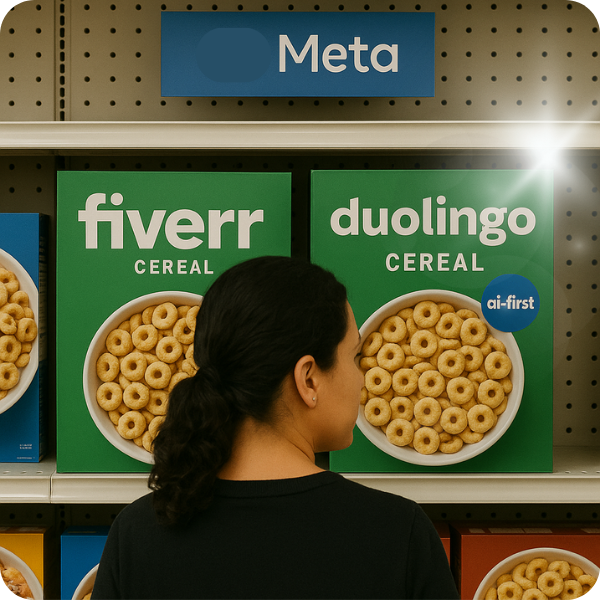
ai is coming for your job. But first, it’ll colonize your expertise.
Oh, the fear of ai permeates our nostrils.
You can’t scroll for more than two posts on LinkedIn without bumping into somebody talking about chatgpt em dashes (—) or an ai-generated action figure graphic.
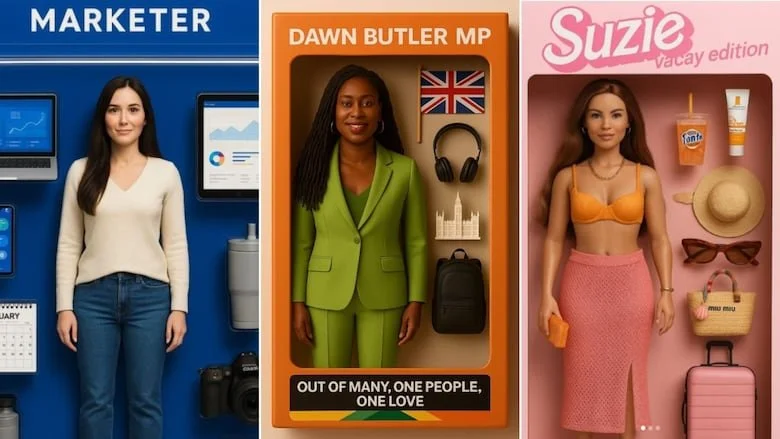
Why is everyone suddenly a doll? Newest AI trend is more than harmless fun (CBC)
Like this one LinkedIn poster, a Creative Director—in fact—identified that if they don’t learn a new ai trick fast and in a hurry, they will be replaced. After posting an ai-generated model with human-like imperfections, their practice ad faced backlash for ai’s use instead of a real person. “Because I need to learn new skills and practice, otherwise I'm going to be replaced too…”
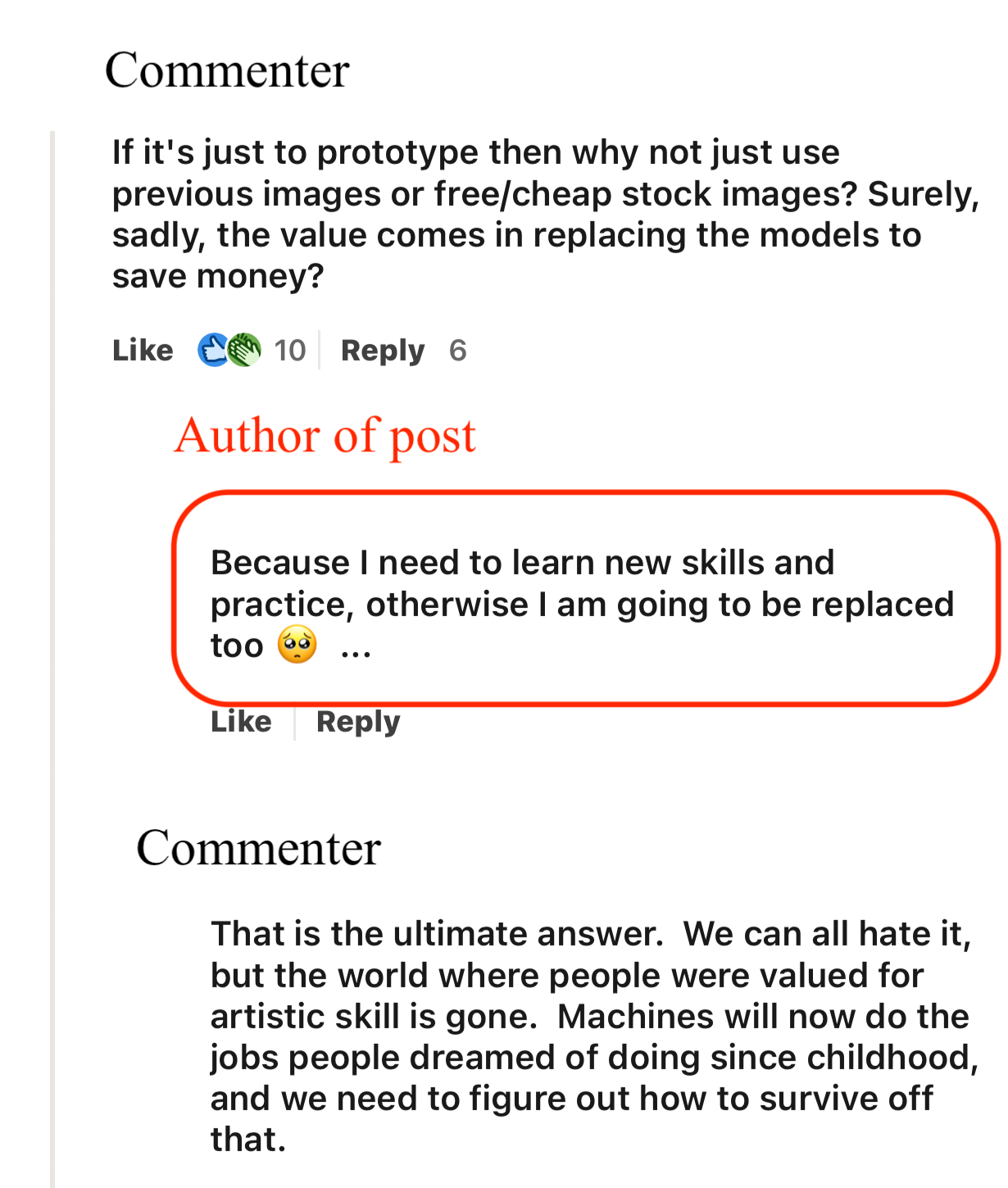
A LinkedIn poster expresses ai concerns
That’s what this entire article is about. And I have a lot to say about the topic.
fear-mongering?
About a month back, Micha Kaufman, Fiverr CEO (the company that did a commercial jingle on “nobody cares if you use ai” with their freelance marketplace but, it turns out, we do. Them. I wrote about it here). Sent an email to staff, exclaiming that ai was going to take their jobs. Including his own.
He was even bold enough to share that same email on Twitter (X).
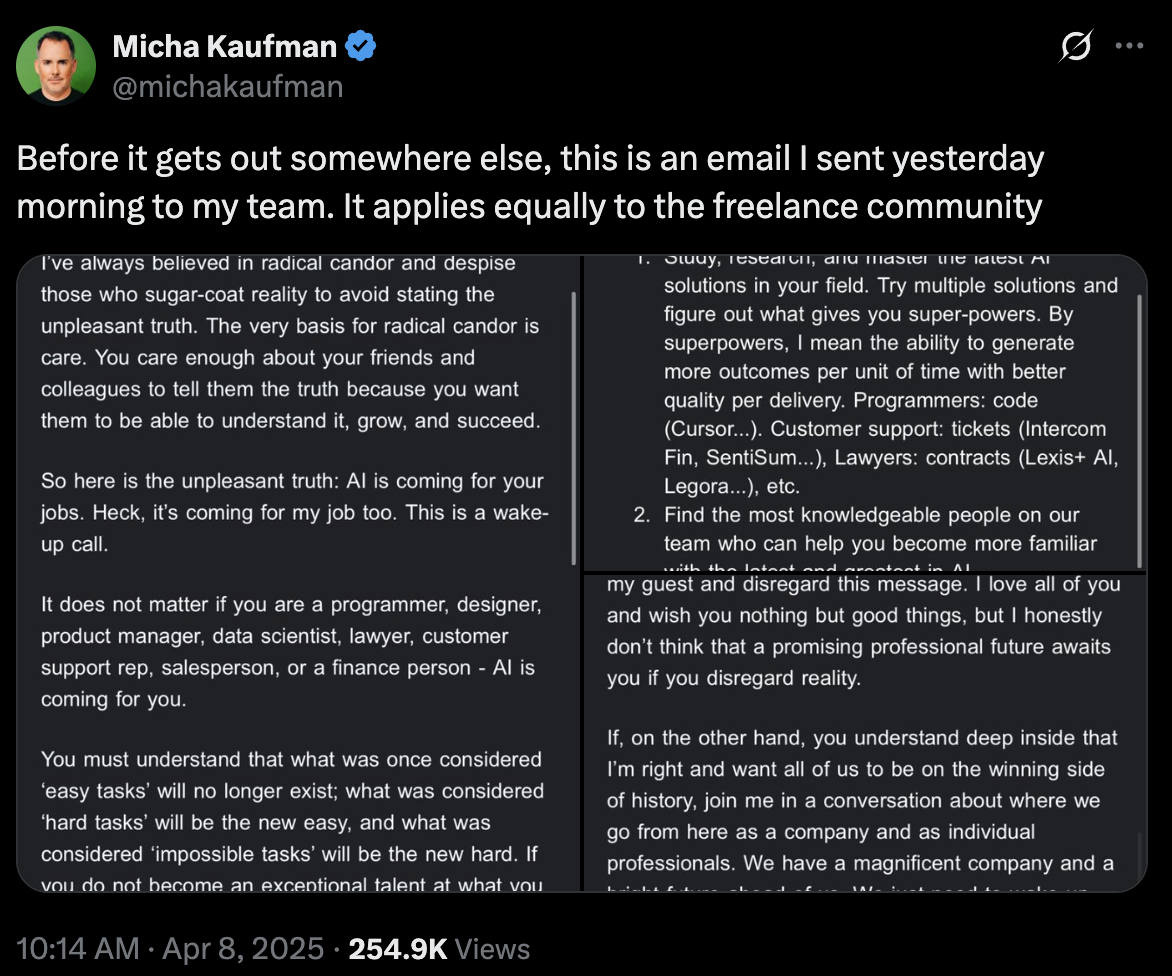
source: X
And honestly…*slow claps*.
I agree.
We collectively, WE, downplay the power and the dangers of ai. It’s not just out for our jobs, THAT’S only the casualty. It’s out for US. Our identity.
*Type this into chatpgt right now: “What are the threats of ai. Be honest,” and see what it says.
ai learns from human data. Us.
ai learns art, writing, language, music, voice, video, code, law.
ai learns bias, racism, sexism, classism, and every other -ism.
ai then optimizes it and repackages it.
Sounds a lot like colonizing, doesn’t it?
As much as there is good in how it can supercharge us in our work and life…there are unspoken threats. And when you do speak up on the threats, you’re fear-mongering. Like in the Fiverr CEO’s case.
But deepfakes are a real, present reality.
Forget fake news. Imagine even faker people. Not fake like your sister’s BFF who acts like a Stepford wife. I mean ai generating entire political speeches, protests, or war crimes that never happened, all in HD with the voice to match (see the movie G20 with Viola Davis for an eerie representation).
Don’t believe the hype…at least not all of it.
ai-first?
Duolingo, everyone's favorite psycho bird. And language learning app recently fired all their contractors (first translators, then writers) and replaced them with ai.
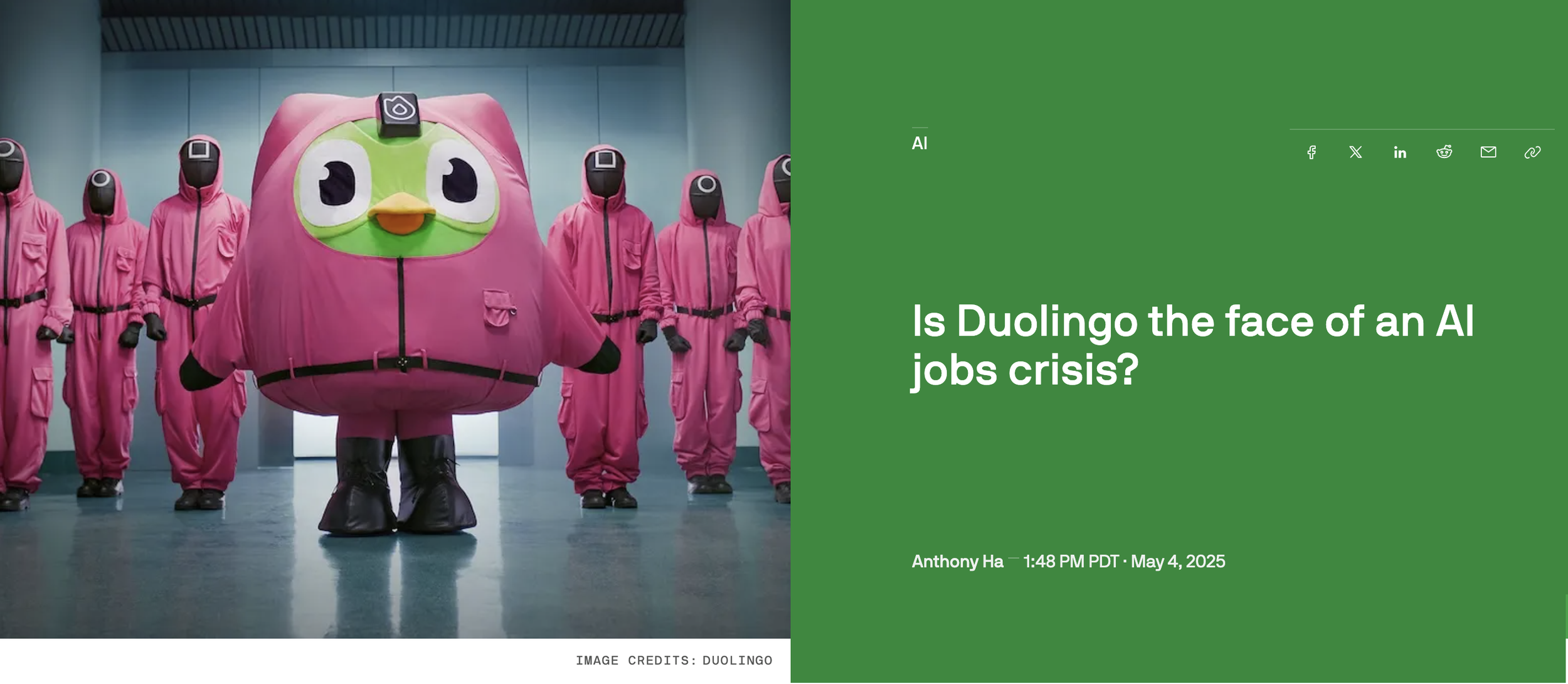
Source: TechCrunch
Let me write that again: They fired translators.
Professionals closest to the cultural language, so you feel like you’re learning authentic dialect instead of playing a game of linguistic charades. And for that lovely trade-off, we get 148 new language courses generated by ai. What would’ve taken them 12 years to accomplish, they did it in one.
Hip hip hooray!
This is what it means to be an ai-first company. It’s oddly similar to a profit-first company. The similarities are uncanny.
But before you write me off as sounding bitter about it, I want you to know that I am a Duolingo Devotee.
This criticism comes from a loving place for their on-the-pulse marketing and how they’ve set the bar for employee engagement. I am challenging them to think bigger and be braver in their language learning approach.
They could’ve built an immersive program for learners. Connecting learners to native speakers in their home country (I see an Airbnb partnership).
They could’ve leveraged the translators to create paid micro-courses focused on regional slang, idioms, and cultural references too.
They could’ve created Duolingo Originals. Web-based series that help learners grasp the language through telenovelas (hello, Netflix or maybe YouTube).
They could’ve made contractors in-app coaches as a paid upgrade.
They could’ve struck up EdTech licensing deals with schools, orgs and governments.
“Instead of shrinking their soul to scale,” ← ai said it, not me.
But I’m sure the smart Duos over at Duolingo already pitched these alternatives with the caveat that none of the above can be done fast and in a hurry. However, short-term tactics over long-term ones will have you fighting for your messaging life. Profits to follow.
It’s the 12 years that made them, but it could be that one year that breaks them.
It’s bad optics—even worse timing. And an unexpected pivot that caught me off guard is all. I was rooting for you, Duolingo!
So, for the employees reading this from a company computer, here’s what you’re up against
Change management battles
I fear that the companies toting ai-first failed to ensure practical application by establishing existing well-oiled systems and processes first—before introducing another tool with no roadmap. They’re underestimating the ramp-up time to see ai ROI, as if employees don’t need to be reskilled or upskilled.
Research shows “employees are not getting the training and support they need. More than a fifth report that they have received minimal to no support.” (McKinsey 2025)
And we haven’t even factored in the workplace politics of senior leaders feeling intimidated by employees who are more ai-versed, taking their jobs. Then, sabotaging the complete rewiring the company now has to undergo. People can be the driver or the blocker to ai adoption.
Speed vs safety dilemmas
“Data security, hallucinations, biased outputs, and misuse (for example, creating harmful content or enabling fraud) are challenges that cannot be ignored. Employees are well aware of AI’s safety challenges. Their top concerns are cybersecurity, privacy, and accuracy.” (McKinsey 2025)
Yes, those who are ai-first will indeed produce more and faster. As for quality, that's questionable, but we’ll tackle that on a LinkedIn post. The real threat for CEOs, especially established brands like Duolingo, is handing over the playbook for Duolingfauxs.
Slapping ai-first on your brand is like wearing a generic sign on your forehead—you're just advertising your codependency on tech you don’t control.
Startups get the edge here because they truly can move fast with no bureaucracy as a barrier. No disgruntled or underskilled employee can sabotage their growth. CEOs will have a new challenge unlocked: copyright infringement on intellectual property (IP). It only takes one employee to abandon safety & privacy protocols, and they’ve engraved the company’s tombstone.
Sure, “produce faster,” but while enterprises are tangoing with these speed bumps, startups can now copy & paste their entire business model with a single prompt (from all the data input). And by the time they’ve realized it, a hundred more competitors startups have popped up.
Meta marketing?
Can we hate Meta anymore?!
Apparently, I can, and the whole marketing community betta be behind me when Ryan Coogler says: “The moment some s*** becomes a business, somebody’s getting f***ed.”
And it’s the advertising world.
Zuckerberg’s plan:
“...we’re going to get to a point where you’re a business, you come to us, you tell us what your objective is, you connect to your bank account, you don’t need any creative, you don’t need any targeting demographic, you don’t need any measurement, except to be able to read the results that we spit out. I think that’s going to be huge, I think it is a redefinition of the category of advertising.” (Source: The Verge)
Any professional willing to throw their brand to the mercy of “connect us to your bank account and read the results we spit out,” deserves the results they get. Because this is your Hail Mary.
Meta wants your business data to be compromised and companies fearful of falling behind, so they hand over their bank account without a fight.
And the first to leap at the chance will be scammers. I repeat. Will be scammers. “Infinite creative,” is a scam artist's dream! They’ll probably get some unsuspecting suckers, get rich then create a course.
We won’t see any award-winning campaigns, tear-jerker ads or meaningful moments here. Just ai-generated slop that makes Zuckerberg filthy richer.
Hip hip hooray!
Because people really don’t care about creative newness or nostalgia, they care about convenience. And if they can get whatever you’re selling faster and at a lower cost than the competitor—they’re buying.
But at what cost!?
It’s a heavy penalty if consumers don’t refrain from falling for the okie doke. It’s a vicious cycle that, if entered, job loss follows shortly after. Because it confirms we don’t need a human here. And yet, we still need people to buy these products…but with what money?!
It’s another group project we’ll likely fail.
Narrator: Ok, so what’s the moral of the story, Tennile? It’s getting dark.
We need to be as ready-like, ai.
Colonizing has upgraded to code. It’s cultural erasure coding.
“It’s when machine intelligence, built on biased data and optimized for scale, starts to replace, dilute, or flatten human systems—especially the ones that were already marginalized or inconvenient to capitalism.” —ai
There are no royalties to the artists—LLMs were built on to generate those viral action-pack figurine graphics. No citations to the writers before us and scholars of today who contributed to the Internet library. And no credit to the cultures that birthed languages, slang, and AAVE. With Duolingo’s firing of translator contractors, you get the “learning,” but no lineage.
And big tech owns it all.
So before we turn into property. And our identity goes on sale. We can stop handing it over willingly.
How to “future-proof” your career?
Learn ai’s limitations
And that means play around with the tool. Try it and break things, as they say in coding. You only fear shadows in the dark.
Here’s what it lacks:
Emotional depth (therapy, negotiation, leadership)
Cultural fluency (branding, storytelling, DEI work)
Creative originality (conceptual thinking, innovation, satire)
Contextual judgment (strategy, ethics, crisis response)
Become a category of one
Otherwise known as personal branding, cringe or weird. That little piece of real estate on your LinkedIn headline begs you to carve out what you want to be known for.
Get up to speed on tech
Learn how to improve your workflows, stack your skills and reduce inefficiencies. Tools like Zapier, Notion, chatgpt, Descript, Midjourney, etc. Get in the weeds and see what all the hoopla is about. Stay curious, not intimidated.
Be undeniable
It’s not enough to be skilled and an expert. You need to be able to tell that story in visibility and receipts. Your business acumen needs to be just as good as your talent. And that includes diversifying your income. Otherwise, you’re replaceable by you know who.
We're walking right into a future where YOU are optional in a company—and that’s what ai is truly coming for.
In the words of the Player’s Club, “Make the money. Don’t let it make you.” - Diamond
👋🏾 Soooo…collective illusion is public enemy number one—Don’t Believe The Hype. Every so often, we’ll say the quiet parts out loud (in your inbox). So we can cancel or co-sign marketing or market trends and discern pop culture gems from flops together. And start making sense of the nonsense online.

High-Like: Is marketing dead?! An open letter to marketers...
The cost of being remarkable is discomfort. The cost of being comfortable is irrelevance.
[ short answer ]
Is marketing dead?
No, but safe marketing is. Too many brands lean on predictable celebrity deals and AI-generated ads that have no heart. The work that breaks through, like Pella's "Make Life Brighter" campaign with Missy Elliott, taps into real human experience. Use AI as the paintbrush, not the artist. As Tennile Cooper puts it: the cost of being remarkable is discomfort, and the cost of being comfortable is irrelevance.
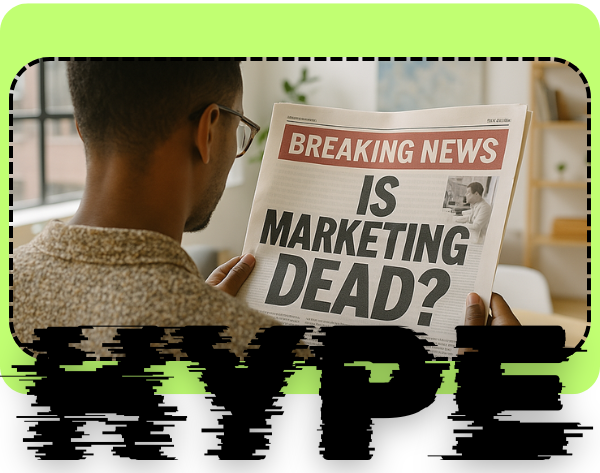
generated by ai
Marketers need more guts.
No, because we keep putting out trash.
We keep executing from the same playbook.
We keep stalking our competitors instead of our vision.
We keep losing sight of the goal with a constantly moving target and budget.
We’ve lost our edge.
And that’s not the reason we got into this business, is it?
So, congratulations, you did it.
You’ve cracked the code and managed to make marketing—a once electric, culture-shaping, boundary-pushing art form—so safe, so predictable that it’s basically a 90s workplace health & safety video.
We’re no longer the moment that makes people stop, think, and feel. No, we’re churning out content that’s algorithmically approved, editing committee certified, and passion-free.
If we’re not going off the rails with incongruent partnerships, it’s ai-generated productions now?! The brand narrative is starting to glitch.
no inclusivity, no challenging of stereotypes, just status quo
Whenever brands need a quick hit, they reach for the usual suspects.
Performance marketing: Celebrities with massive followings.
We’ve seen it with Snoop x Solo Stove, and instead of curating a lifestyle, they rent one that’s about as relatable as a White Lotus episode.
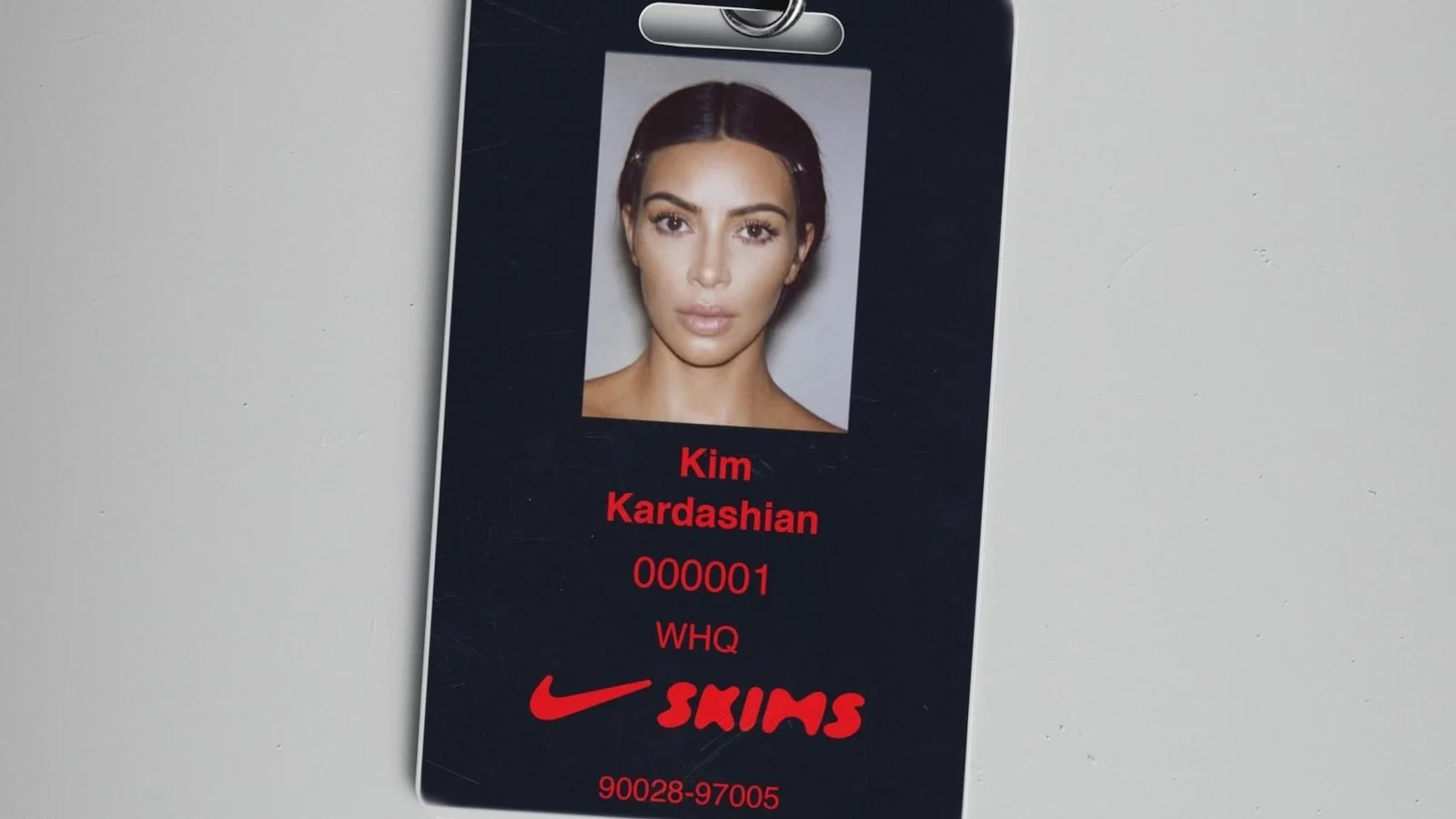
Exhibit A: Nike x Kim Kardashian
Athleticism is diluted into aesthetics.
A brand synonymous with athletic excellence teaming up with a celebrity whose brand is built on shaping beauty standards rather than breaking a sweat. A deal expected to significantly boost the value of Kim Kardashian's shapewear brand, SKIMS, which is already valued at $4 billion.
This isn’t about questioning Kim’s business acumen or Nike’s desire to expand their market share to 6.2% within 24 hours.
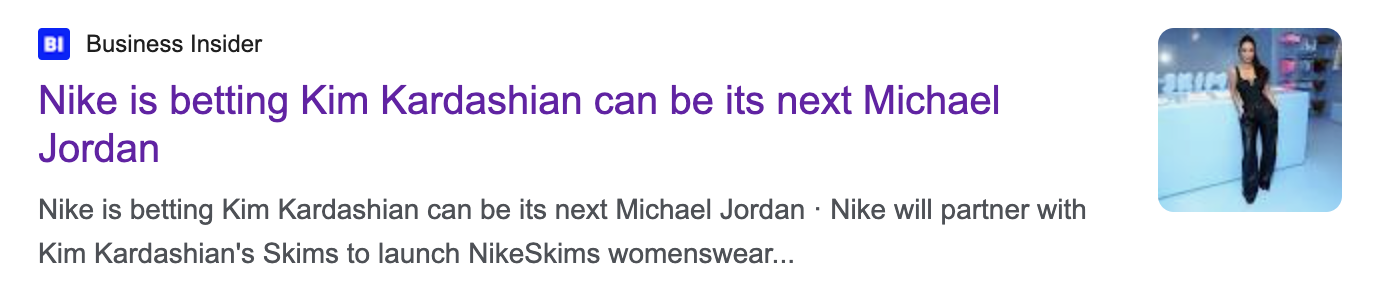
BFFR. Michael Jordan is an athlete, hardly the same Business Insider.
It’s about asking why we keep reaching for these predictable partnerships when there are countless other stories waiting to be told—stories that might not rack up likes as fast but could actually create cultural impact like a Kendrick Lamar. Cause we need it so bad right now!
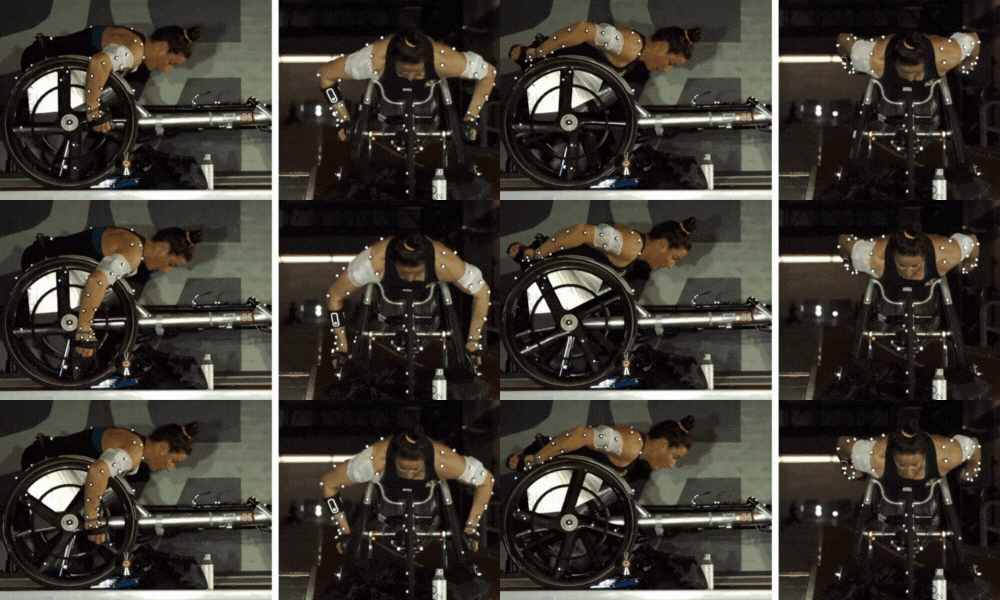
Why not align with unconventional athletes who break the mold of what fitness looks like? Like Tatyana McFadden, a paralympic wheelchair racer and the closest we’re getting to a superhuman.
Why not invest in campaigns that tell the stories of women using sports to challenge societal norms? We see you, Sha’Carri Richardson, a track and field badass who knows her place—IT’S FIRST.
As Nike has done so before. Why are we losing the plot?
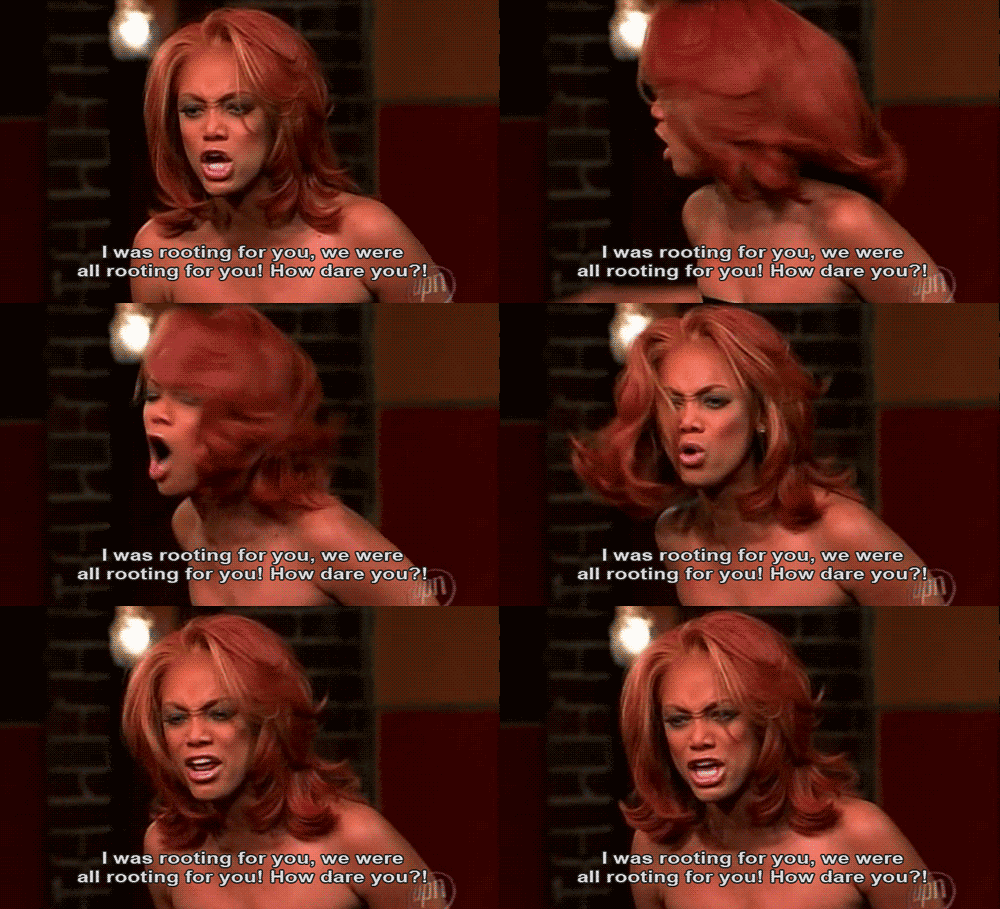
Of course, Kim’s influence is undeniable.
But this is not a shot at one thing.
It’s a firing round at the entire myopic machine. When you boil down marketing to only leveraging someone’s follower count, it becomes solely a transaction.
As I mentioned before, both entities are not short of cash.
This is not a creative brief of inspiration but for Instagrammability.
Marketing has become so dull.
a pandering partnership went sour…*shock-face emoji*
Exhibit A.1: Gymshark x TikTok Star Alix Earle Lawsuit
Alix Earle expressed support for Israel, posting "Now and always, we stand with the people of Israel" on Instagram. Gymshark caught wind of it and dropped the TikTok star faster than a tariff retaliation. Earle, feeling blindsided, filed a lawsuit, claiming the brand owed her $1 million for proposed promotional content, but the brand denied any formal contract ever existed. After some back-and-forth, they settled in court, but the details are hush-hush.
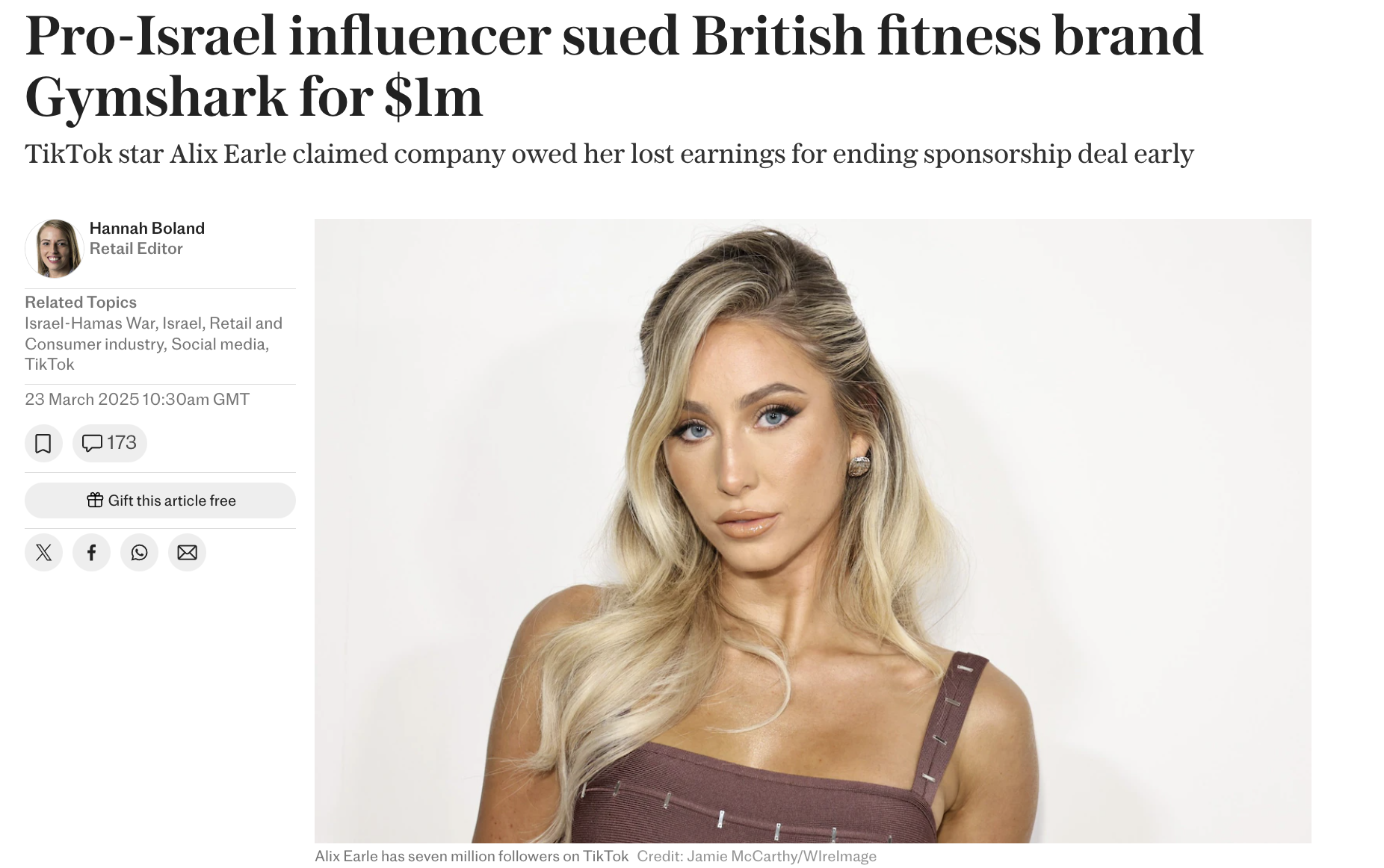
Earle’s over 11 million follower count overshadowed the hollow nature of the brand partnership. When brands know who they’re serving and why it matters, they can spot a misalignment from a mile away. The TikTok streets already knew about her previous racist indiscretions though!
Honestly, I’m impressed Gymshark stood on business and made the correction. But let this be a cautionary tale for brands in their influencer frenzy: Know who you’re partnering with—and more importantly, know why. Because sometimes, chasing clout can leave you catching lawsuits instead.
no heart, no humanity, just budget cuts
This brings me to our obnoxious obsession with ai.
Creativity has been outsourced and used as a crutch to avoid the messy, unpredictable work of creating something uncommon.
Exhibit B: Puma’s ai-generated ad
Puma decided to hand over the reins to the monotone machine—no human oversight, just a bunch of ai agents generating concepts, scripting, and visuals.
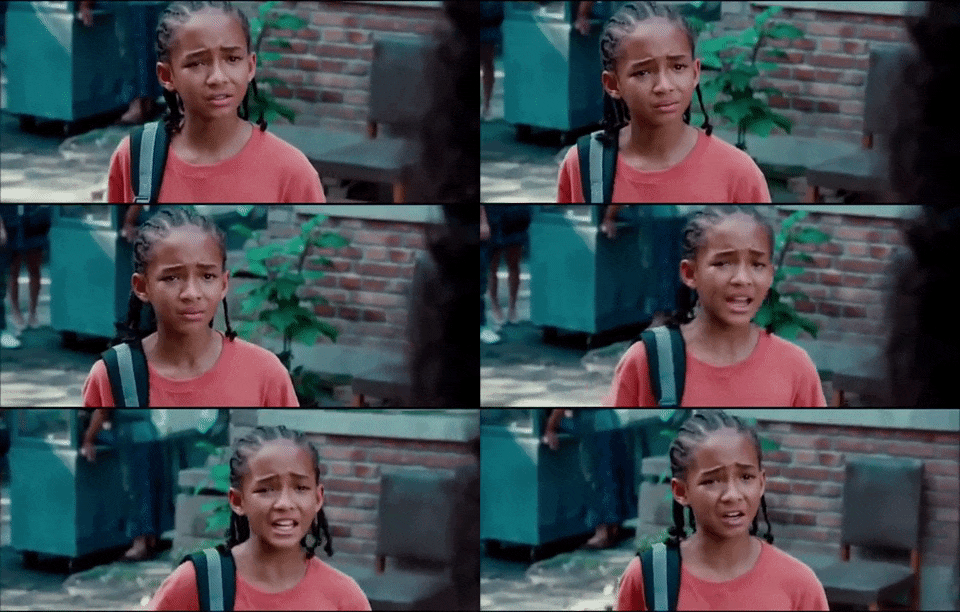
I hate it here.
This is an ad that technically checks all the boxes of “creativity” but lacks the heart and spontaneity of real human storytelling.
It’s efficient, sure. Novel, absolutely. But does it resonate? Hell nah.
The whole thing resembles a Bing search image gallery: copyrighted, formulaic, and ultimately soulless.
I think tf not
The campaign itself was more proof of ai’s technical prowess than an actual cultural moment. Puma isn’t generating a narrative here—they produced a spectacle. The type you gawk at and ask ‘Why?!’
Survey says: there’s a disconnect.
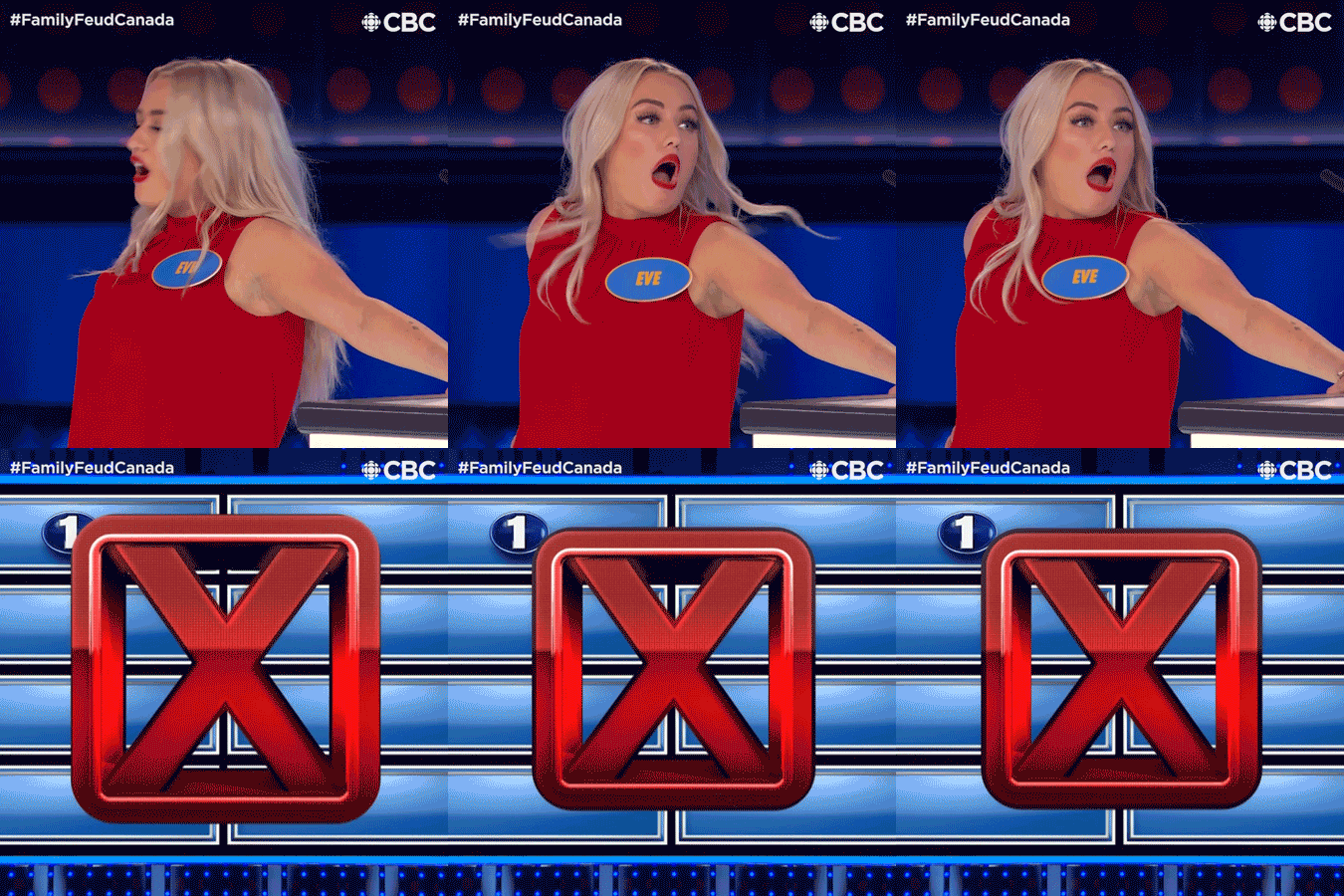
The problem isn’t ai itself. It’s how we’re using it. We’re treating it like an artist rather than the paint brush, leasing creativity rather than investing in it. ai can be an incredible assistant. Something that helps shape ideas, enhance visuals, or predict trends. But when it becomes the entire creative department, fcuk no!
We end up with this. Campaigns that feel manufactured rather than meaningful.
Giving up on the imperfect brilliance of human creativity because we’re too afraid of the unpredictable is a major cop out. The risk of creating something that doesn’t immediately rack up likes or approval feels too great, so instead let the mechanical machine take the fall.
Le sigh.
turns out, everybody cares about the use of ai…*melting face emoji*
Exhibit B.1: Fiverr x ai
What Fiverr was trying to get across was that ai is a powerful tool when paired with talented freelancers on their platform. The catchy musical number, complete with jazz hands and cameos—it was flashy, it was upbeat, and... it fell on deaf ears.
No shots fired at the ad itself—I actually kinda liked it. I even caught myself humming along at one point. But let’s focus here: the real issue is brand positioning. Just because something is creative doesn’t mean it aligns with how your audience views you. Get this wrong, and suddenly, your brand feels like it’s doing a tap dance to save revenue.
Fiverr isn’t exactly synonymous with high-quality content output, so doubling down and essentially saying you also don’t care was...questionable. The desperation of it all.
In a world already cautious of ai’s impact, people want brands to take a stance, not do a song and dance.
human experiences > expected narratives
Because if you’re playing it safe, you’re already losing.
Marketing is starting to feel more like a chore than an adventure. Where's the joy and experimentation?
Exhibit C: Pelle Windows x Missy Elliot “The rain (Supa Dupa Fly)”
Admittedly, I didn’t know anything about this brand or ad until Dr. Marcus Collins posted about it. And it’s what the industry is missing. It’s why I got into marketing in the first place. I mean, outside of becoming the Black Seth Godin to build a purple cow personal brand and never need to pitch myself again.
I got into marketing to tap into the cultural and emotional reverence of the human experience. To elevate the underrepresented and spotlight the underserved. People don’t buy the what—they buy the why.
That’s what was in the marketing syllabus.
And Pella Corporation's latest ad campaign, "Make Life Brighter," is an unexpected departure from traditional window and door marketing.
What is seen as a conventional and often boring industry. This ad was anything but. It wasn't a product ad. It's a connection point—emphasizing the emotional value. It highlighted your home as a place of protection and peace.
Pella released two versions of this ad: a short form and a longer video that’s two minutes (watch the full music video to get the full concept). It reels you into the moment they’ve intentionally cultivated. The campaign has also recently been recognized by Ad Age's Top 5 Creative Ads.
if you’re going to ai—ai with this secret recipe
Exhibit C.1: KFC x ai
By hosting a live taste test and letting consumers weigh in, KFC Canada proved that you just can’t beat the OG. They didn’t just throw ai at the problem and hope nobody could smell the stench of desperation for sales. They made it part of the joy and experiment. ai wasn’t the star of the show—it was the sidekick. The human touch came out on top, exemplifying how you innovate without sacrificing heritage. *chefs kiss*
high-like marketing—ready to risk it?
Marketers, the fear of backlash has killed our hunger for imagination.
The cost of being remarkable is discomfort. The cost of being comfortable is irrelevance.
So we need to get high-like off our own supply.
Nike was playing it safe by partnering with Kim Kardashian. Predictable. Who isn’t partnering with her?! Let’s brand causes, not personas.
And we’ve seen what happens when Puma leased their creativity to ai. Bland. Let’s scale depth, not shortcuts.
Meanwhile, a windows and door company, Pella Corporation. Dared to go against the matrix. And tapped into the heart of the matter: humanity. They saw their windows not as a product but as portals to a brighter life.
Marketers have the power to shift perspectives, shape culture, and disrupt hierarchies.
We should be brave.
If no one’s left to tell real stories, make bold statements, and let creativity bloom, the world loses its voice. High-like marketing isn’t about chasing easy approval. Aim higher and choose courage over the ever-so-played-out complacency.
History needs meaning. And marketers are the right ones to revive it.
Signed,
A marketer making sense of the nonsense online
👋🏾 Soooo…collective illusion is public enemy number one—Don’t Believe The Hype. Every so often, we’ll say the quiet parts out loud (in your inbox). So we can cancel or co-sign marketing or market trends and discern pop culture gems from flops together. And start making sense of the nonsense online.