

17 Lead Magnets That Prove You Don't Need Tricks to Grow Your Email List
Seventeen lead magnet ideas for small businesses, split in two: the ones that earn the email address, and the ones that bring a one-time customer back.
Updated November 2026

Years ago, during Buffer's weekly Twitter chat (do you remember that? Do you remember when X was called Twitter?), they tweeted a chance to win free swag as a thank-you. I gladly obliged, and 3 weeks later I got a handwritten note and branded stickers in the mail.
Who does snail mail anymore? No one.
Quickly. Name one free PDF you downloaded this year. Now name the last business that sent you something after you paid. You remember the one that thanked you, amirite?!
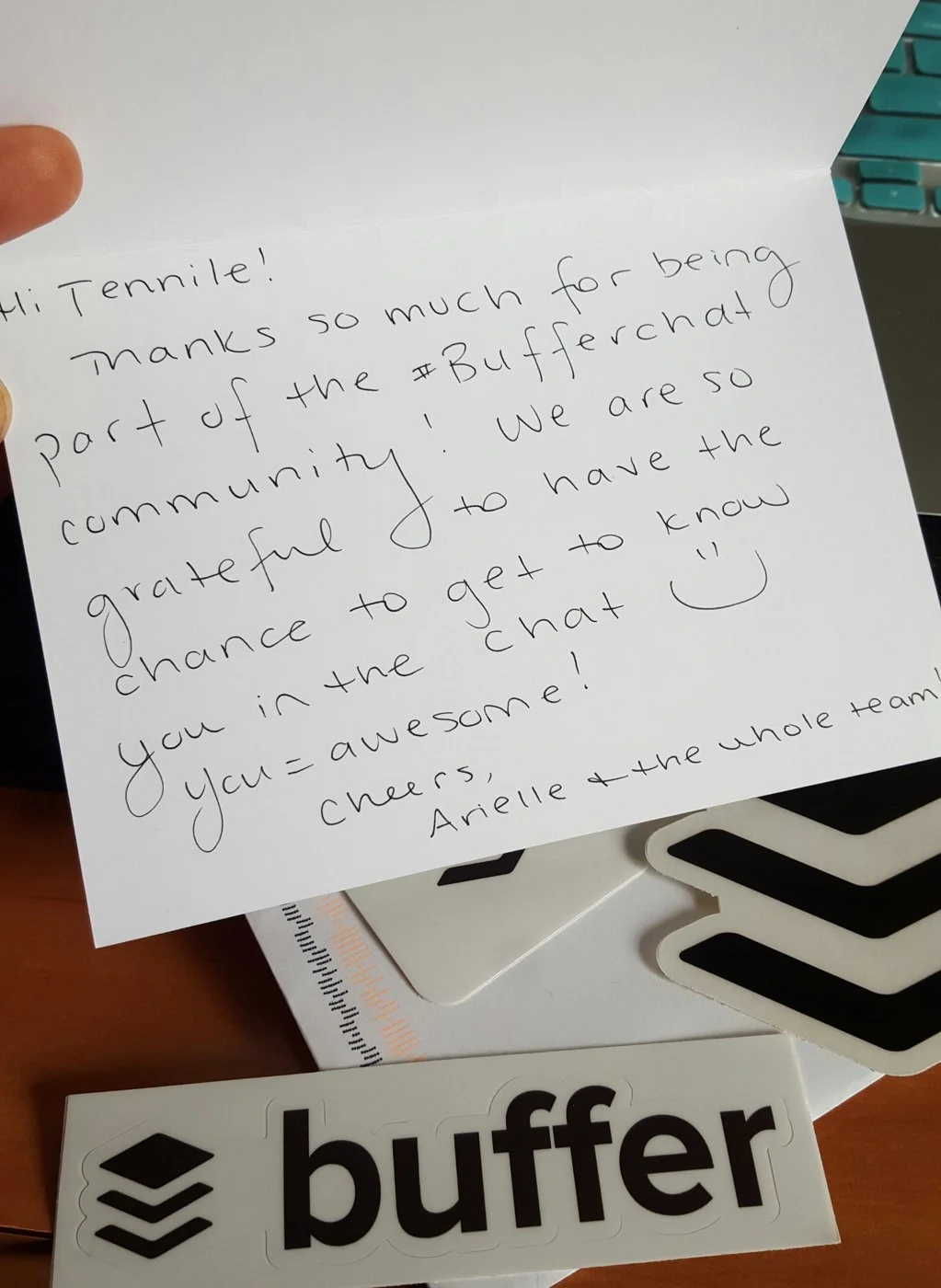
Source: me
There is always some new magic trick on the scene that is supposed to help explode your list-building growth and skyrocket your sales, right? (They even use those exact words too.) From exit pop-ups to a bar that follows you as you scroll the page, and the ongoing debate of a one-click button over forms to fill.
But there is one cold, hard truth that remains. It doesn't matter how sexy you dress up your stuff, or what nip, tuck and stunt you pull to grab eyeballs. Valuable content trumps anything fancy you could ever slip on.
Don't get me wrong. These tactics work… but only when combined with painkiller solutions. The real magic is the unglamorous part: intention, and enough customer research to know which rut your customer would happily trade an email address to get out of.
So here are 17 lead magnet ideas for small businesses that prove the best strategies don't include hocus pocus:
Act 1 earns you the email address and the first sale.
Act 2 earns you the second visit, the repeat order, the regular.
If the term is new: a lead magnet is a small, useful thing you hand over in exchange for permission to land in someone's inbox. A checklist. A quiz. A first-visit offer. Hold on to the word permission. We'll need it later.
How to pick the best lead magnet
Run every idea through three tests before you build it.
It answers a question your customers already ask, in their words. The ones you hear at the counter, in your DMs, in your reviews. If seven people asked it, it's a lead magnet.
It's usable in one sitting. A one-page checklist gets used. A 50-page ebook gets saved to a folder called "Read later".
It points at what you sell. A free colouring page from a plumber is adorable. It books zero drain cleanings.
Act 1: lead magnet ideas that win the first sale
1) A checklist or cheat sheet
One of the easiest lead magnets to create, but you have to make it worthwhile for them to give up the email address. What do you explain so often, you could write the manuscript? Put it on one page: what to bring, what to ask, what to check before they buy. It saves them the overwhelm and saves you from repeating yourself. Best for: any business whose new customers make the same mistake before they find you.
2) A short email course
What have you learned that you can teach? You have 3 clever options: video, audio or email. Drip it out over a week or hand it over all at once. Psst. Word on the street is busy entrepreneurs like it all at once, and when it's a threesome. Best for: businesses where people need to understand the craft before they trust the price.
3) An email challenge
Speaking of challenges… people love a good challenge. What can you teach that's actionable in 3, 5 or 7 days, tops? One small task a day, sent by email. Best for: anything people get better at with practice.
4) A quiz
These are fun. As a kid, I was OBSESSED with getting to know more about me. Who isn't a little narcissistic?? A handful of questions, with the result sent by email. Use a quiz tool that connects to your email platform, so every result lands on a list you own. Best for: businesses with several services or products, where "which one is right for me?" is the question you answer most.
Here's mine: 50 First Bookings, a five-question pulse check on where repeat visits slip away, built with Claude design and connected to Kit. Answer five questions, and you get the dollar figure sitting in your client list, your stuck point and one thing to try this week. The full plan comes by email, and the sign-up box asks before it adds anyone to the newsletter. (Permission, remember?)
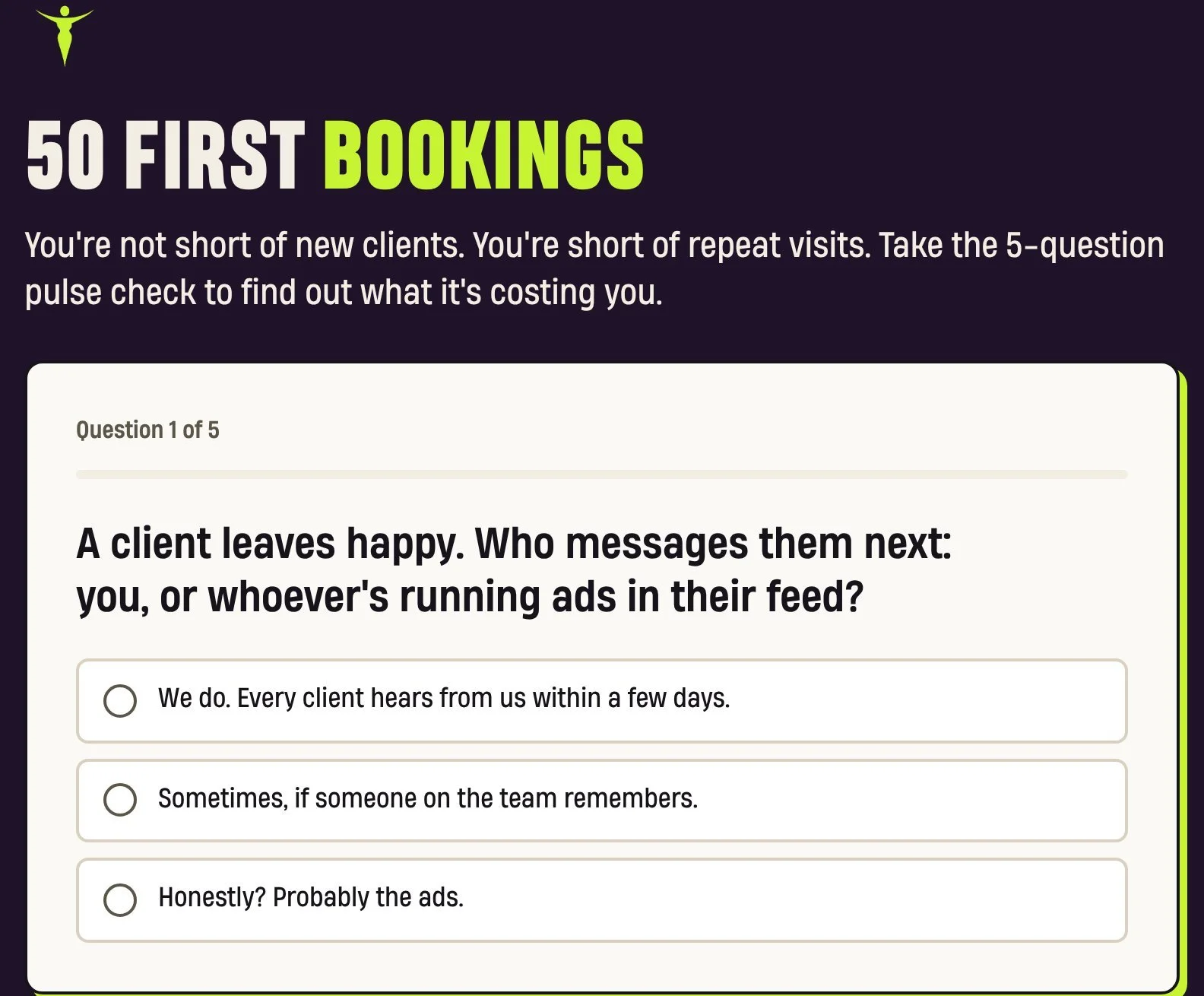
Source: She is Epic quiz
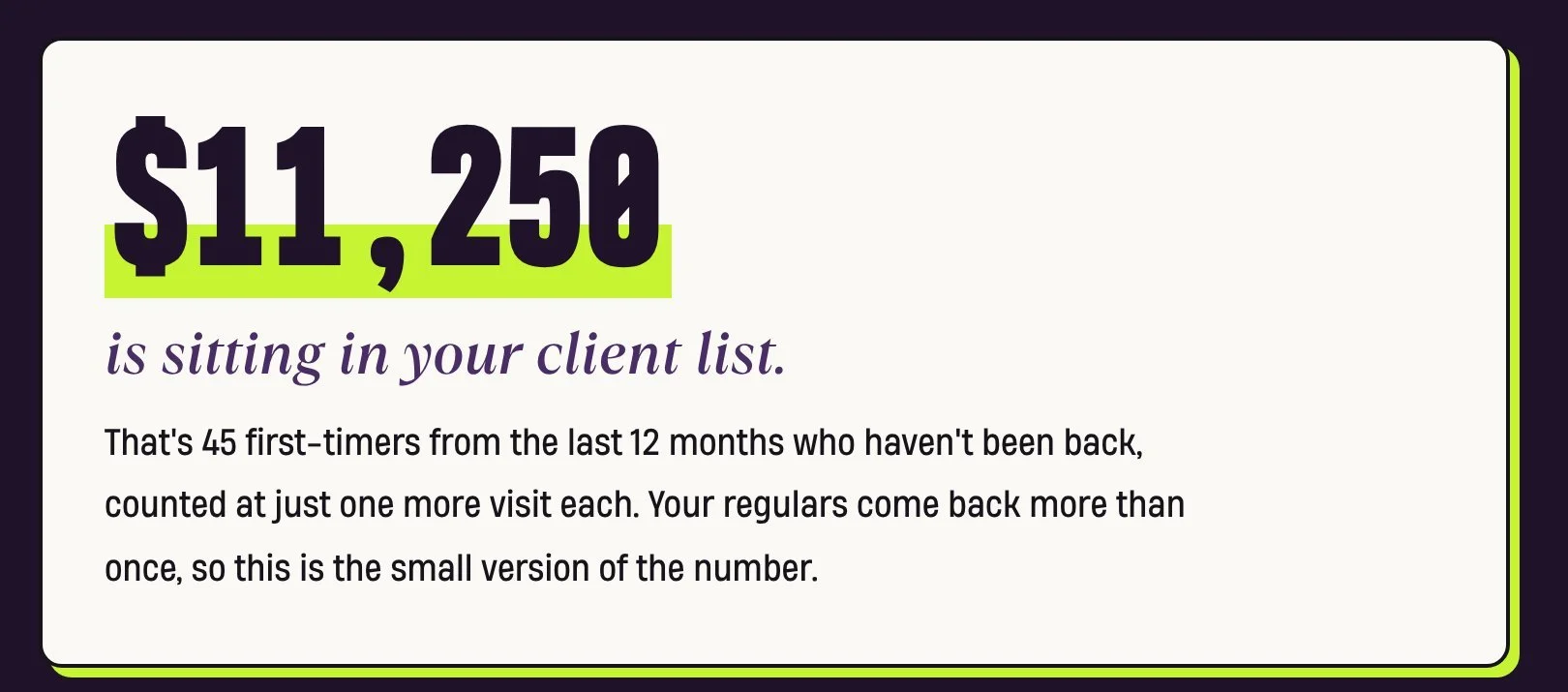
results page
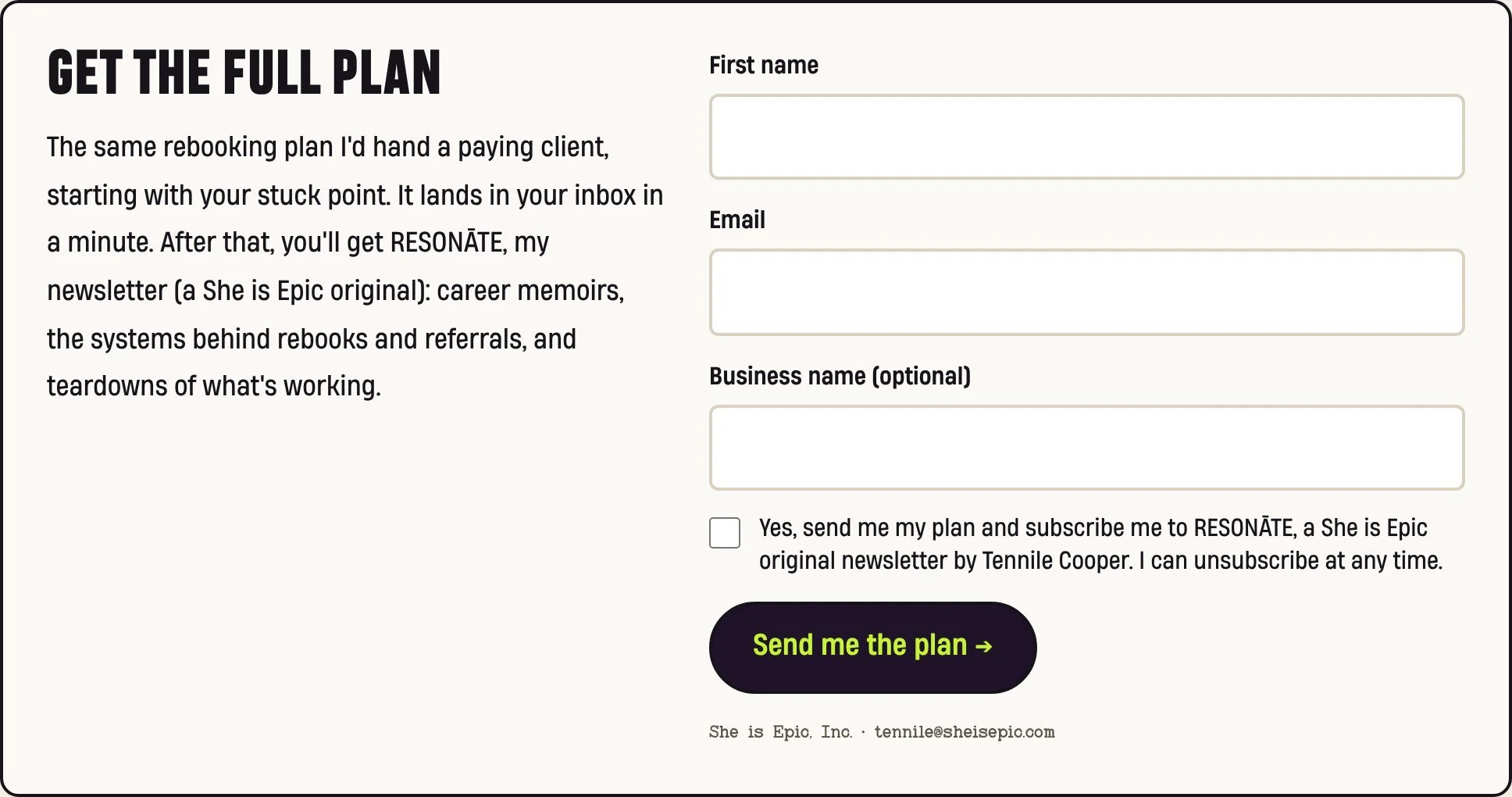
email capture to get the full plan
5) A free quote, estimate, consultation or trial
A number on paper, or a 15-to-30-minute call. Not to give free advice, but to get an opportunity to talk with a live person and see if it's a match made in online heaven. Best for: service businesses where every job is a little different.
Software does the same thing with a free trial. BDOW! (formerly Sumo, now owned by Showit) leads with "Start your free trial" and backs it with a 14-day money-back guarantee, so saying yes feels like no risk at all.
Source: BDOW!
6) A calculator or cost estimator
"How much will this cost me?", answered before they pick up the phone. Best for: businesses whose prices change with size, frequency or scope.
7) A first-timer's guide
What happens on the first visit or the first order: what to bring, how long it takes, what it costs. Best for: businesses whose new customers feel nervous before they walk in.
8) A first-order discount
Coupons can be instant winners: 10% off or free shipping… you get the idea. Highway Robery, a small-batch robe maker in Austin, put a 10%-off offer in a sign-up pop-up and started getting "3, 4, 5 new email addresses a day". Word of caution: discounts can attract deal-seekers who disappear once they redeem. So a Black Friday sale may sound tempting but it trains your audience to wait for the discount. Best for: product businesses with a best-seller people buy again.
Eight Saints makes the new-customer offer feel like a gift: 25% off plus a free Deluxe Discovery Kit and eye gel, a "$119 value" that ships free.
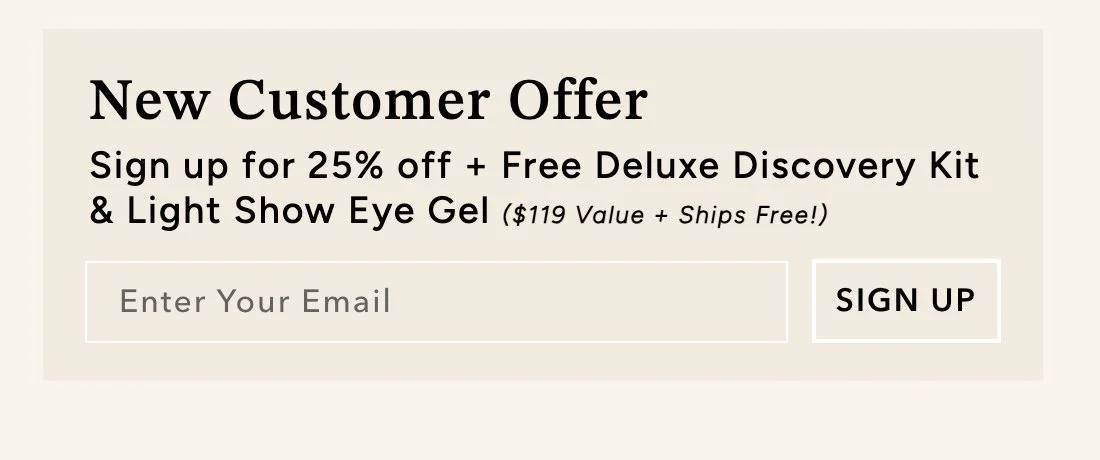
Source: Eight Saints
9) A resource list
The tools, suppliers or apps you'd recommend to a friend. Help your community thrive. They'll thank you for it later. Kinda like this list. (Psst. It's getting a glow-up: a fresh swipe file of lead magnets worth stealing is in the works too. Bookmark this post and check back.) Best for: businesses whose customers keep asking "what do you use?"

10) A short guide or report
Eek! It's not as out of reach as it seems. You may already have one in your arsenal: stitch your last few blog posts, or the questions you answer every week, into a short guide. It's a matter of putting it together in an easier, digestible form. Best for: businesses that know the answers their customers keep googling.
What should you do after someone downloads your lead magnet?
Henry's House of Coffee, a coffee roaster Mailchimp profiled, built the welcome, follow-up and re-engagement emails. It reports its customer retention went from the low teens to an average of 28%. It's an older example, and the system still holds.
Automation scales what you've already mapped out. So map the comeback before you subscribe to another tool.
The freebie earns the address. The follow-up earns the regular.
Act 2: lead magnets that bring customers back
These are for people who already paid you once. Each one hands them a reason to come back. Send only to people who opted in, or who bought from you in the last two years. And every message should name your business and carry an unsubscribe link.
11) A rebooking reminder
For appointment businesses: a message timed to when they're due again. Booking tools like Fresha have a "reminder to rebook" built in. Check yours. It may already be sitting there, switched off.
12) A "your next order" email
For product businesses: ask how the last one went, then shrink reordering to one click. Henry's follow-up emails ask customers to rate and reorder, and its 14-email product follow-up series has made $1,539.
13) A "when to come back" calendar
The classic calendar lead magnet, aimed at the customers you already have: when to reorder, re-service or rebook. Printable, or a calendar invite they can save. Make it one of those eyegasms they tape up on the office wall (or admire on the refrigerator).

lead magnet ideas
14) Customer-only perks
Cheese Grotto sends members monthly emails with exclusive discounts and early access through the email provider's best-customers automation. The members-only club is the one they've already paid to join. Give your regulars a peek behind the great OZ curtain.
Eight Saints runs an exclusive Facebook group where customers see before-and-after photos, ask other customers questions and get new products and sales before anyone else. That's the one kind of Facebook group that earns a spot here: it's for people who already bought.
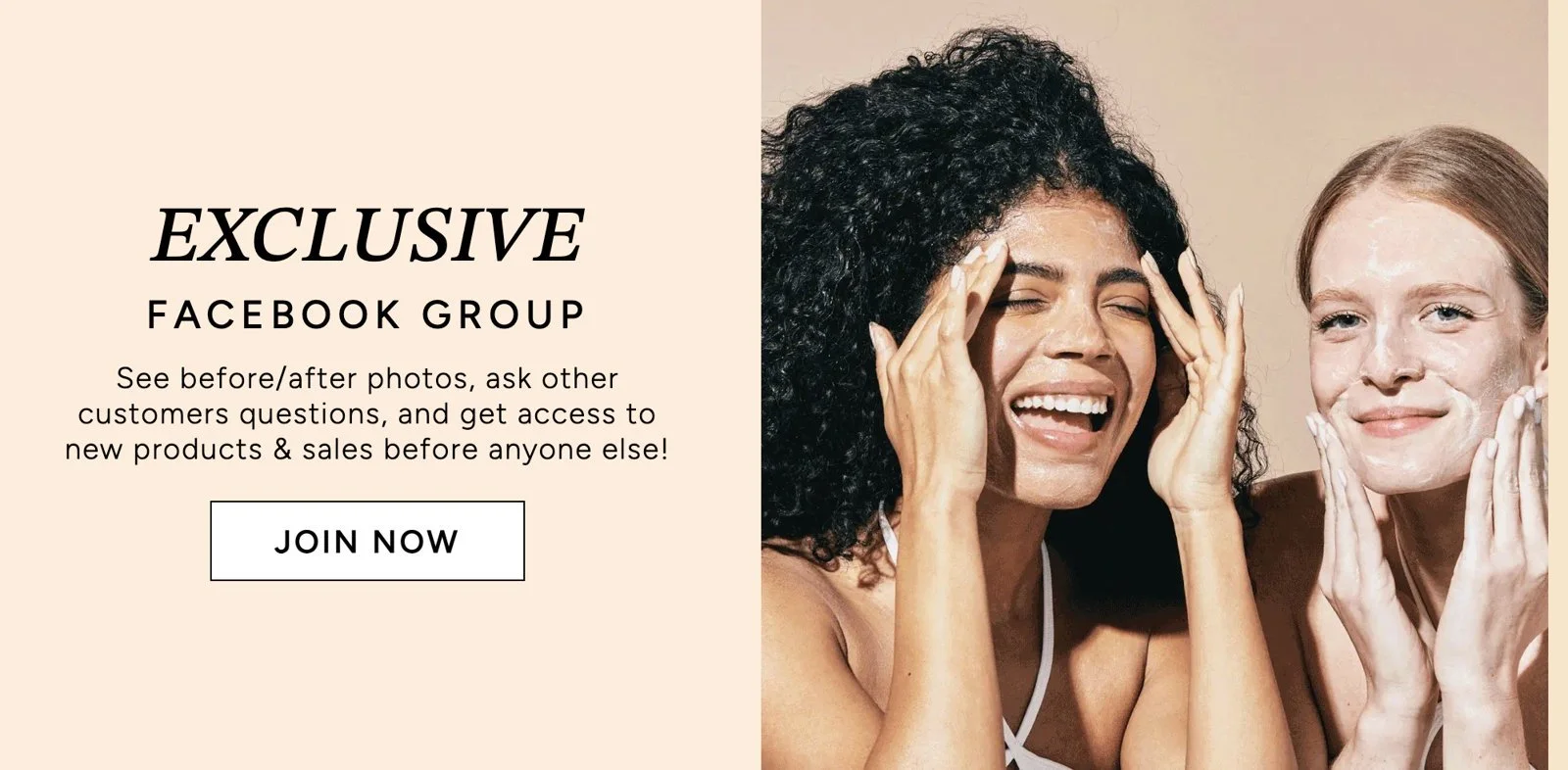
Source: Eight Saints
15) A win-back offer
For the customer who went quiet. Henry's separate two-email re-engagement series, sent to customers who hadn't bought in a while, made $1,466 in seven months. Two emails.
16) A thank-you in the mail
Back to Buffer. For years, Buffer sent handwritten cards, usually with stickers, 40 to 60 packages a week, with stickers costing 28 to 56 cents each. The chat I joined retired in 2018. The lesson didn't. A handwritten note after a first purchase costs a stamp and a pen. Now, that's how you cut through the noise.

Source: Buffer on Twitter (X)
17) A birthday or milestone message
A note on their birthday, or on the anniversary of their first visit. Fresha builds this one in too.
BONUS A pledge
This is totally left field, and I love it! Get your readers involved and have them take a pledge. Ash Ambirge of The Middle Finger Project had readers sign their first name and email to a vow, then hit "Pledge vow."
It works for any business that asks people to commit. A Pilates studio could have new clients pledge to the future version of themselves (revenge body and all). It makes it real, because it's a pledge to yourself. And the email address is the signature.
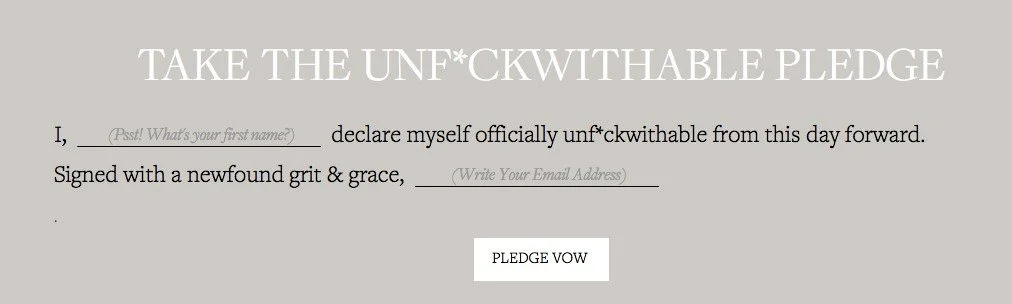
Source: Ash Ambirge
Do this this week
List every customer who bought or visited once and never came back. Pick one Act 2 idea and build one comeback message: a rebooking reminder or a "your next order" email. Send it only to people you have consent for. Under Canada's anti-spam law (CASL), a purchase in the last two years counts as implied consent; everyone else needs to have opted in.
A handwritten note. A rebooking reminder. Two emails to the customer who went quiet. Nobody remembers the PDF.
[ the master plan ]
What lead magnet ideas work for a small business?
The ones that answer a question customers ask, take one sitting and point at what you sell: a checklist, a quiz, a free quote. Then build the second act most lists skip: a rebooking reminder, a "your next order" email or a win-back offer, sent only to people who agreed to hear from you. Henry's House of Coffee reported retention climbing from the low teens to 28% after adding follow-ups.

4 Platforms to Leverage, When You're Time Poor & Want to Make an Impact (Tout Suite)
If you've been at this for awhile, then I'm sure you have been told posting in Facebook groups is a surefire way to get clients?
Or, if you're not posting 3 times a day (on social media) ---nobody will know you exist?
AND...you're not about to pay to play using Facebook ads (more about this another time).

Get The Audio Sysnopsis or Read On:
Finding the best platform to sell online is like digging for gold without a shovel.
Your hands get filthy and you tire yourself out before uncovering the nuggets.
If you've been at this for awhile, then I'm sure you have been told posting in Facebook groups is a surefire way to get clients?
Or, if you're not posting 3 times a day (on social media) ---nobody will know you exist?
AND...you're not about to pay to play using Facebook ads (more about this another time).
That's one way to go about it...
But I grew weary of it quick!

If you're anything like Naomi me...a social introvert that has a packed schedule of --LIFE. And only want to speak on the things that add value, not waste time.
Here are 4 platforms (other than Facebook) to leverage, when you're time poor and want to make an impact --tout suite (that's french for fast).
Brushing up on a 2nd language I've never used before this.
1. Twitter
This has become my new playground.
For a couple of reasons. [1] Lead Cards:(Jen Lehner has a great graphic on this). It's a way to capture your followers email...for FREE, in one click. Use it, just as you would a regular tweet. [2] Twitter Chats: participating once a week for an hour, can really boost connections quickly and most importantly authentically.
A Few of My Favorite Chats:
@soasidehustler #SideHustleChat Every Tuesday @ 8pm est.
@2MovesAhead #HERmovementEvery Tuesday @ 9pm est.
@Buffer #BufferChat Every Wednesday @ 12pm est.
@_MYCC #blkcreatives Every 2nd Monday of the month @ 9pm est.
@ChelseaKrost #MillenialTalk Every Tuesday @ 8pm est.
@BizGalz #BizGalz Every Monday @ 1pm est.
@melcoach #SpeakerChat Every Tuesday @ 7pm est.
@BrandChat #BrandChat Every Wednesday 11am est.
@KateNasser #PeoplesSkills Every Sunday @ 10am est.
@natejturner #BeIntentional Every Sunday @ 9pm est.
Introduce yourself in new chats using this format:
Hi, new to #twitterchatname! I [what you do] @ [name of biz] for [target audience] to [how you help].

(try to stay within 140 characters)
2. Instagram

I haven't quite mastered Instagram and I don't really know if it's the best platform for a service-based business. But as a product-based business, you should invest some of your sweet precious time here. Research & use hashtags in your industry, post at least once a day and get featured on an account with higher followers than yours. This will get you in front of your audience quick.
If you're not the best at writing lengthy blog posts, treat Instagram as a blogging platform to share your story on the go. Here's a picture guide of a super easy way to write your Insta bio + captivating captions.
And here's a great resource that slay's the game of growing your Instagram followers.
3. LinkedIn

This is the best space for B2B marketing (Business to Business). Decision makers mostly hang out here and if you've gained 500+ in connections, I certainly hope you have claimed your authorship rights. With every newly published post, your connections get notified and you stay on their radar. If you're still growing your LinkedIn following, this could help.
Be sure to have a call-to-action at the end of each post (what your readers should do next).
4. Email
This actually should be #1 but for emphasis, I saved it for last.
Email is by far the best space to leverage. You can speak directly to those who have taken an interest in your business. No frills, no fanciness and no hashtag lurkers in your convo.
- Reach out to people/businesses you'd love to work with...
- Extend your services to previous clients & see how you can help...
- Keep your email list in the loop of what you're working on...
Most often, it only takes one well-crafted email to make an impact.

Name a platform you're leveraging + drop the link to it in the comments below.

Why It's Probably Time to Unsubscribe The Squatters Yourself

3 weeks ago, I unsubscribed 1/3 of my mailing list.
And later on, I'll give you 5 reasons why you should do the same (let go of inactive subscribers).
0.25% is the average that will unsubscribe themselves without being prompted. (Source) 0.25%!! Some subscribers will potty-squat forever, see your emails and never open them. It's up to you to start the conversation and find out if you're still the right fit for one another. (Your brand, direction & vision).
Now, I didn't have a massive list. I was in the low 100's and it still didn't stop me from removing inactive subscribers.
Maybe the opt-in freebie I offered didn't align with what I do regularly.
Maybe they lost interest and their priorities changed.
Or maybe, all my emails were hitting their spam folder (or in an unroll.me digest).
Who knows really...
Whatever the reason, I'm not paying for it anymore.
A low open rate means lower engagement. Now, I'm not caught up in list sizes. It does nothing for my ego. I'm more concerned about connection and co-creating, especially when I choose to work with 3 client projects/month. And I can't do either of those things with a sleeping list, massive or pint-size.
Depending on where you're at in your business, determines where you place the most focus & attention.
Engagement or list building?
Do you sell more products? Then you may need to focus on list building strategies. Do you offer boutique services (like me)? Engagement should drive you.
Both are necessary to reach your audience, so balance is essential.
Email conversion rates are three times higher than social media, with a 17% higher value in the conversion. (Source) Mailing lists are still the best way to acquire new clients BUT they have to be opening your thought-provoking emails to know you exist.
REVIVING THE DEAD (subscribers)!
If I ever intend to grow beyond the low 100's...I needed to re-engage the inactive subscribers and pull in more raving readers.
My mission is to reach the ears of those who have a message.
I did the first option and sent out this email, Subject: Are we breaking up?

And a second follow-up email afterwards.
I was able to re-engage 5% and the rest, 3 stars and under were selected and unsubscribed by me.

Keep in mind, the third of the people (on my mailing list) who received this email have not opened the last 10 campaigns sent to them. I send weekly emails. That's 10 weeks of not caring about what I poured my soul into.
No bueno.
How to sniff out the squatters on MailChimp.

Step One: Head over to Lists, select the mailing list with the in active subscribers
Step Two: Click Manage Subscribers
Step Three: Click Segment
Step Four: Hit Create Segment
Step Five: Make sure Subscribers match ALL
of the following conditions
- From there you determine the date added before a specific campaign was sent
- Campaign activity did not open the last 5, 10, 20 campaigns or other suited criteria
- I also chose to insert member rating, as it determines the average amount of opens and clicks from subscribed date
The next step was to pull in raving readers.
So that meant I had to create a superfly opt-in freebie. Enter, 35 Buzzwords to Smoking Hot Copy...
Guess what!
The 1/3 of the list I unsubscribed --got replaced instantly. I swear every time someone unsubscribes from my list I get 2 more in return.
OK, now...
5 reasons why it's probably time to unsubscribe the squatters yourself:

1) Inactive Subscribers Breed Dead Lists
If they're not reading your stuff, they can't get to know you and the services you offer. Therefore, can't buy nada.
2) You're Paying For Their Unoccupied Seat at the Table
Financially: if you have a paid account, every time you send an email to someone who will never open it --you're losing money.
Energetically: they are filling a space that could be saved for someone who would actually show up to eat, be merry and bring a dish to the dinner party.
3) It Pushes You to Add Real Value
This allows you to re-evaluate the content you share and offer your readers on a gold nugget level.
4) It's Fcuking Liberating
Bye-Felicia
5) You Get to Have Real Relationships
Since I dropped the dead weight, I was able to re-engage with you and new readers on a more intimate level. And it feels amazing! I hope you're feeling it too. If not, hit me up and let's fix that!
This might just be the best thing that could ever happen & grow your business considerably (it was for me).
Here's your assignment: Comment below. How active is your mailing list and what freebie will you create to pump it up?

Why They're Scrolling Past Your Headline
[ short answer ]
How do you write a headline people will click?
A headline's only job is to get people to read the next line. Say what's in it for the reader, speak to one specific person and problem, use their language, state the benefit, and show your authority. Three formats that work are the how-to, the testimonial, and the reason-why. Best of all, answer the question already on your audience's mind.

...because they're bored to tears.
The most effective way to swing necks on your timeline is with your headline.
You know that line of text people read before anything else? Like, the title of your recent blog post. Yea, that.
Get this right...and you got them reading the 1st line...then maybe the 2nd and before they know it...they've read the whole shebang!
Giving you the best opportunity to tease a click on your call-to-action.
Now, this is no easy feat. Foreplay never is.
You're in competition for your audience's attention. And all though I hate to use the word competition...because really, there is none if you're being authentic.
You are up against 25+ opened browser tabs, TV playing in the background, dinner menu options running through the brain and an uncontrollable scrolling enigma for Facebook.
Major publications or any business that takes writing headline's seriously; craft a-shit-ton of headline options before crowning LE ONE.
Do you know how heavy a-shit-ton of headlines are?
Enough to pull an eyebrow muscle from all the serious brainstorming. Don't think, it will get any easier with your email subject lines. They require just as many push-ups, jumping jacks and burpee routine to get opened and read. (Someone is back on her fitness).
"So, get to it Tennile...WTF!? How am I supposed to pin down a headline so that they stand at attention?"
Glad you asked nicely.
Before I share with you, my go-to flirt & flaunt headline eye-snatchers. This can be used with any of your sales letters, landing pages, articles, and social media posts.
I purposely left out email subject lines because it's a totally different beast. On another post, I'll share the subject lines that got me the most open's (and unsubscribe's).
Back to the task at hand...
The headline's job is to get them reading the next line, and the next line's job is to get them reading the next line.
The whole snowball effect. You still with me?

It's kind-of-a big deal.
So I dedicated a whole post on it. And because I follow you on social media, here's my nudge to tweak your own stuff. Remember, I got you!
The flirt & flaunt headline eye-snatcher of captivating your audience and clutching their attention:
1) Get Her To Notice You
Quickly share, what’s in it for her. What's the "big idea" you're communicating and whyyy...should she care??
2) Be Picky
Speak directly to her pressing problem. You want to be picky with who you direct your headline to. What's for her, isn't for Samantha. Zone in on her & on one thing that could help her slay.
3) Be Seductive
It's quite alright to lead her on. Use words & phrases that appeal to her, you want her to know this is strictly for her. So entice her to keep reading on...
My "Why Having a Platform is the Biggest Stage for Your Business (Learn from Bey)" is a great example. I was catering to Beyonce fans who run their own business.
4) Go All In
What's the benefit if she clicks? Tell her. Don't be shy here. Clearly, state why she needs you, she just doesn't know it yet.
5) Show Some Leg
Let her know, you're not new to this. You're an authority in your niche. And will whip out the silky smooth good lotion leg, if need be.
Using the 5 techniques above, swipe my 3 go-to headlines to reel her in (all real examples):
The "How-To" Headline:
These work best when there is a clear benefit involved.
ex. "How To Land The Guest Post On Large Publications In 3 Painless Steps." --
"How to Edit Your Web Copy to Sound Like You Hired a Copywriter."
The Testimonial Headline:
People are usually skeptical. Especially when new online businesses are popping up all over the place. *pop* *pop* *pop* So why not establish your credibility from the get-go. Let her know, "This person already loved my stuff".
ex. "Everything you write is what I’ve been preaching to others and getting the crazy look." -- "You made a huge impact on my thinking (and site)."
FYI: Best for social media & sales letter text. Using article headline's on Twitter, are not as effective as Quotables or words out of someone else's mouth.
The "Reason Why" Headline:
This outlines specific reasons why she should consider what you're offering after the click and creates a little curiosity.
ex. "Why You Should Wear the Same Thing to Work Every Day." -- "27 Skills Every Entrepreneur Needs Now."
*Remember to include, when possible to [tie it to a benefit] + [end desire goal] for your reader.
Here's the big picture about headlines...and this is a mind shift, I promise you this!
The main motive of your headline is to join the conversation your audience is already having in their head.
Unanswered questions, things they've been pondering, and topics they've been chatting about --all up in your social media feed!!
This is the reason 99.9% of these Wednesday newsletters are done the night before. Everything I witness in my social media interactions goes into a post and I stick in my expertise.
This could be the difference in a headline getting clicked and read. Over one scrolled past.
Pay attention and listen. Then answer them in your headline.

How to Edit Your Web Copy to Sound Like You Hired a Copywriter
[ short answer ]
How do you edit your own web copy so it sounds professional?
Follow seven steps. Read it out loud. Record yourself explaining it to a friend. Cut wordy phrases. Make it snappy with contractions and shorter sentences. Reword anything flat or repetitive. Tighten each draft so every sentence builds on the last. Then delete any sentence that still doesn't make sense. If you have to re-read a line, your reader will too.

Putting words on the page can be an easy process, depending on who you talk to.
Editing your web copy, on the other hand, can be very painful for anyone! There is an art to articulating your thoughts, so it not only expresses your ideas but people get it too.
Why am I sharing this intel??...because sometimes our passion gets lost in translation and some of your copy -- YOU can fix. And in those awkward moments, your genius will reveal itself.
Below are 7 editor's intel to writing web copy, you can follow (and I use), Pitch Perfect edition.

1. Read it Out Loud
The first step to checking & catching awkward writing is to read it out loud.
Your ear can pick it up better than your eye. Here's a free tool that will read it for you. You're 3x more likely to catch what you previously overlooked. It will expose messy word order, which could potentially confuse the hell out of your readers.
If you had to re-read it a few times yourself, chances are --your reader will too. This interrupts the flow and distracts from the point you're trying to make.
You want them to get it, not get lost.
2. Record Yourself
One of the best ways to capture your natural voice and insert only high impact words into your copy.
Whip out your cell phone's video or audio recorder and say what you want to say but address it to a friend. You're less likely to sound "salesy", preachy or pretentious. (Unless your relationship is set-up that way...)
Aim for a regular conversation between humans.

3. Axe The Wordy Words
The vagueness of your last sentence left me at the corner of "What!?" and "Huh??".
Here are some awkward examples (taken from the web):
Awkward: Taking life a day at a time is how I think it should be done to be happy.
Fixed it: Take life one day at a time, you may be better off!
Awkward: Each and every one of the readers of Business Insider wrote a comment on the last blog post.
Fixed it: All of Business Insider readers commented on the last post
Awkward: It is important to effect the verbalization of concepts through the utilization of unsophisticated terminology.
Fixed it: No need to use fancy words, say what you mean.
Effective writing avoids inflated language. Inflated language is puffed-up and overcomplicated. Speak naturally.
4. Make it Snappy
Remove every unnecessary word, phrase, and/or sentence.
When you're trying to explain something, less is more. Use contractions (ex. You're vs. You are, Don't vs. Do not) and shorten sentences wherever you can.
What's the point of your content? To entertain, excite or educate? Keep the main point in the back of your mind and get to it.
The first round could be awkward and confusing, while the second re-write may be clearer, straight to the point, and sliced in half.
Yes, you can do it!
5. Re-Word it
Almost every sentence can be worded a hundred different ways, but as the author, your job is to find the best, yet clearest, wording.
Avoid using a flat voice (void of personality), randomness and any repetitive themes.
For example:
"Some of the best times I've had were in my home with my family and friends. I carry those memories in my heart. I invite you to explore this site, which is a reflection of my heart. I invite you to make this your home.
Start your day here with prayers and affirmations. Replenish your spirit with music and meditations. Meet the people and participate in the processes that I hold dear to my heart. Let's do the work together to support our individual growth and the evolution of human consciousness.
Your presence here is essential. Visit me here often and tweet me about your experience. If there is anything else I can do to make our home a better place, please let me know."
Let’s re-word it:
"Some of the best times in my home were with family and friends. I carry those memories in my heart. I invite you to explore this site, as a reflection of those warm experiences. I also invite you to make this your home.
Start your day here with prayers and affirmations. Replenish your spirit with music and meditations. Meet the people and participate in these processes, I hold dear. Let's do the work together to support our individual growth and the evolution of human consciousness.
Your presence here is essential. Visit often and tweet me your experiences. If there is anything I can do to make our home a better space, please let me know."
Taken from Iyanla Vanzant's Website.
Removing a few words and re-working the repetitiveness of "heart" in the different sentences, allowed for greater reader penetration (flow).

6. Tighten it Up
It’s meant to fix any leftover awkwardness in the second or third draft.
It's the difference between having a bunch of mediocre sentences OR sentences that build upon each other to illustrate exactly what you intend.
The best writing creates a build-up and flows --in each sentence written.
Here are 11 raw & honest quotes from the most legendary writers on inspirational writing (class is in session).
“The idea is to write it so that people hear it and it slides through the brain and goes straight to the heart.” - Maya Angelou
"It is perfectly okay to write garbage—as long as you edit brilliantly." – C. J. Cherryh
"Not that the story need be long, but it will take a long while to make it short." – Henry David Thoreau
"A blank piece of paper is God’s way of telling us how hard it to be God." – Sidney Sheldon
"I have been successful probably because I have always realized that I knew nothing about writing and have merely tried to tell an interesting story entertainingly." – Edgar Rice Burroughs
"Words are a lens to focus one’s mind." - Ayn Rand
"Half my life is an act of revision." – John Irving
"Don’t try to figure out what other people want to hear from you; figure out what you have to say. It’s the one and only thing you have to offer." – Barbara Kingsolver
"All the words I use in my stories can be found in the dictionary—it’s just a matter of arranging them into the right sentences." – Somerset Maugham
"If you write one story, it may be bad; if you write a hundred, you have the odds in your favor." – Edgar Rice Burroughs
"My own experience is that once a story has been written, one has to cross out the beginning and the end. It is there that we authors do most of our lying." – Anton Chekhov
7. Delete it
Sometimes, there’s nothing you can do with an awkward sentence.
Staring at it for hours, re-writing it 242 times, and asking your partner after each revision, "Does this make sense?". It’s time to ask yourself: "Does this make sense?!" It might just need to be deleted.
If it’s not necessary and plain ol' confusing, it’s okay to let it go.
There is a sense of freedom that comes from just scrapping it all together and starting from the top...or hire an editor.

* I’ve put together the exact words you should say when a client’s invoice has gone beyond your mortgage due date, the words that get trapped when you’re at the follow-up pitch stage and how to respond when someone questions your expertise or why you’re better than *insert so-and-so name*.

Why Having a Platform is the Biggest Stage for Your Business (Learn from Bey)
7 Ways to Slay: Rule #1 Capture your audience's attention prior to releasing a paid service/product

Were you witness to the events of this past weekend??
I'm still coming off my high (actually, I think I'm going to stay up here).
She dropped a video, performed at the Superbowl and sold out her world tour in 38 minutes. If you haven't already guess it...
I'm talking about the slay-queen, Beyonce.
If you're not a Beyonce fan stop reading right now if you want to.
HOWEVER, you don't have to be a part of her Beyhive or be a Bey fanatic to respect her hustle. And her hustle is something to be admired.
Now that that's out the way...
We can carry on to why this is legendary and how you can mimic her slayage.

Here's a brief recap (if you were hiding under a boulder):
Her Instagram: After 10 weeks of silence she directed every follower to her website to watch her new video.
Her Video: Released the night before her Superbowl concert. It was a piece of art, filled with powerful imagery and a message that covered Katrina, police brutality, Afros, baby hairs, Red Lobster, braids, and hot sauce. (Not linking the video, stay focus)
Her Performance: Effortlessly executed.
Her World Tour: Just went on sale and already sold out.
What can we learn from Beyonce's 2-day promo?
7 Ways to Slay:
1. Capture your audience's attention prior to releasing a paid service/product
Social media is a mighty tool (and free). When used cleverly, you can capture the attention of those who should see your greatness --before they know they need you. Your email list, blogging, industry groups, and your Fan page are all places to make some noise too.
2. Be unapologetic of how skillfully savvy you are about your craft
No hemming or hawing. Know your stuff. Know that you can't half-ass it. Push yourself further every time you produce something. And promote yourself like you're the last (insert title here) standing.
Repeat after me: "You need what I'm about to serve."
3. Release something you know your audience is currently struggling with
I've said this before, somewhere written in another post. Pressing problems over pain points. People only buy, what they currently need. Your role is to provide the antidote. (Beyonce knew, I needed to be revived & given life this week. She supplied my urgent prayer). Yasssssssss.
4. Being yourself ( x10) works out...extremely well
It eliminates the fence-sitters, who are not sure they need you but only hang around to see what you offer for free. Always, add your voice to the things you write. It carves out what's uncommon about you and builds raving supporters.
5. Stand for something and powerfully state your position
Tie your voice to the values and the things you care about. There's a potential your audience cares about those things too. And it will most likely, bring you both closer together. People buy from brands they like or have similar values.
6. The more niche down, the better you can sell a product
When you know what your audience gripes about to their closest confidant over the phone. You also know their thoughts, fears, and conversations they have with only their inner circle. You're better equipped to create a product that gives them something to brag about instead.
That’s when they feel like "You really get who I want to be!"
7. A Mission-Driven Message
Nothing is more powerful than having a strong message —it's hard to ignore. Then embody it in everything you do. The way you interact online, how you onboard, you write, your 1:1 calls, your coaching, how you speak or what you create.
Your mission-driven message should flow through every facet of your business.
Cultivating a platform is as easy as creating the kind of content people care about.
And consistently putting out insightful pieces of work —that not only helps them solve their deepest pain but helps them slay!

11 Uncommon Ways to Learn How to Write Stronger (#9 is Really Left Field)

Without a doubt, my writing has grown since I first started my biz. And without intentionally deciding I was going to do these 11 things. I found that it significantly strengthened my writing.
Give it up...for happy coincidences.

1. Re-write Your Blog Posts
I can't tell you how many times, I've gone back and read a previously written piece and be like;
"OMG! this is dreadful. I certainly hope this didn't get any views."
(meanwhile 344 views later)
Either I misused or missed a word, said "so" excessively, or I was being too "proper" in my writing. I really hate when articles lack personality and the writer is trying to sound like something they're not. (Avoid these errors.) It takes time, to really step into your writing and own your stuff but don't be afraid to.
That is where the magic happens. Your money shot. The Je ne sais quoi! Where... "insert a silly cliche here". Couple months down the line, I'm probably going to shudder at this post too.
2. Write for Another Media Outlet
When I started blogging for bigger named publications, it was purely for selfish reasons. I wanted my name in the byline. (The little line of text at the end of an article. Usually referred to as a bio.)

I did it for applause & accolades.
How vain right?
But if I'm being honest, it may have been a vain goal of mine but it worked!
My writing got on several big name platforms and then I was held to a higher standard of writing. I had timelines, format, style, sound and editing requirements to adhere to. It forced me to take a look at my writing from an editor's point of view, especially when, my business is about writing other people's stuff!
Creative writing is great but not without some structure. A point. A goal. Which every piece you write --should have it.
3. Pull Inspiration Out of Thin Air
There are a lot of moans and groans from people who can't write, unless inspired...

I think this is absurd.
There are a lot of things in life we do, and we don't wait to be inspired to do it.
Taking out the trash, washing dishes, folding laundry, making dinner, taking care of another human being. None of those things inspire you to want to get up and do it...
So what's your motivation?
Why not wait for inspiration to hit, before you do the things you have to do??
Writing is like that too.
You find what motivates you and then go write.
You empty the trash, otherwise, your house would stink. You wash your dirty plates or you'll have nothing to eat on. You fold your laundry, otherwise, you'll have to iron them later. You make dinner because a man is not going to show up at your front door with food in hand. (If he does, marry him!)
You take care of your kid, parents, and/or partner because you love them and want to see them thrive. <---Motivation.
You write because ____________ (fill in the blank).
That's your motivation. Use it the next time you feel uninspired.
*I write because I love the way it makes me feel: creative, love, confident, lit up & God-filled.
4. Solicit Criticism
Having a go-to "read this plz" person for each newsletter, blog posts or even Facebook status --doesn't hurt.
It's wise to get an outside opinion on how you sound in your writing.
Am I being myself? Sounding authentic? Do you get what I'm saying in this sentence? Am I being clear? Would you find this interesting to read?
This type thing --keeps you accountable to your words and honoring your readers time.
5. Set up a Google Alert

Okay, you got me! Most of my writing is influenced by Google Alerts.
It's this little gem that hunts the internet for relevant content related to your industry. And emails it to you.
If you ever want to know what's going on & who's writing what, this is your #1 source.
How does it help you write stronger?? It keeps you on your A-game!
If Huffington Post just came out with an article on
"How to Buy the Best Fruit, When Funds are Low."
And you're a health coach. You know immediately, what your audience could be focused on. You can peep the interest for this topic and if there is one, write something from your expertise.
How can you do it better? Your Health Coach article:
"How Buying The Best Fruit is The Worst Decision For Your Body."
Game on. Huffington Post. Game on.
6. Trust Your Own Voice
Mimicking different styles of writing can set you up to find your own in the beginning. When I first started out I read very few blogs because I couldn't connect to their style of writing. Then I stumbled on this one blog and it changed the way I did everything!
I'm going to get technical on you for a minute.
Here are 4 different writing styles you'd see on blogs:
(definitions taken from hubpages.com)
Expository Writing } It is a subject-oriented writing style. The author focuses on telling you about a topic or subject without voicing their personal opinion.
When You Would Use Expository Writing:
- Textbook writing
- How-to articles
- Recipes
- News stories (not including opinion or editorial pieces)
- Business, technical, or scientific writing

This is the style I used when commissioned to write a piece on a bigger name blog about a specific subject. Sans, my opinion. (not my style)
Persuasive writing } contains the opinions and biases of the author. To convince others to agree with the author's point of view.
When You Would Use Persuasive Writing:
- Opinion and editorial newspaper pieces
- Advertisements
- Reviews (of books, music, movie, restaurants, etc.)
- Letter of recommendation
- Letter of complaint
- Cover letters

This style of writing is mostly used throughout one's copy, particularly the sales page. As you are trying to persuade the reader to buy (in).
Descriptive Writing } It is a style of writing that focuses on describing a character, an event, or a place in great detail. It can be poetic when the author takes the time to be very specific in his or her descriptions.
When You Would Use Descriptive Writing:
- Poetry
- Journal or diary writing
- Nature writing
- Descriptive passages in fiction Fiction

Are best to set the scene and truly connect with the author, as if they're seated across from you.
Narrative Writing } the main purpose is to tell a story. The author will create different characters and tell you what happens to them (sometimes the author writes from the point of view of one of the characters).
When You Would Use Descriptive Writing:
- Novels
- Short stories
- Novellas
- Poetry
- Autobiographies or biographies
- Anecdotes
- Oral histories

One of my favorite ways to write! It's as if, we're having a conversation and you & I have known one another for years. The style most readers connect to and now many big businesses are taking this same approach.
Once you find the style you like best --remix it, to match your own voice and flair. Add your message and pull your readers into your BIG picture ideas!
7. Journal Your Experiences

I wouldn't say, I'm a journal junkie but I had a few journals in my arsenal.
I can whip out one now and tell you what I did July 13th, 2001. I can tell you how I was feeling and where I was. And I wrote poetry back then, more than I do now. All my significant growth and the intuitive gifts I under utilized.
There is no pressure to write for yourself and to yourself.
Who else is going to see it?
It's just you, the paper, and the pen.
A place for you to be vulnerable and naked in your truth.
Have spelling mistakes and grammatical errors. Who cares? It's about getting your feelings out. Your hopes, goals, dreams and maybe, jotting down what you ate for dinner, that didn't agree with your stomach.
For your eyes only.
That's some of your best writing. (but please hire an editor before releasing it to the world)
8. Practice with Writing Prompts
I want to know only your 1st thought! #WordPlaypic.twitter.com/OHLHPAasx0
— Ms. Cooper (@TennileCooper) January 12, 2016
It's not just for grade school!
In order to get better, you gotta practice and work your writing muscle. You need to be willing to look silly, go deep and be misunderstood.
That's the beauty of writing.
That's the beauty of finding who we are in different spaces and giving ourselves permission to be.
To just be.
No label.
No judgment.
Just freely write.
What does "confidence" feel like? (only your 1st thought)
9. Comment on Other People’s Stuff
Huh? Say what now...
Yes! and not no "Love it!" boring & basic comment either. I want you to read someone's post, newsletter or Facebook status and actually write how you truly felt about what they wrote. (Start with mine ;) )
Why did you "Love it!"? Explain...
How it stirred an emotion for you... The last time you felt this way... And why you felt compelled to say anything, at all...
Write something worthwhile. Because the author did. They put themselves out there. That's courage.
When practicing writing meaningful comments on other people's stuff, it gives YOU more meaning.
It adds to your brand and it tighten's up your writing skill. You side stepped from out your little space of the internet, for a moment, to chime in on something that moved you.
Writing because you have something to say is a hobby but writing with heart is an art.
10. Join a Writing Group
There is something to say about the energy a group can give you.
Everyone with the same mission or goal, coming together to be or to do profound things. Okay, too much pressure?... Coming together to support the other's craft.
It still sounds profound to me. A group will hold you accountable, be your "read this plz" person and push you out of your comfort zone.
So, you can get into your zone of brilliance!
I help women build a biz with a little less hustle and a lot more heart, over at the Hustle + Heart Heroine's Facebook group --if you're looking for one.
11. Read Books Not in Your Industry

This is a tip I rely on heavily, when stuck.
I read.
Usually, you can't find the words because you haven't been introduced to them yet or you need a different way of saying something.
Reading is a tool to open your mind to new worlds, deeper insight, and grants you a clear picture of the bigger picture.
Read when you don't know what to say. Read when you do. Read when you feel A-mazing. Read when you feel depressed. Read when you're not inspired. Read when you are.
Don't stop reading, it's the door to your writing soul. (I'm currently reading E-Cubed by Pam Grout)
The best kind of writing is when you just go with it, don’t schedule, don't edit it to death --just publish.
What do you think? Can you try out, at least, 1 out of the 11 uncommon ways to learn how to write stronger?
Let me know in the comments below!