
You’re 10,000 hours into your craft and it takes you 10,000 words to explain it
[ short answer ]
How do you explain what you do so customers can repeat it?
Name a problem you solve for people you know well, and skip the job title. Expertise works against you: in Elizabeth Newton's 1990 study, people tapping well-known songs on a table expected listeners to name half; listeners named 3 of 120. Customers hear the knocks without the tune. If they can't repeat what you do, they can't refer you, so ask three regulars how they'd describe you.
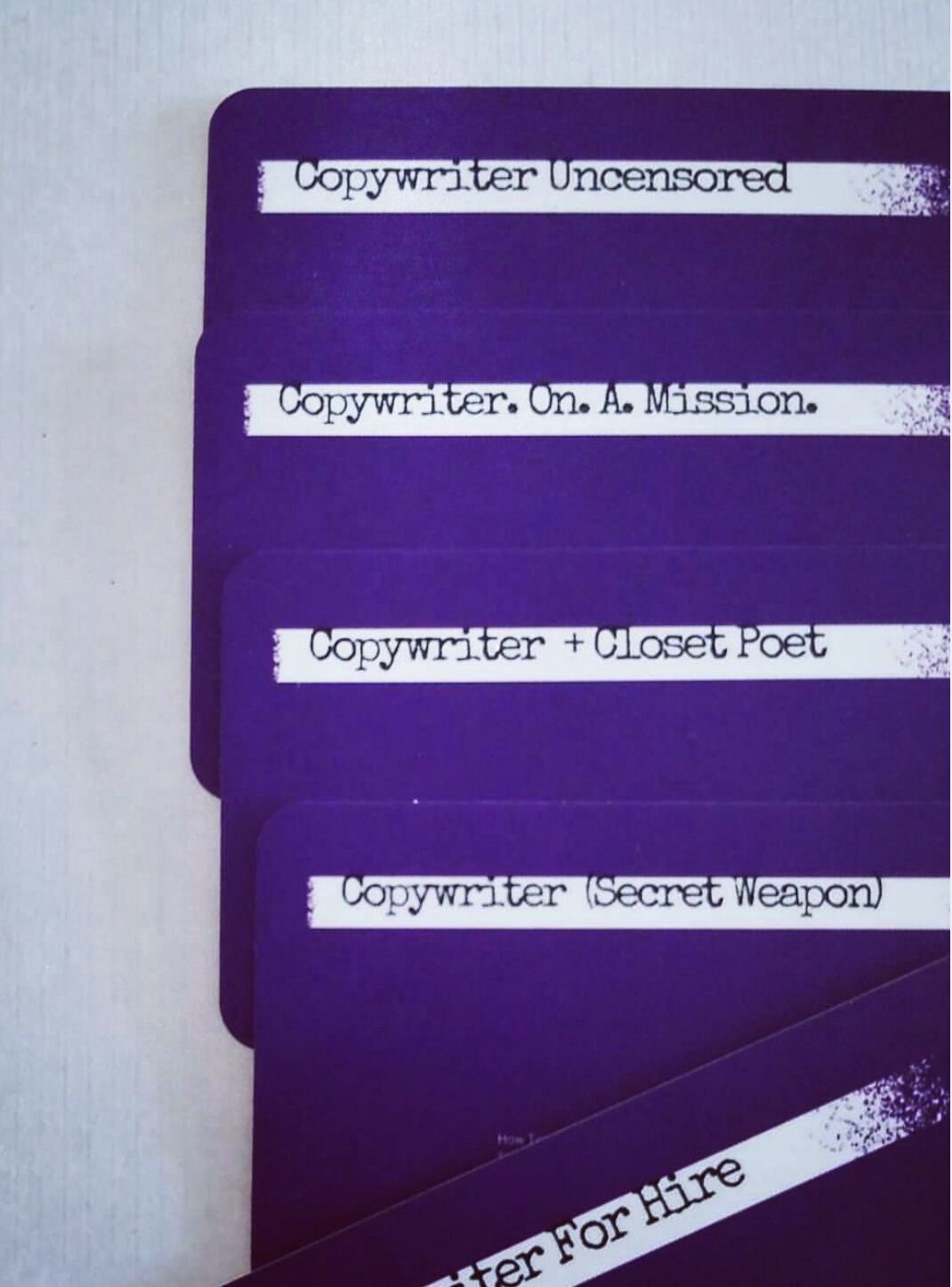
The business card that launched a thousand trademark questions.
For five years, I introduced myself as a copywriter.
And for every. one. of. those. five. years. people heard “copyright-er.”
They thought I had the legal authority to protect their intellectual property. I did not. I had a laptop and strong opinions about email subject lines.
Most of those introductions happened at networking events, back when I was building my client list. You know the room. Name tags, business cards, and nobody there to connect. Everyone was a pigeon, dropping business cards on anyone who stood still long enough.
I’d say “copywriter” and watch the other person’s face do what yours does when you reach out to shake someone’s hand and they offer you a fist bump. Complete discombobulation.
The irony stung. I was speaking to coaches, nonprofits and startups about how to write their LinkedIn headlines and About sections. On stage, I taught introductions for a living. In the hallway, I fumbled my own.
So I built a one-liner: I help people put their passion on the page. Then a plainer one, for the faces that stayed blank: I’m the salesperson on your website and your social media.
My marketing colleagues got it. Barely. Everyone outside marketing did not, and that was about 99.978% of my clients.
I spent years blaming their vocabulary before I admitted the translation job was mine.
The better you get at the work, the more translating your customers need
In 1990, a Stanford graduate student named Elizabeth Newton sat people down in pairs. One person rapped their knuckles on a table to the rhythm of a song everybody knows, like "Happy Birthday". No humming, no words, just knuckles on wood. The other person had to name the tune. Before they started, the tappers guessed their partners would get it about half the time. Out of 120 songs, the listeners got 3.
Here's why. While the tapper knocks, the whole song plays in her head, melody and words landing right on cue with every rap. The listener gets none of that. Just a string of knocks with no tune to hang them on. The tappers couldn't believe how hard their partners were struggling with something so obvious. Economists had already named this "the curse of knowledge", and Chip and Dan Heath made it famous in Made to Stick. Once you know something, you can't un-know it, so you overestimate how easily anyone else can follow along.
Anyone who opens with a job title is tapping “Happy Birthday” on a table. You hear the whole song: the research, the positioning, the subject-line testing. They hear knock, knock, knock. And possibly an IP lawyer.
Expertise makes you fluent in a language your customers don’t speak. Ten thousand hours into a craft, it can take you ten thousand words to explain it.
You’re tapping too
If you run a business, you’re doing it right now.
Specialists talk the way their peers talk. The bookkeeper offers “monthly reconciliation” to someone who just wants to stop dreading tax season. The IT consultant pitches “managed endpoint protection” to an office manager who wants the laptops to stop catching viruses.
The owners I work with now are seriously good at what they do. They know their stuff. By rights, they should have a waitlist. They don’t, and it drives them up the wall, because the customers who love them can’t say why.
That’s where it starts costing you. Picture your happiest customer at dinner. A friend asks who does their books. They say, “Oh, she’s great, she does the… numbers stuff.” The friend nods, and later books someone with a clearer sentence.
If your customers can’t repeat what you do, they can’t refer you.
The intro everyone sends
A friend asked me recently why their freelance outreach wasn’t landing the way it used to. They opened with their title, their years of experience and their biggest client. Mine opened the exact same way in 2016.
Title, tenure, logo: a résumé shrunk to fit a DM. It’s three facts about you, sent to a stranger who hasn’t yet decided to care. Those networking rooms were wall to wall with them.
It worked better before every browser tab came with a free paragraph generator. Today the title tells people even less than it used to.
The sentence you’re actually trying to earn
The reaction you want is “Oh my God, that’s me. That’s what I’m struggling with. I need you.” Nobody has ever said that about a job title.
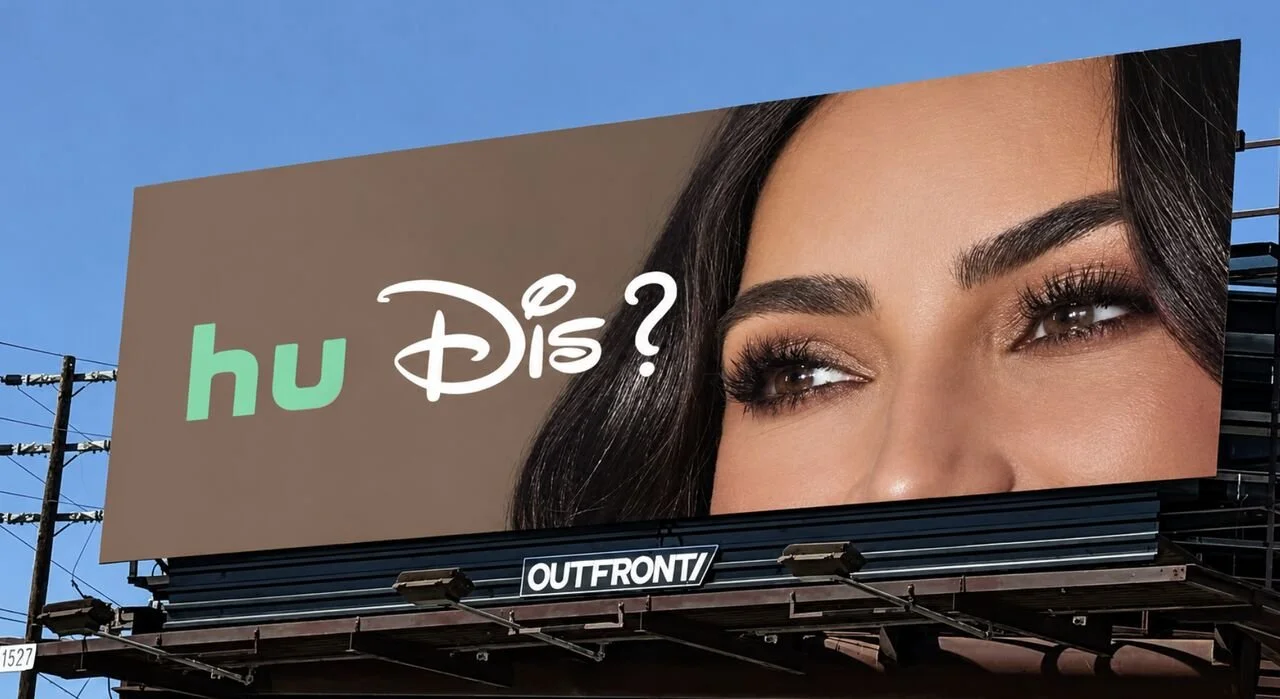
“Hu Dis?” by Courage for Disney+ Canada, 2026. Image via Famous Campaigns.
You get there by naming a problem you solve, or a change you make, for people you know really, really well. Say the WHAT, and the WHO you do it for:
→ The conversion copywriter: “I rewrite the checkout pages for online course creators, so the people who click Buy actually pay.”
→ The creative copywriter: “I write ad campaigns people screenshot to the group chat.” (See: Toronto agency Courage’s “Hu Dis?” billboards for Disney+ Canada, which spliced Hulu’s green “Hu” onto Disney’s script “Dis”. Group-chat royalty.)
Cover the labels and read those lines again. You still know exactly who to hire.
The fear nobody says out loud: if I say who I’m for, everyone else stops calling. They weren’t calling anyway. A generalist intro is a door held open for everyone, and the hallway stays empty. In 1975, psychologist Stephen Worchel and his colleagues offered people chocolate chip cookies from a jar holding ten or a jar holding two. Same cookies. The people facing the nearly empty jar rated theirs as more desirable. People stretch harder for what looks a little out of reach.
Before Friday
This week, ask three regulars one question: “If a friend asked what I do, what would you tell them?”
Write down their exact words, mumbles and all. Whatever they say is the sentence already travelling around town without you. If it beats the one on your website, swap it in. If they hesitate, you’ve found the gap, and now you know what to write.
Somewhere tonight, a customer is describing you in four mumbled words and a hand gesture. I turn that into a sentence they can repeat, so it brings business back to you.