
Hella Questions: A Non-Tipper's Terms and Conditions for Tipping
CBC News
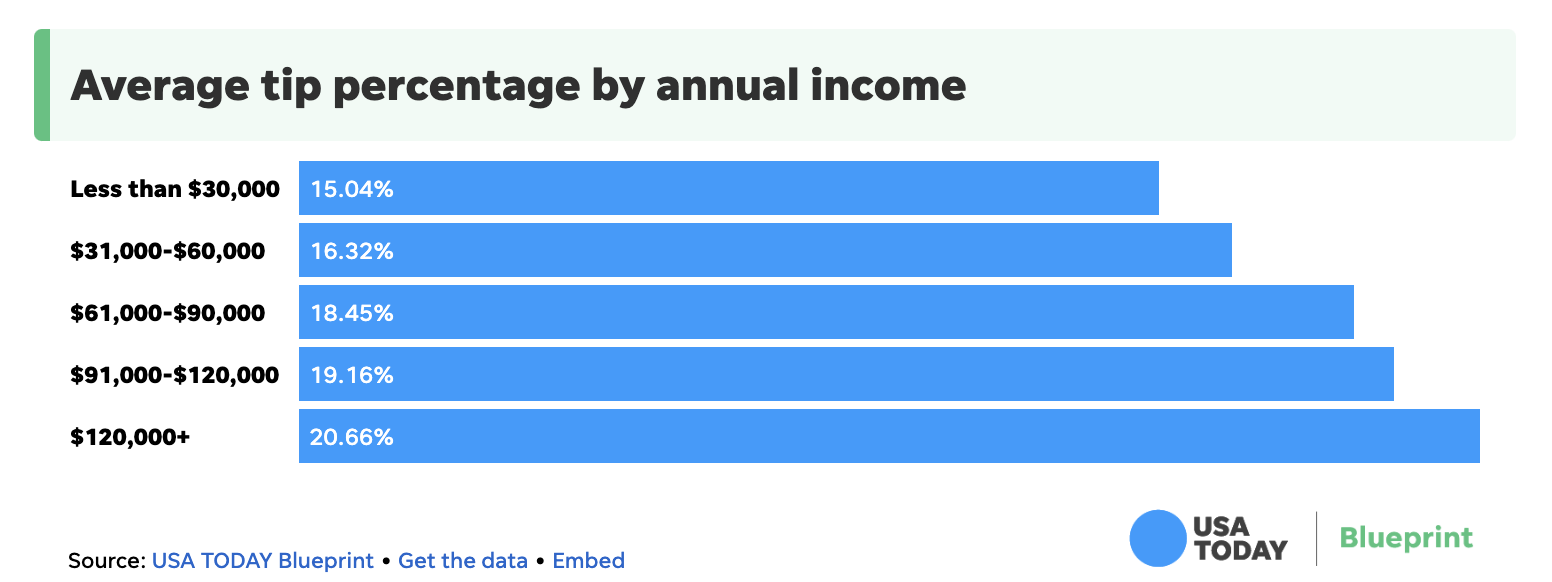
Americans reluctantly spend nearly $500 per year on tipping (USA Today, 2024).
I’ve structured these terms and conditions for my fellow non-tippers so we can manoeuvre through this whole gratuity thing. It’s popping up everywhere, like a thousand bottles of non-Costco baby oil press from a P. Diddy case.
And for my big tippers, this may alter your opinion of me for better or for worse, but I need to get this one off my chest.
Listen, I agree to tip, but under the following terms: I’m still struggling to navigate the confusing etiquette of rewarding service workers while pretending I understand all the unwritten rules. I understand that tipping is supposed to reward good service. I understand that you, the worker, often (and unfortunately) rely on it. I also understand that everyone is nudging me to tip, from the little jar at the coffee shop to the bright prompts on my food delivery app.
But we need to talk—assuming, of course, that you’re willing to meet these modest, reasonable conditions.
A Non-Tipper's Terms and Conditions for Tipping
INTRODUCTION
These Tipping Terms and Conditions constitute a socially binding agreement between the Service Provider (you) and the Slightly Confused, Possibly Overwhelmed Customer (me), concerning our Exchange of Services (including but not limited to: dining, grooming, and food deliveries).
EXPECTATION
When you say “tip,” I understand I’m supposed to add extra money for your service. I also understand it’s my duty to decide how much, often based on your smile, the speed of delivery, or just sheer guilt. I am willing to comply, as long as we agree that tipping is a reward for exceptional service—not a default surcharge or a way to subsidize wages because an employer won’t.
HISTORICAL PRIVILEGE
When we talk about tipping, I understand this isn’t just about tossing spare change into a jar. We’re diving into a tradition that dates back centuries. Let’s recognize that its complex historical roots are tied to racial oppression and economic structures that emerged after the 16th-century Civil War in Europe and transplanted to America, where affluent individuals would discreetly offer small amounts to servants for prompt service (TIME, 2019).
In other words, it was a way to avoid paying formerly enslaved workers—instead, it was a token of their inferiority. If this tradition is considered a sign of generosity, it also serves as a subtle indication of social hierarchy.
GLOBAL SPREAD
As globalization took root, tipping practices varied widely. Some cultures, like Japan, view tipping as unnecessary and even rude, while others, like North America, have adopted a tipping culture deeply embedded in the service sector. And if everywhere is requesting a tip, what’s left in the customer’s pocket? In this shaky economy, we’re in a state of tipping fatigue!
I’m willing to acknowledge that this global perspective complicates the conversation about the motivation behind tipping to express gratitude or conform to the social norm.
KOKOROZUKE WORLDVIEW
心付け “ko-ko-ro-zu-ke” n. gratutity
I agree to tip, but only if we acknowledge that, again, people in Japan would find this whole thing weird. There, tipping is seen as disrespectful, implying the worker is not paid adequately by their employer. Shouldn’t we have “kokorozuke” (gratuity coming from the heart), take a cue from them, and focus on ensuring fair wages rather than random “generosity”? Or is my $3 really the key to saving the industry?
DIGITAL PRESSH-SHA
…it’s getting worsa and worsa
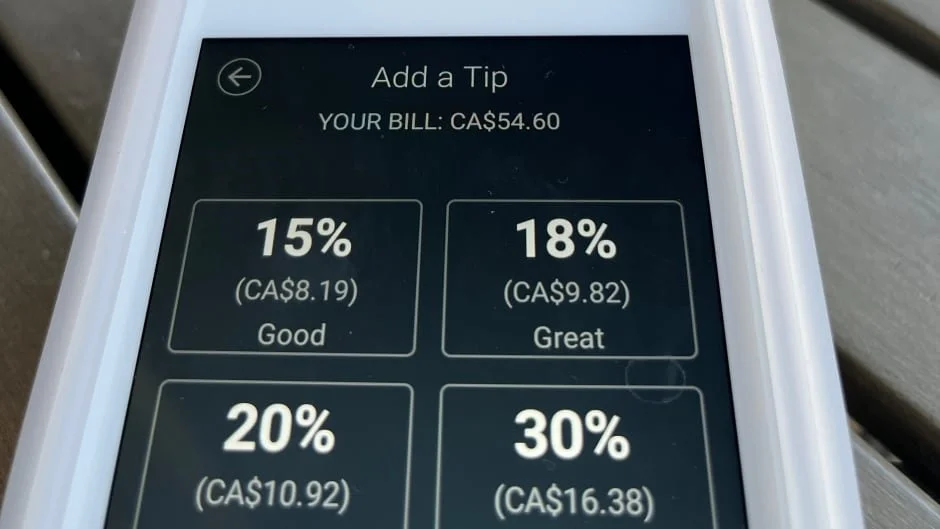
I understand that digital tipping screens have made my tipping decisions more public. However, I reserve the right to feel slightly offended when the barista spins that iPad around, and I’m staring at percentages starting at 18%, even when I haven’t had any service. Did you expedite my muffin in the bag quickly enough for the reward of a Shark Tank investor deal? Let’s agree that the pressure I feel isn’t because I don’t value your effort—it’s because this feels less like a choice and more like an obligation.
POWER DYNAMICS
I agree to tip, provided we both understand the power dynamics at play here. As a customer, I wield the ability to affect your income with the flick of my pen (or the tap of my screen). Is this empowering, or just awkward for both of us? When I see your eyes widen in anticipation as the tip line comes up, it makes me question whether tipping is about appreciation—or whether it’s become a negotiation in which I always feel like I owe you more.
PUSHBACK
I know some places have dropped tipping in favor of mandatory service fees (you’re not slick Uber), and while I’m all for less mental math, I’m also skeptical. Is this the global tipping reset we need, or just another way for businesses to shift the costs? If we’re rewriting the rules, can we finally admit that fair pay shouldn’t come down to whether I had a good day or fallen prey to tipflation?
HELLA QUESTIONS
I agree to tip, but is this my own free choice, or have I been culturally conditioned? Why do we tip our server but not the nurse who took care of us?
I agree to tip, but only if the responsibility of paying workers a living wage doesn’t rest solely on me. Is it my job to ensure the server or driver can afford rent, or should the company play a bigger role?
I agree to tip, but when the barista spins that screen around with 18%, 20%, and 25% options, am I still tipping for good service or the privilege of feeling like a 16th-century aristocrat?
I agree to tip, but maybe I shouldn’t. In Australia, tipping is more of a bonus than an expectation because wages are higher. Who’s got it right? Shouldn’t we, as customers, all play by the same rules, with workers getting a fair deal regardless of the country?
I agree to tip, but only if we can have an honest conversation about why, where, and how much. Maybe we need to reset the whole system—because, at this point, I’m not sure who’s benefiting the most: the worker, the employer, or the payment app coercing me into an 18% deal.
AGREEMENT
By providing me with your service, you agree to read, understand, and accept that these Tipping Terms and Conditions reflect my confusion, concern, and genuine attempt at being a decent person because I don’t believe the hype.
☐ I agree to these terms.
☐ I would rather risk pressuring you for a tip
☐ I think we both deserve better and need to rethink this whole system.
👋🏾 Soooo…collective illusion is public enemy number one—Don’t Believe The Hype. Every week, we’ll say the quiet parts out loud (in your inbox). So we can cancel or co-sign marketing or market trends and discern pop culture gems from flops together. And start making sense of the nonsense online.