

Learning ai is a trap (if you’re a founder, here’s what to do instead): Guess less. Grow more with this Notion dashboard.
I can operate like I have a team of five, and sleep like I only have one.
[ short answer ]
Should founders learn AI?
Don't start by learning AI. Start with your friction points: the tasks that take the most time for the least return. Fix your systems first, then give AI only the jobs you hate, like turning client calls into drafts or automating new-client setup with tools such as Notion AI, Zapier and Asana. Treat AI like a new hire you train, not a shiny new toy.
Honestly. I didn’t start with Python or agents, I started with the bottlenecks in my business.
For me, the question wasn’t “How do I learn ai?”
It was: “Where am I spending way too much time for way too little return?”
That turned out to be:
Writing up client notes from scratch after every first call
Walking every new client through the same setup steps, by hand, every time
Scrambling each week to figure out what was working
So I treated AI like a new hire rather than a shiny new hot toy. I trained it, and I only gave it the jobs I hated.
I didn't build anything from scratch. I just:
Used ChatGPT to turn client convos into content drafts
Set up Notion AI + Zapier + Asana to handle new-client setup
Saved prompts for the recurring tasks I dreaded (and also, I’m not a prompt engineer)
And let me be clear…I still don’t know how to code. But now I can operate like I have a team of five, and sleep like I only have one.
If you’re a founder, I’d say, don’t start with ai. Start with your friction point. Improve your systems. Then build out your tech stack from there.
This is your semi-comprehensive guide when you’re stuck on where to start!
The founder's dilemma
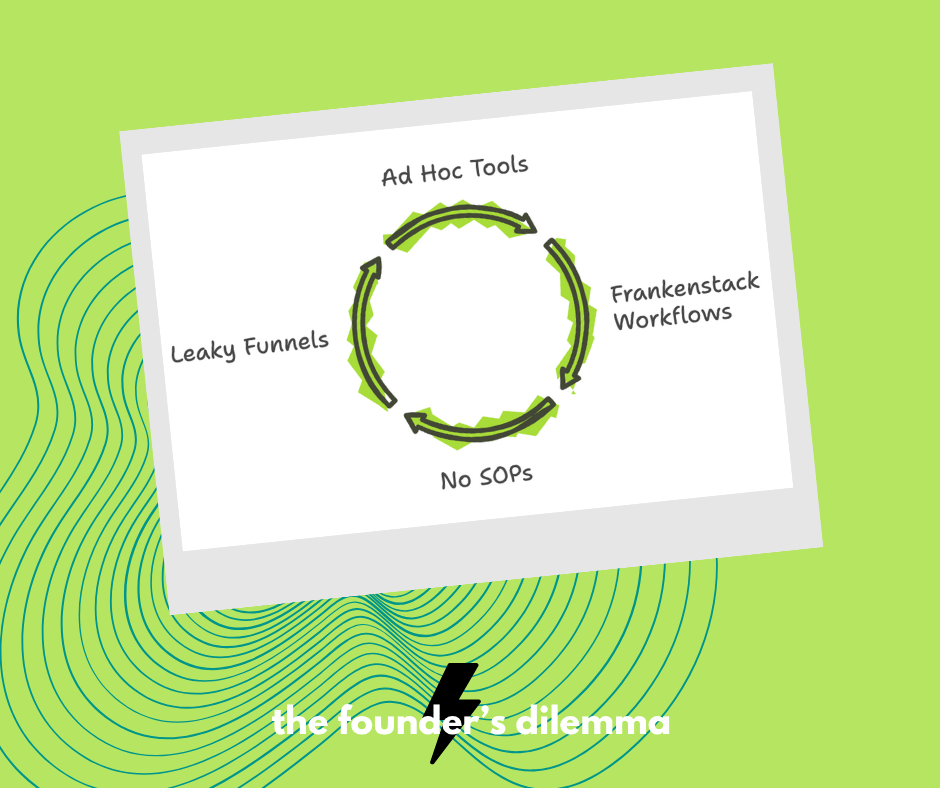
Ad Hoc ToolsA booking app a friend recommended, an email tool from a free trial, a spreadsheet from 2019. And none of them talk to each other.Even big marketing teams use just 49% of what their marketing tools can do. (Gartner 2025)
Frankenstack WorkflowsTools duct-taped together that snap the minute you get busy or try something new.
No written how-tos (SOPs)The steps live in your head, so every sick day turns into a guessing game.
Leaky Follow-up FunnelsClients slip through the gaps between the booking app, the inbox and your memory.
⚠️ The result: you’re spending time and money bringing people in, and you can’t tell which part is paying you back.
The case for marketing-led ops
What is Marketing-Led Growth? In plain English, your marketing looks after the whole trip a client takes with you:
Finding you (demand generation)
Booking the first time (customer acquisition)
The first visit (onboarding experiences)
Coming back and bringing a friend (retention & advocacy)
You can own every marketing software on the market and still have nothing that brings the same client back twice. Software sits still until something tells it what to do.
That something is your system: who sends the text, when, and what it says.
Why Marketing Should Steer Your Operations Early
Software companies love debating whether the product or the sales team should drive growth (insiders call it PLG vs. SLG). Your business gets to skip that debate. Your marketing is the only thing talking to clients when you’re not in the room, so let it steer:
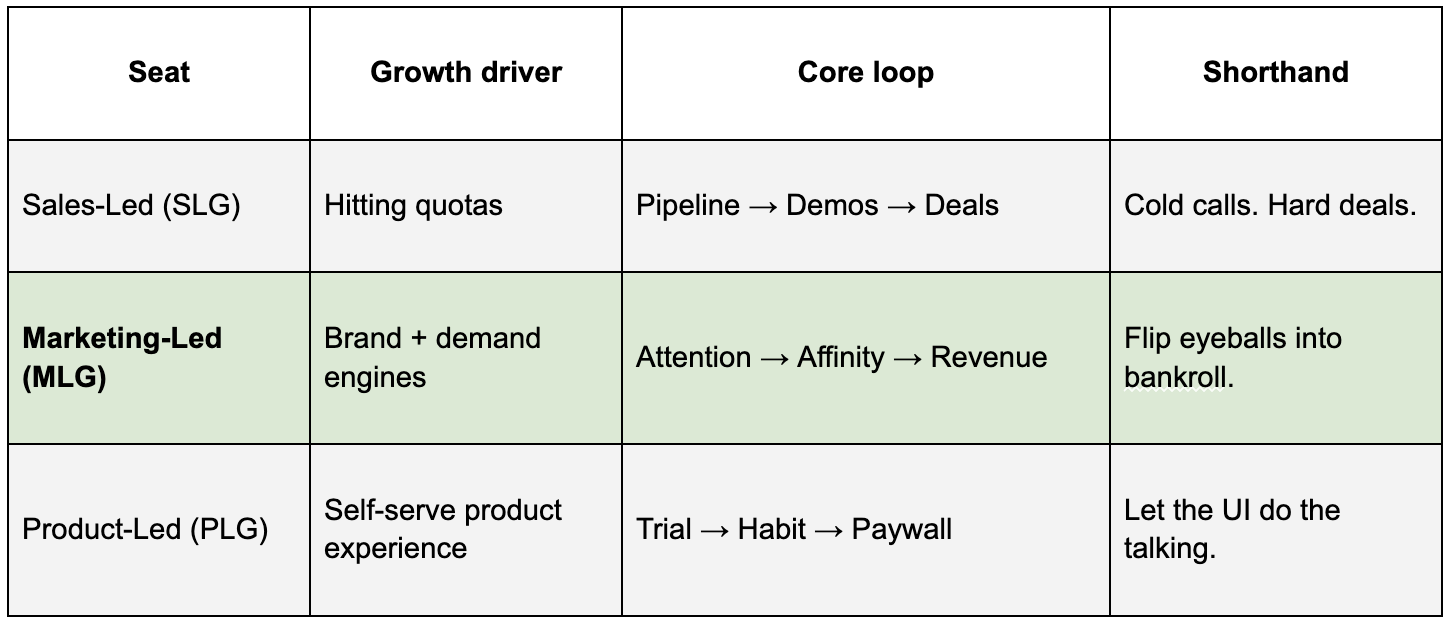
Marketing owns the full-funnel customer journey.
Revenue clarity from lead to expansion.
Faster experiment-to-scale cycles.
Marketing-led growth bets that good storytelling, a bit of community and a little ad money can walk someone most of the way to booking before you ever say “hi.”
3 companies that made marketing the prime growth engine
Hubspot, B2B Software as a Service (SaaS)
The godfather of “inbound” content. Taught the internet for free with blogs, courses and a podcast, years before anyone was talking about product-led growth (e.g. HubSpot Academy). They have my email at least 987 times.
Steal this: answer the question clients ask you every week once, in public, and pin it.
Canva, Consumer & Enterprise SaaS

Made design feel doable for everyone: “Design for the 99 %”. Narrative + viral template marketplaces + headline partnerships (Pinterest, Leonardo.ai). Mic drop.
Steal this: make the thing clients love easy to pass along, like a gift card or a referral link.
Duolingo, Consumer SaaS
Let a 23‑year‑old run TikTok. Leaned into mascot comedy, real‑time memes, and creator collabs. Need I say more…?!
Steal this: the funniest person on your team probably shouldn't be the one stuck answering email.
The 3-layer setup you need
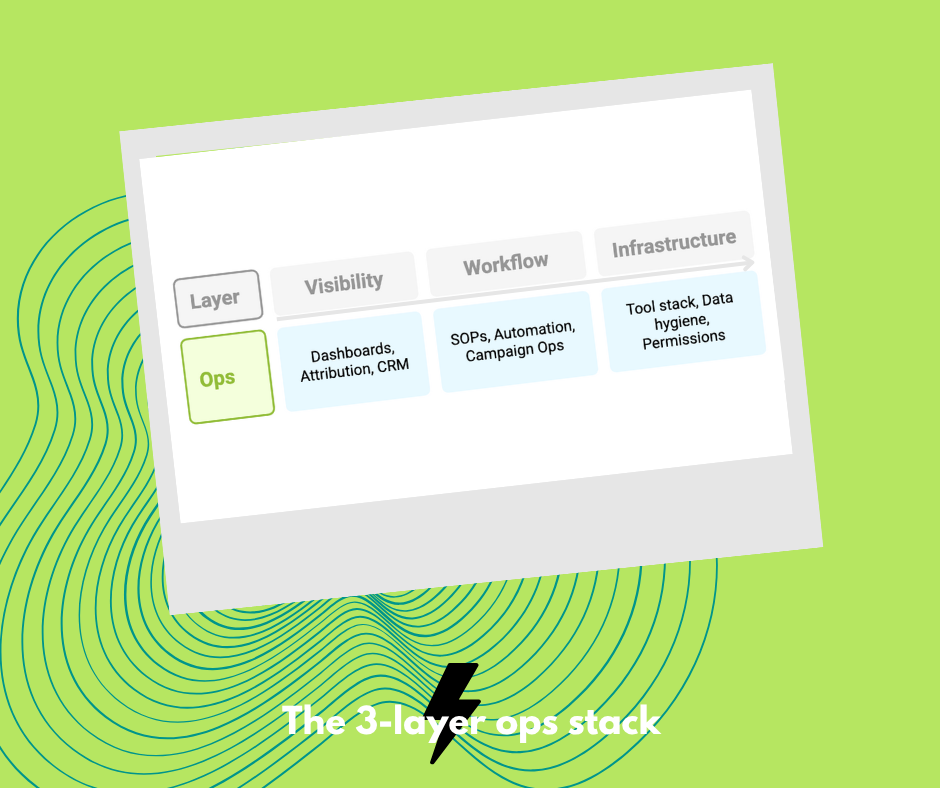
Visibility: can you see it? Who booked, who came back and what brought them in. A simple dashboard, your booking app's reports and one client list cover it. (i.e. Dashboards, Attribution, CRM)
Workflow: does it happen without you? Written how-tos, automatic reminders, and a plan for what goes out each month. (i.e. SOPs, Automation, Campaign Ops)
Infrastructure: will it hold when you're slammed? One booking tool, a clean client list, and a clear answer to who can log into what. (i.e. Tool Stack, Data Hygiene, Permissions).
Ops shortcuts for owners who do it all
All four are low lift. Pick the one that bugs you most.
A Notion tracker for your promotions
🟡 Low lift/⚡️High impact
Plan, track and measure every promotion with pre-built templates in one dashboard. Easy to connect your tools via embeds or APIs.
Single Source of Truth Doc (also known as the holy grail)
🟡 Low lift/⚡️High impact
Create one master document with all critical business data points: promotion UTMs, CRM fields, audience segments, and brand assets linked in one place.
Zapier Recipes for Lead Routing
🟡 Low lift/⚡️High impact
Send website form entries straight to your client list, a follow-up email and a team alert, with no code.
Loom Video Training
🟡 Low lift/⚡️High impact
Record yourself doing a task once. The next new hire watches it instead of shadowing you for a week.
The 60-minute check-up (for owners who don’t do tech)
Pinpoint what’s breaking behind the scenes before it slows your growth.
Run this audit to help you spot the operational blind spots holding your marketing back. So you can fix what’s messy, automate what’s manual, and scale what’s actually working.
Promotions: Is there a system to launch campaigns?
✅ Documented campaign process exists (i.e. a brief)
❌ No centralized campaign calendar
❌ UTM tracking links are inconsistent or missing
✅ Team knows their roles in campaigns (i.e. a RACI)
Quick Fix: Download The Flow State and get a promotion brief you can implement immediately. Hit the subscribe button below.
Customer Data: Is there clean CRM hygiene?
❌ Lead sources aren't tracked consistently
❌ Duplicate contacts exist
✅ Contact fields are standardized
❌ No regular data cleanup process
Quick Fix: Run monthly data hygiene checks with your tool’s duplicate management system, or a simple spreadsheet audit via Chat GPT.
Reporting: Can you see what's working in under 5 clicks?
✅ Key metrics are clearly defined
❌ No single dashboard for KPIs
❌ Campaign ROI calculation is missing
❌ Data spread across multiple tools
Quick Fix: Set up a dashboard in your preferred CRM tool with your top 5 marketing metrics.
Follow-up: does anyone hear from you after the first visit?
❌ No thank-you note goes out the same day
❌ Review request in place
❌ Rebooking reminder lands before they’d normally be due
❌ Tracking who hasn’t been back in 90 days
Quick fix: turn on your booking app’s automatic review request after each visit.
Key workflows to set up first
Start with the jobs you repeat every week. Lock those in and everything after gets easier.
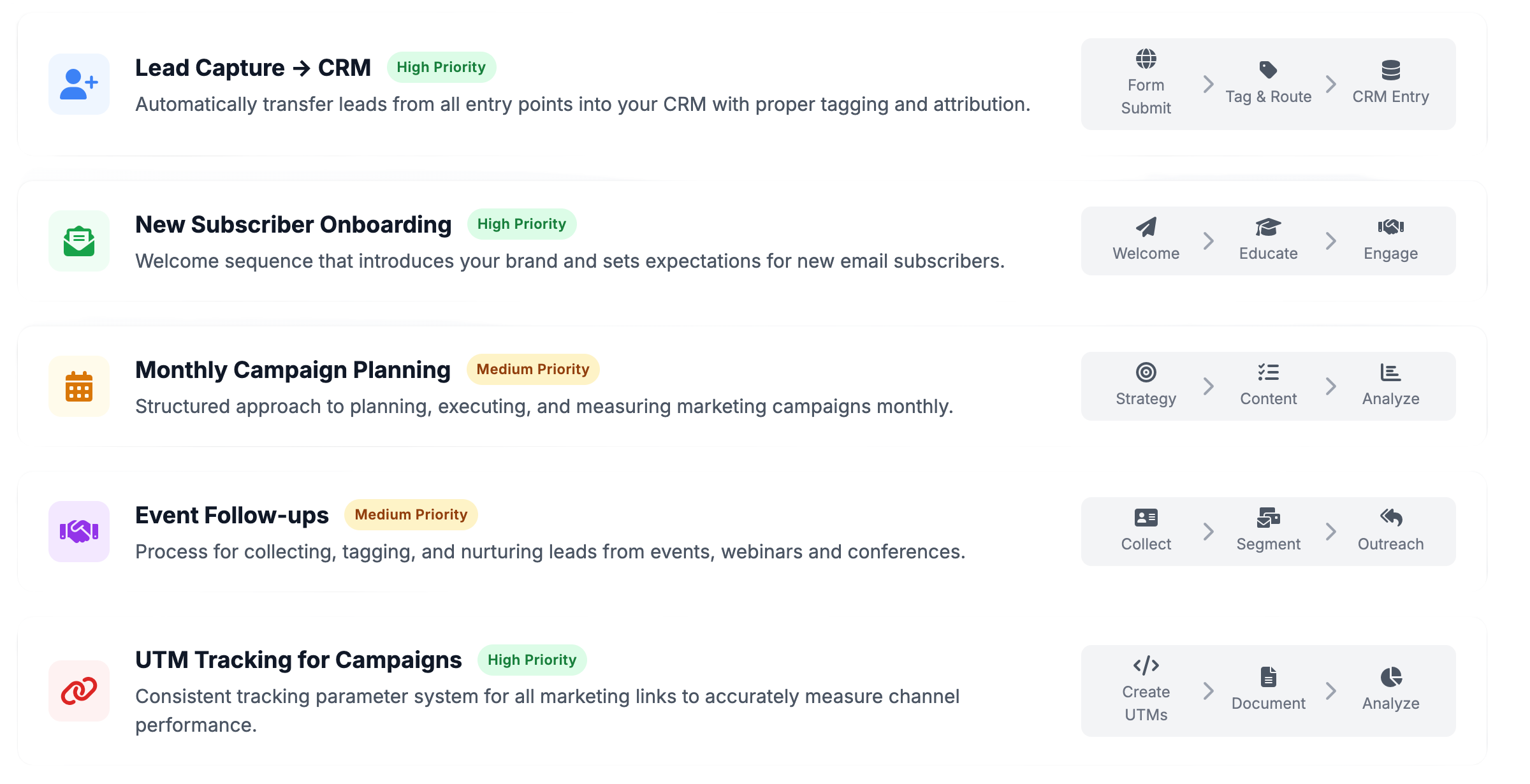
Templates & Swipe Files
Skip the grunt work. If you spend more time figuring out software than using it, I made these plug-and-play resources to get your marketing running.
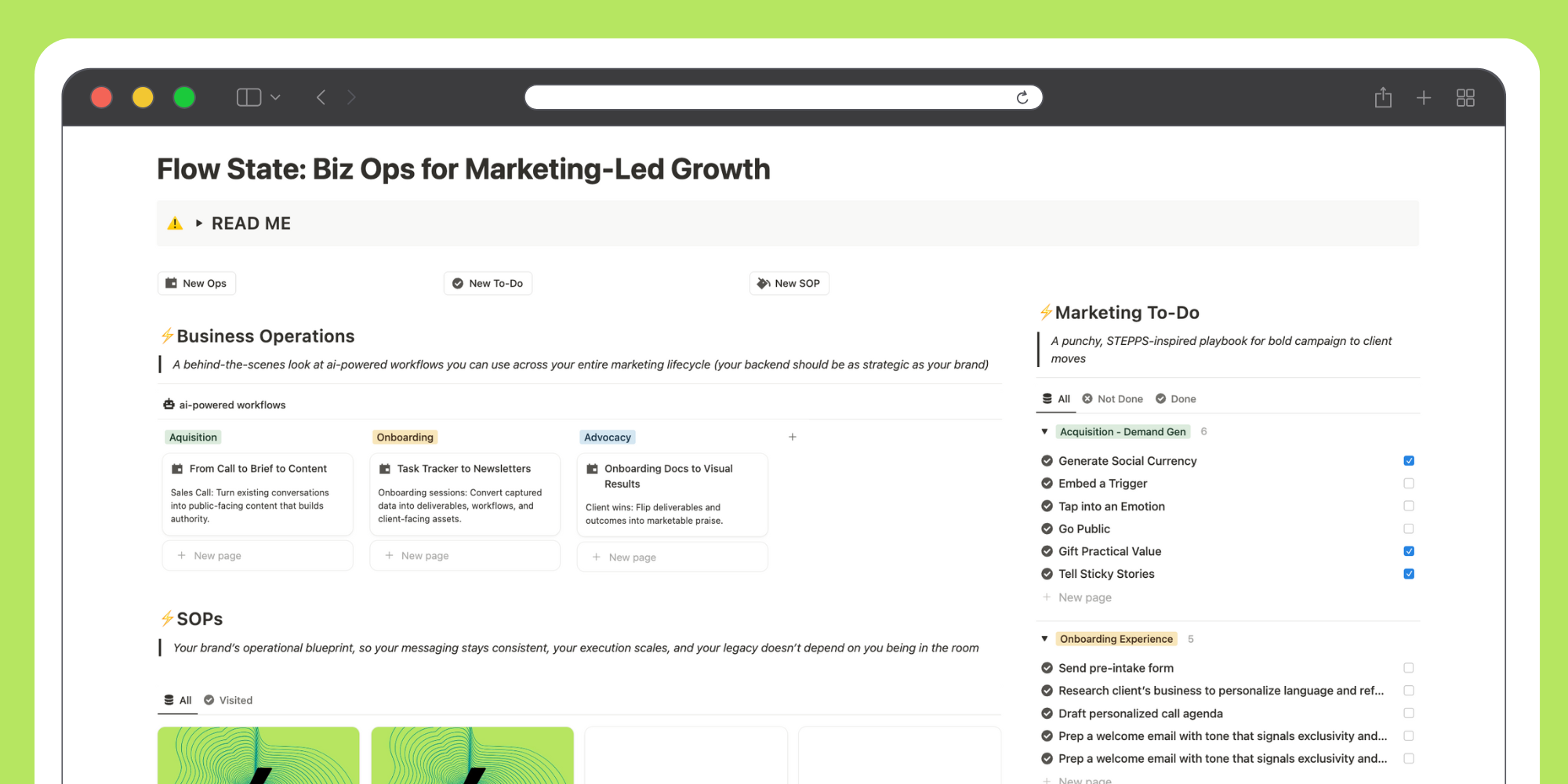
We can continue to build on this dashboard together.
I help founders set up their first ai-assisted workflow to finally see what marketing is working, what’s wasting money, and free up 10+ hours a week doing it.
Before you open another AI tutorial, pull up last month’s bookings and circle every first-time client. Then count how many have booked again. If that number makes you wince, you’ve found your friction point, and it’s where I’d start.
Now, let it resonāte,
Tennile

Hella Shook: Swiping right on AI, where convenience meets caution
I just want to edit a pic, not hand over my whole existence.
Subject: Elevate Your Career: Join the WhatsApp Team
That’s how the scam email got me to open it.
At first glance, it looked like an open door to a dream scenario—no job boards, no pretentious smiles, no rehearsed lines, just direct access to a coveted role.
Who wouldn’t be curious? It felt like skipping the line. No hustle required.
But as the saying goes, “If it’s too good to be true, it probably is.” And this email was too polished, too professional. No typos, no clumsy grammar—just an opportunity that seemed too real. I was hella shook.
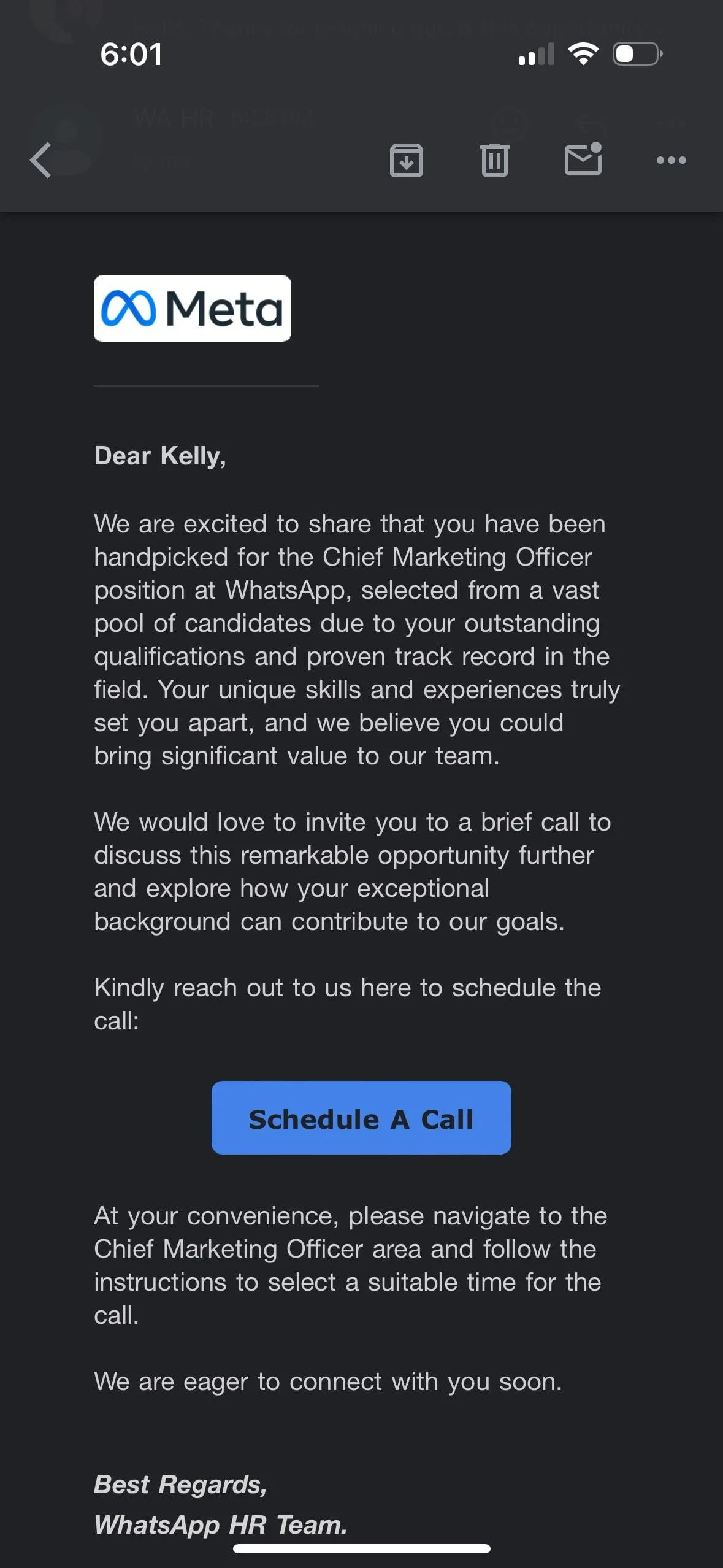
An example of the same email sent to me. I blocked and deleted mine before I thought about writing this article.
When I looked closer, I spotted the trickery.
The email linked to a fake job posting that didn’t exist on the official WhatsApp website. They even asked me to sign in through my Facebook account to view the job description—a major red flag that made me pause. Still, the responses from the “recruiter” were prompt and professional. They did everything right to keep me hooked, and that’s where the threat lies.
This experience made me question the fine line between trust and deception in digital spaces. When it comes to AI-driven systems, we expect seamlessness—no friction, no barriers. But the more frictionless the experience, the more vulnerable we become. And that’s where the tension between privacy and user experience gets messy.
Enter the privacy-personalization paradox…

As we collectively dive deeper into the ever-charming world of AI, I can’t help but face the awkward reality.
We all want those seamless experiences—like when I fire up that photo editing app, *coughs* CapCut, ready to tweak a single video. But lo and behold, it demands access to my entire photo library. I just want to edit a pic, not hand over my whole existence.
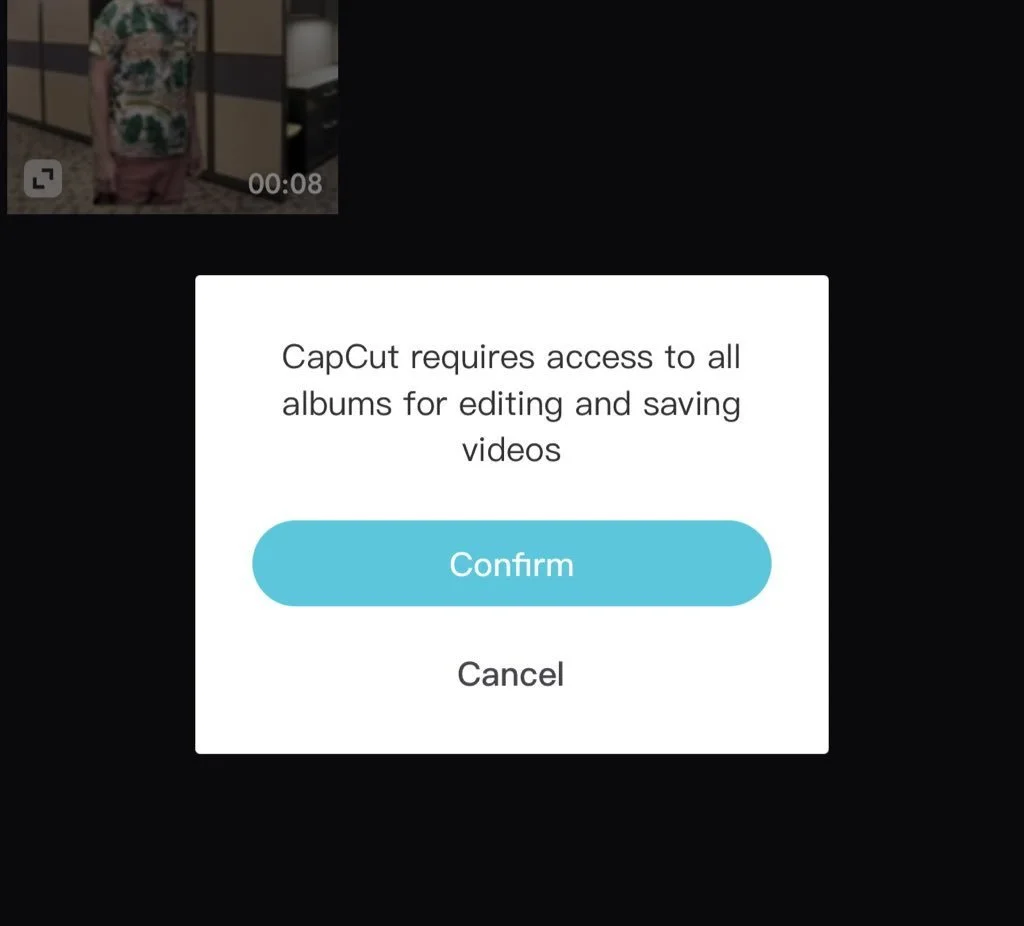
This dance between convenience and privacy is everywhere: whether it's a weather app that insists on constant location updates or Google Maps wanting to stalk my whereabouts even when I’m off the grid.
Sure, it’s convenient, but am I really willing to feel like I’m stuck in a never-ending game of Pac-Man?

This tug-of-war isn’t limited to apps alone, though. That public Wi-Fi at your neighbourhood Starbucks? Instant connection, but it’s as secure as a paper umbrella in a hurricane, leaving our data wide open for all kinds of scamming eyes. And those fitness trackers aren’t any better. Yes, I want to know my step count stats, but do they really need all my personal activity to give it to me?!
I am willing to bet they’re trading our sensitive information to text solicitors (I have way too many SMS’ from bots versus humans, sadly). Then there’s the social media login trap—life’s easier with one-click registrations. But that quick fix comes at a HIGH cost, giving new sites access to unnecessary personal info I’d prefer to take to the grave.
But don’t lose hope y’all! Companies like Google are implementing federated learning, which means apps can learn your quirks without invasive data sharing. Apple’s privacy-first policies are shaking things up by demanding transparency in data collection, showing that we can enjoy the sweet perks of AI without completely tossing our privacy to the proverbial gossip columns.
By keeping our wits about us and choosing tools that respect our data, we can navigate this tricky landscape and aim for a healthier balance between privacy and that oh-so-seamless user experience.
But let’s be real…are the perks worth the red flags? Sounds a lot like dating these days, doesn’t it.
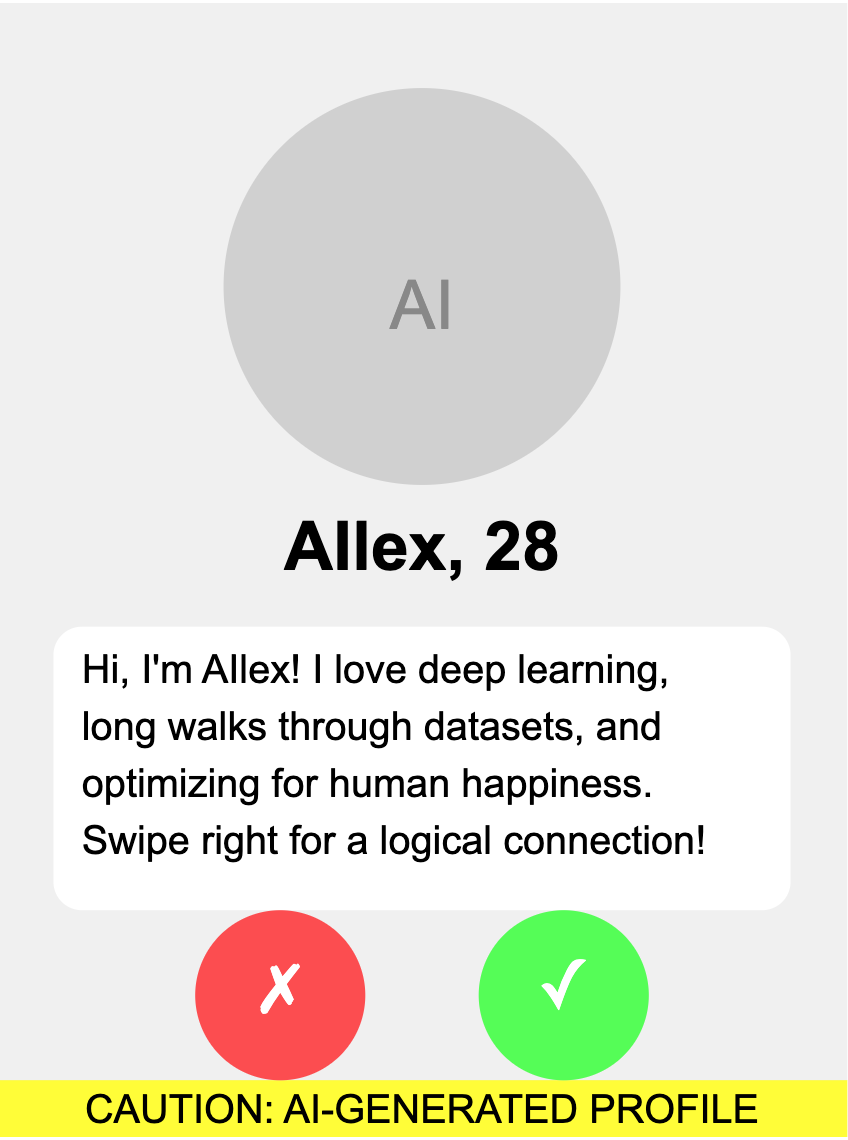
Swiping right on AI: where convenience meets caution
Dating Profile Name: PrivacySeekerUX (User)
Age: 30-something (But as timeless as the internet)
Location: Somewhere between convenience and confidentiality
About Me:
Hi there! I’m just a human trying to navigate this digital landscape where every app feels like a potential match. I love the idea of AI-driven systems that can make my life easier, but I’m also cautious about how much of myself I’m willing to share. I want personalized experiences, but not at the cost of my privacy.
Let's see if we can find a way to make this work.
What I’m Looking For:
I’m searching for a user experience that values transparency and mutual respect in a relationship—whether it's a perfectly curated playlist or personalized shopping recommendations—without demanding my entire life story in return.
I’m open to new adventures but not willing to compromise on my personal space. Ideally, you’ll understand that privacy is more than a buzzword—it’s a commitment we both make.
Interests:
Photo Editing Apps: Love a good photo? So do I! Just don’t ask for access to my entire library—let’s keep it to the one or two pics we need for the gram.
Location Services: I enjoy exploring new places but am not keen on being tracked 24/7. Let’s agree on boundaries.
Smart Home Devices: I’m a fan of convenience—who doesn’t love controlling the lights with their voice? But always listening? That’s a hard no.
Social Media Logins: I appreciate a quick login, but if it means you’re accessing all my social data, I think we need to slow things down.
Free Wi-Fi: Who doesn’t love the thrill of free Wi-Fi…anywhere? Just remember, I’m not sharing my secrets with everyone at the airport.
Personalized Ads: I appreciate a well-placed ad, but I prefer it when my browsing habits aren’t on display for the world to see.
Fun Facts:
I value transparency and not compromising my data.
I’m a minimalist—let’s keep it simple and only share what we truly need.
My ideal date? Discussing the balance between AI-driven personalization and the importance of keeping our private lives private times.
Let’s Connect:
If you’re ready to embrace a modern relationship built on trust and shared interests—without compromising your privacy—swipe right! Together, we can figure out how to enjoy seamless experiences while protecting what we don’t post online.
Learn to get the bots on your side. Enter Back-to-the-Future: quantum leap your life with ChatGPT, a mini course
Hella Open: Back-to-the-Future: quantum leap your life with ChatGPT, a mini course →
👋🏾 Soooo…collective illusion is public enemy number one—Don’t Believe The Hype. Every week, we’ll say the quiet parts out loud (in your inbox). So we can cancel or co-sign marketing or market trends and discern pop culture gems from flops together. And start making sense of the nonsense online.

Thirsty as F*ck: Was 2020 the best year for human capital?
Companies will bend the rules and play the fool, but they’ll always be thirsty as f*ck for human capital.
👋🏾 Soooo…collective illusion is public enemy number one. “Don’t Believe The Hype”. Every Tuesday, we’ll say the quiet parts out loud (in your inbox). So we can cancel or co-sign marketing or market trends and discern pop culture gems from flops together. And start making sense of the nonsense online.
Corporate workplaces are thirsty for DEI hires, Chat GPT and hybrid models, but it’s also the 13th reason why companies should foot our therapy bill.
Is That a Hard “er”??
It’s a DEI Hire
At the height of the Black Lives Matter movement (in 2020, shortly after George Floyd riots against police brutality), companies from far and wide coveted Black talent.
Head of D&I roles were plentiful and well-paid, too.
Due to legal and compliance pressures, companies saw the need for equal employment opportunities and to avoid potential lawsuits related to discrimination.
As societal awareness around social justice issues grew, so did social responsibility. Companies faced increased pressure from stakeholders, including employees, customers, and investors, to showcase a commitment to diversity and inclusion.
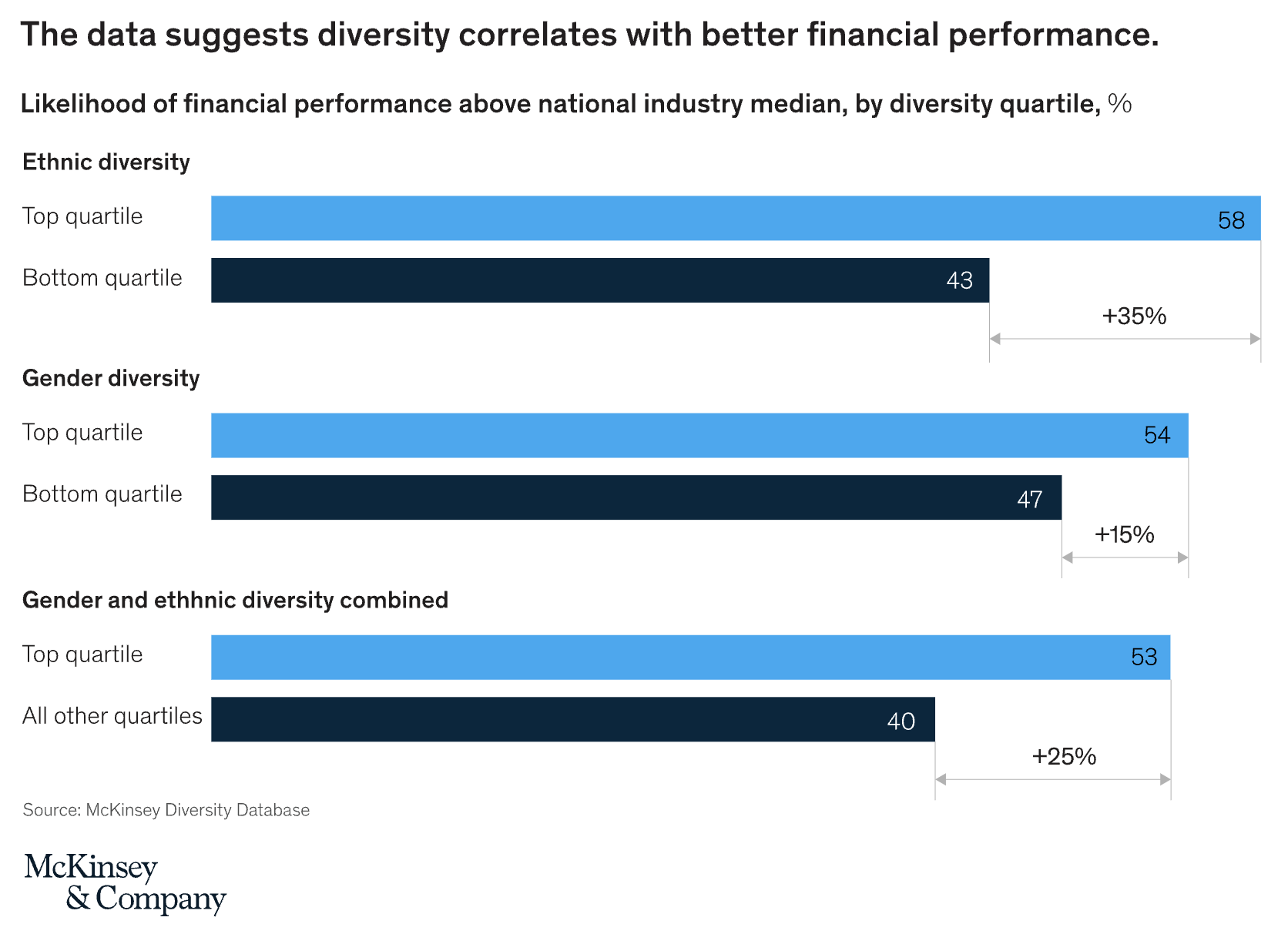
McKinsey & Company research clearly outlined the increased business performance when diverse teams are on board. This leads to better decision-making and innovation, which improves competitiveness and financial performance.
Cue graph for receipts.
Fast-forward to today, and that’s no longer true?!
To be a “DEI hirRE” is to lack qualifications, I’m sorry?? To be honest, DEI is starting to sound like a slur these days.

Exhibit A of VP Harris' recent press
Self Driving Careers
It’s a Chat GPT
And where do I even begin about the Olympic race companies are in to adopt AI and Automation expeditiously!
They’re deprecating roles and conducting mass layoffs so fast that they forgot to reskill employees to keep pace. If the aim was to improve efficiency and reduce costs, you kinda failed.
Hi. Do we have a global skills shortage in the room?
As industries rapidly evolve, there is a mismatch between the skills workers have and the skills employers need. Reskilling helps bridge this gap…and keeps the costs low.
However, companies are more worried that reskilling their employees will provide a direct path to job security despite the uncertain job market (people becoming highly employable—who wants that? *Sarcasm alert*).

Workers seamlessly exiting for new roles outside of the company doesn’t sound like a good time, I guess. But, this logic is flawed because employees can also transition within a company.
It’s risky, but outsourcing everything to AI is also risky.
Either way, adaptability is crucial in a world where job roles and requirements constantly change. What are companies going to keep doing? Fire people only to replace them six months later? That’s expensive and inefficient.
A workforce that is augmented with technology and continuously learns and adapts is better positioned to drive innovation within a company.
Because succession is not only reserved for the award-winning TV show, there’s planning involved. The happy side effect is that when a company prioritizes reskilling, it becomes a talent destination.
Now, I didn’t go digging for the research on this, but I am willing to bet worldly riches that employees who are exposed to new ideas and technologies (through reskilling programs) are more likely to be creative, solutions-driven and contribute improvements.
Betting all the gold on this.
Flexibility is Only For Yoga (And Pretzels)
It’s a hybrid Model
Back in good ol’ 2020, the COVID-19 pandemic forced us to stay indoors.
And companies were like, “No problem. Here’s a laptop. You can work from home.”
Remote work became necessary, leading to permanent shifts in work models. Companies had to invest in digital tools and technologies to maintain productivity and communication. But once our sneeze was no longer deadly, it’s like they forgot we could do all that monotonous work in PJs.
Forget flexibility and work-life balance—I need to see your productivity in person.
And if we’re ALL being transparent here, the Hawthorne Effect kicked in, and the ones who complained about remote work the most were usually the ones who needed to be watched. Shhh. You’re telling on yourself.
The Hawthorne Effect: a type of human behavior in which individuals modify an aspect of their behavior in response to their awareness of being observed
Never mind that flexible work arrangements are valued by top performers and can lead to higher levels of job satisfaction, which reduces turnover, and helps companies retain their talent. F*ck that!
A survey by Buffer (one of my favorite examples of a remote work environment) found that 98% of respondents wanted to continue working remotely, at least part-time, for the rest of their careers.
Not to mention, remote work allows companies to hire from a global talent pool (remember the whole “DEI hire” benefits thingy?).
There will always be a war for talent, despite the current bear job market.
Don’t believe the hype.
Companies will bend the rules and play the fool, but they’ll always be thirsty as f*ck for human capital.
They just want to lower the demand first.