

Backwards-Like: The silent class war behind DEI rollbacks & the rise of personal branding
There is no innovation in stagnation.

It’s not about priorities. It’s about power.
The rollback of DEI isn’t a step backward—it’s a correction to keep class structures intact.
I told myself I wasn’t going to write about DEI again. Lord knows the internet doesn’t need another think piece. It’s the same conversation on loop, usually led by Black and Brown folks. But there’s an angle being overlooked—one that makes the whole DEI debate a little more logical. And that it’s never been just about race.
Classism has been the main character all along.
Too many “non-traditional” hires found a way in, and now the corporate world is hitting the reset button.
But they forgot to close the back door.
While companies pull back DEI, the rise of personal branding: LinkedIn thought leadership, TikTok entrepreneurs, and Twitter commentators are building influence without permission. And it’s giving individuals a way to bypass traditional gatekeepers and build influence on their own terms.
And that, my friends, is what corporations really fear: not the increase of diversity, but the lack of control.
Mini caption for the sister of woke
DEI: Diversity, Equity and Inclusion.
A wise LinkedIn commentator once said we should start writing it out because when you shrink DEI into an acronym, you shrink its meaning too. And honestly…points were made.
If you’re against Diversity, Equity, and Inclusion, then what you’re really advocating for is fake meritocracy—a system propped up by bias, discrimination, lawsuits, attrition, groupthink, and, let’s be real, mediocrity.
The part where it’s backwards-like: class loyalty vs. class mobility

We’re living in two work realities at the same time, and somehow, we’re supposed to be great at both.
On one hand, there’s the Industrial Era Thinking (Class Loyalty): work hard, be grateful, keep your head down, and maybe—maybe—you’ll climb the corporate ladder.
On the other hand, we’ve got the Tech/Digital Era Thinking (Class Mobility): work smart, build a personal brand, and make your own lane because corporate loyalty won’t pay the bills.
The problem? Companies expect us to juggle both.
But let’s put this into context. The days of working on the assembly line for 40 years and retiring with a pension are gone. Social mobility used to be tied to inheritance (family farms, generational businesses), and then education became the new currency. The most valued career paths—professional and technical jobs, entrepreneurship—require an advanced degree, capital, or both.
Over the years, gatekeepers have made sure not everyone gets access, and the price of entry kept rising.
This is why DEI wasn’t just about diversity—it was about who gets access to capital, opportunity, and power. Historically, wealth was tied to financial capital (land, money), but in today’s landscape, human and social capital determine who moves up. And guess what personal branding does? Did you guess it?? It bypasses the traditional power structures and creates new paths for influence. That’s why it’s on the rise.
So now it’s less about nepotism and elite pedigrees. The average person is getting a shot now because of skill.
And although DEI was supposed to be the bridge between these two worlds, giving marginalized folks a fair shot at the same corporate perks that had always been reserved for the right kind of professionals (read: the ones who already fit in). Companies got to look progressive, hire a few “culture adds,” feature a few minority-owned brands and pat themselves on the back for “opening doors.”
But now that too many outsiders have made it inside—the door is being slammed shut with the quickness.
Follow-up point of backwards-like behaviour: self-made vs. skill-made success
Skill—not pedigree—is producing our next wave of CEOs, founders, and millionaires.
And honestly…the old guard is stressed about it. For decades, success was gatekept behind Ivy League degrees, country club connections, and last names that sounded like they owned a railroad. But now. The real currency is skills. And according to McKinsey, those skills have the lifespan of an iPhone update—half of them are irrelevant in five years (whispers in AI).
And let’s be real—education systems are crumbling under the weight of their own irrelevance. Schools can’t keep pace with online learning, and the proof is in who’s winning: experience and skill are outpacing advanced degrees every time. 28% of high school graduates out-earned the median associate’s degree holder, and 37% of associate’s degree holders outearned the median bachelor’s degree holder—all because they learned skills through experience rather than traditional education.
That’s why people from lower-income backgrounds are finding new pathways to wealth—the gatekeepers are still holding clipboards at the front door while folks are building whole empires through YouTube, TikTok, and AI-powered businesses. Like my daughter, who’s getting a middle school education by day and running a YouTube empire by night. Which one is more important? Yes, both. One gets you through the gatekeepers, and the other makes sure you don’t need their approval ever again.
It’s the same for companies. The longer you stay at one place, the more outdated your skills become. Workers who take on higher-skill distance jobs (also known as “job-hopping” to roles requiring 30-40% new skills) are the ones climbing income brackets, while those who stay in familiar roles see little to no financial progression.
But instead of training employees to keep up and stay put, companies clutch their pearls, worried that talent will take what they’ve learned and leave.
News. Flash.

That’s already happening. Either people jump ships, or they stay and sink the ship.
There is no innovation in stagnation.
And in a world where experience is the real golden ticket, companies refusing to evolve are about to find themselves on the wrong side of the wealth gap.
And isn’t this what the people want?!
We are in the Age of Aquarius—where technology reigns, and the power belongs to the people. It’s written in the stars. So while some see the rollback of DEI as a reverse Uno of progress, the powers that be are about to learn what else is backwards-like.
Don’t believe the hype—because the real power shift. It’s not happening in boardrooms.
Just scroll online.
Build the skills that don’t expire in 5 years but compound instead. Start here ⬇️
Professionalism has nothing to do with how you look—it’s how you deliver.
Hella Perspective: The Wicked redefinition of professionalism →
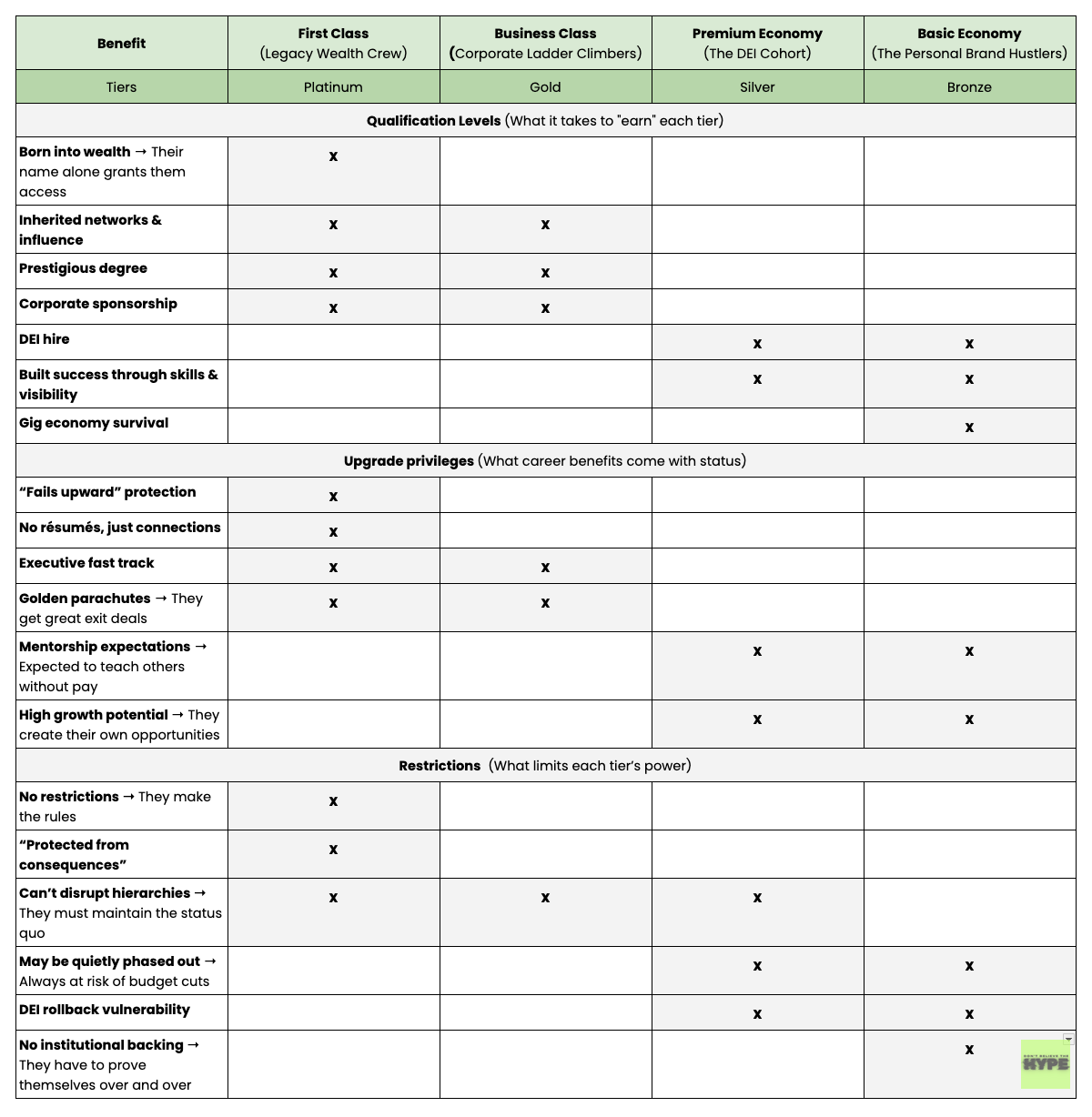
In conclusion, The Corporate Classism Rewards Program
👋🏾 Soooo…collective illusion is public enemy number one—Don’t Believe The Hype. Bi-weekly, we’ll say the quiet parts out loud (in your inbox). So we can cancel or co-sign marketing or market trends and discern pop culture gems from flops together. And start making sense of the nonsense online.

Hella Perspective: The Wicked redefinition of professionalism
If you don’t look the part, your confidence is labeled as cocky, your boldness as insubordination, and your assertiveness as aggressiveness.
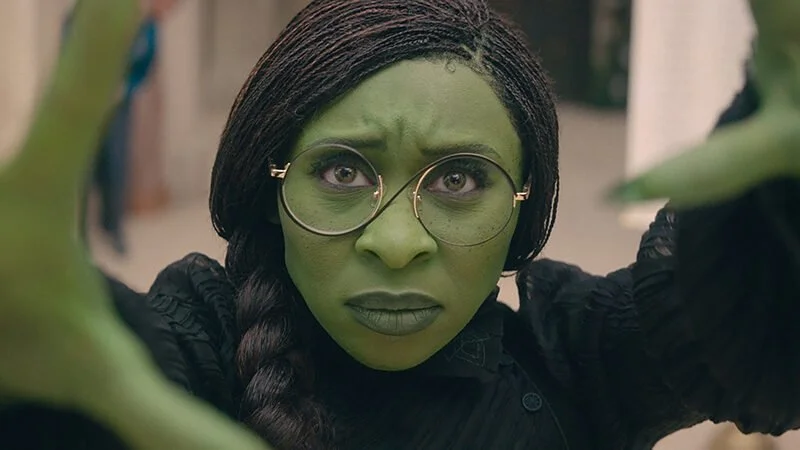
Elphaba Thropp played by Cynthia Erivo, Wicked (2024)
Professionalism has nothing to do with how you look—it’s how you deliver.
And it’s taught in grade school.
I watch my daughter navigate the shark tank that is middle school, and honestly, she’s already clocking in more “professionalism hours” than some grown adults I’ve worked with.
She’s out here navigating tricky social dynamics with the expectations of managing it with the grace of a seasoned diplomat. Her report card is basically a corporate performance review in disguise: graded on responsibility, organization, independent work, collaboration, initiative, and self-regulation. Sound familiar?
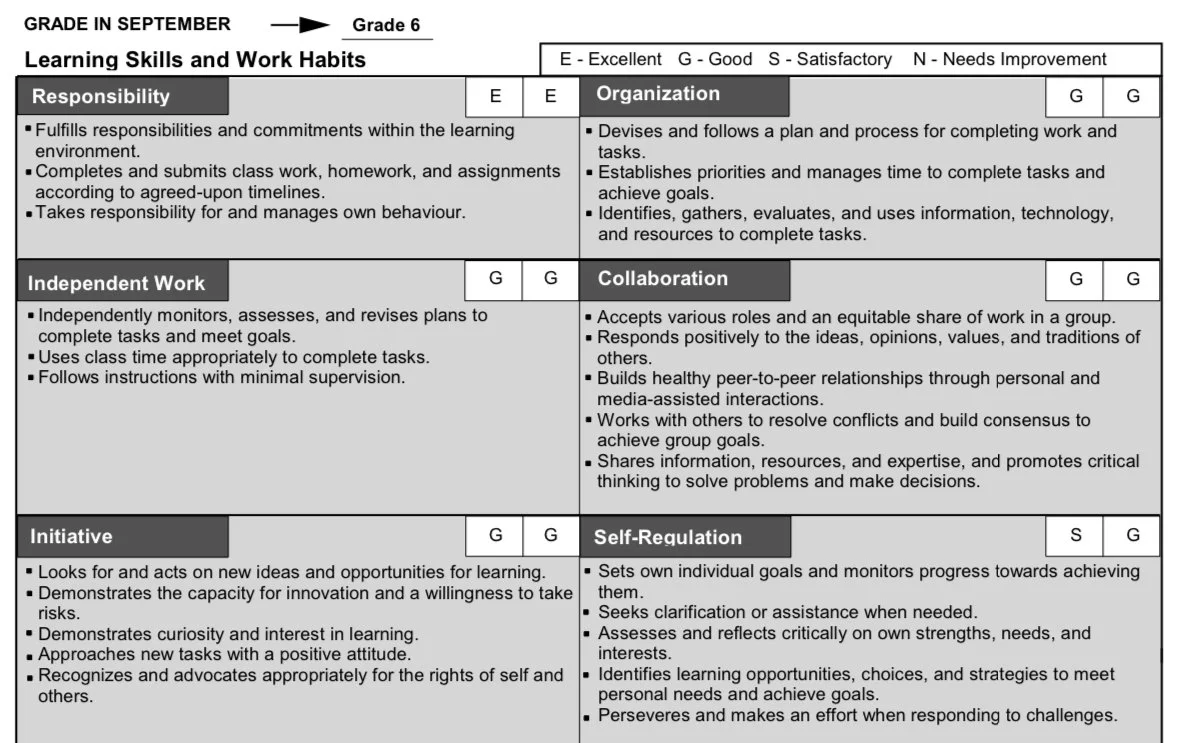
Grade School Report Card
She’s constantly testing the boundaries of her independence with her teachers—like it’s her full-time job. And to understand why, you’d need to know her a little better.
She’s that kid. The one who calls things out, asks the questions that make adults squirm and drops her opinions into conversations like truth bombs—completely unfiltered.
It’s both admirable and mildly terrifying. But her outspokenness often lands her in trouble, like the time her teacher told her to wear her Epipen fanny pack for an outdoor field trip. Her response? “I’m not allergic to outside.”
The same day, we got a call about her.
Here’s the thing, though…this so-called “trouble” isn’t defiance—it’s underdeveloped professionalism.
The thing we all stress over at work. Yeah, it starts way earlier than we realize. And it should have nothing to do with how you look, how loud you are, or whether you tick some outdated corporate checklist.
But it does, even at age 12.
And even in sci-fantasy movies, we can’t seem to escape it. Wicked is not a story about friendship or sisterhood. It’s about being easily cast aside because you don’t fit the “standard.”
If you don’t look the part, your confidence is labeled as cocky, your boldness as insubordination, and your assertiveness as aggressiveness.
Forget competence. You won’t even be offered the same liberties as your peers Glinda. And don’t think it’s any different in the classroom. A student’s behavior has influence on their grades—responsibility, collaboration, and initiative are right there at the top of the report card, bold as hell.
And as we slide further down the funnel of what passes for “professionalism,” the standards get more warped.
There’s a quiet conditioning that it's less about skill and execution and more about appearances and conformity. Frustrating for adults…sure. But downright sobering when you realize these murky standards are already shaping the next generation.
Watching my daughter navigate her social ecosystem with what can only be described as middle-school-level diplomacy (also known as controlled chaos) gave me hella perspective: What if we scrapped this broken script? And redefined professionalism altogether?
We need a Wicked redefinition.
The Wicked Redefinition of Professionalism And Acknowledgements to Those DOing It
You’d think professionalism would be a straightforward concept—show up, do your job, go home. But no, it’s layered with biases, outdated rules, and arbitrary standards like “Do you look like someone I’d trust with a spreadsheet?” Watching my daughter navigate the politics of middle school, where competence and behavior are weighed like some twisted corporate performance review, drove the point home: we’ve been conditioned from day one to stress over professionalism. And for what? To prove we can sit still and smile on Zoom?!
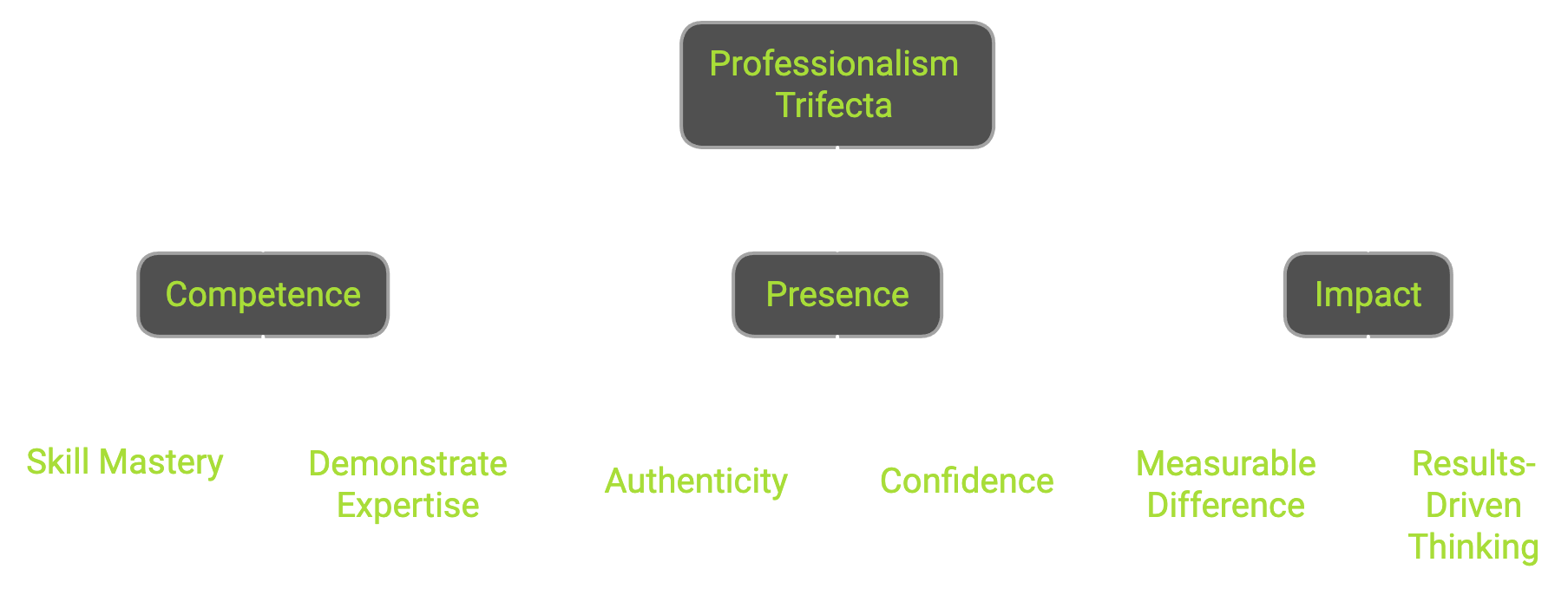
But who’s setting these standards…and why are we still following them? Enter Scott Evans, Kai Cenat, and Bozoma Saint John—three people who’ve ripped the mold to shreds and shown us the alternative. Each of them embodies what I call the trifecta of professionalism: Competence, Presence, and Impact.
Let’s give credit where credit’s due.
1. Competence
To Scott Evans, a walking masterclass in how to deliver—literally and figuratively. Not to be confused with Scott Evans, who played one of the Kens in Barbie (although, he’s cool too).
Whether this Scott is behind the desk at Access Hollywood or interviewing A-listers, I want to thank him for showing up ready. He doesn’t just skim the prep notes. He dives in like the pro he is. If competence had a spokesperson, it’d be him. And honestly, I’d trust Scott to negotiate world peace before I’d trust some of these LinkedIn “thought leaders.”
His most recent project turned my head and has me locked in like an after-school special. The YouTube series House Guest is an intimate, feel-good series where celebrity guests visit his home to share candid conversations and personal stories. It basically feels like you’re kicking it with good friends. You “come for the fun and stay for the joy.”
Scott Evans didn’t become a trusted face in entertainment journalism by accident. His rise is a masterclass in skill development and adaptability.
Do it like Scott:
Hone Your Craft Relentlessly: Scott mastered the art of storytelling, seamlessly blending entertainment news with relatability. Whether covering Hollywood gossip or human interest stories, he does it with a mix of charm and depth that says, “Yes, I did read the room, thanks.” It’s called versatility and consistency, people.
Stay Prepared: Scott doesn’t just skim the Wikipedia page before an interview—he comes armed with receipts. His prep game builds trust but also delivers value to viewers.
Own Your Niche: While the entertainment world is drowning in clichés, Scott stands out because he brings himself to the table. He’s not trying to be anyone else, and it shows. Lesson: your authenticity is way more interesting than blending into the beige backdrop.
Competence isn’t just about doing the job. It’s about elevating it, and Scott, you’ve done just that.
2. Presence
To Kai Cenat, who proves you don’t need a suit and tie to command attention. Thank you for redefining what it means to own a room—even if it’s a virtual one.
This example may be a hard pivot from what we’ve known to be professional (and my 12 y/o told me to leave this one out), but keep following along because his streams and videos are pure nonsense in the best way. Authentic, funny, and unapologetically him. Kai’s presence isn’t about being polished. It’s about being real. He leans into his quirkiness. He’s boldly himself, and that’s why millions can’t get enough.
He’s been making noise recently with the number of celebrity heads popping up on his live streams. Take notes, corporate overlords: even PR pros are amazed at the coordination, logistics and scheduling of running a modern-day Truman Show. His streams can get up to 23 million viewers.
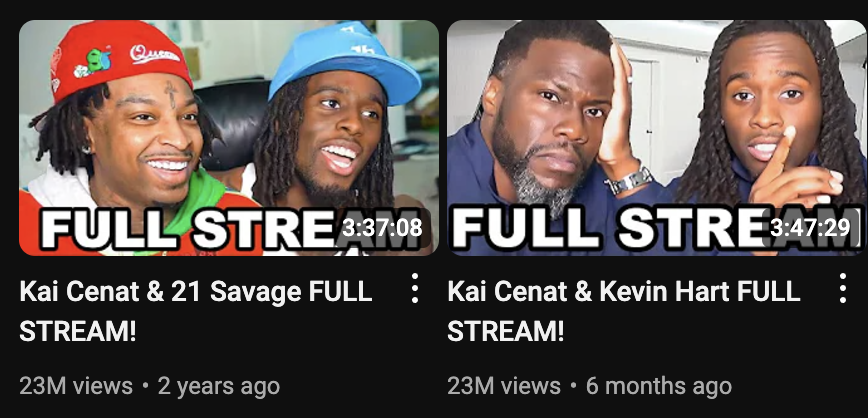
Youtube: Kai Cenat Live
Do it like Kai:
Build a Platform on Authenticity: Kai never tries to be anyone else. His humor, energy, and charisma make his streams and videos magnetic, pulling millions into his chaotic (but real) world.
Stay Consistent: Whether he’s streaming for hours or creating viral YouTube content, Kai consistently shows up for his audience. Presence isn’t just about showing up once and hoping for the best. It’s about doing it again and again until people can’t get enough of you.
Turn Vulnerability Into Strength: He doesn’t shy away from showing the messy parts of his journey, making him relatable and approachable. Confidence isn’t pretending you have it all figured out—it’s owning the process like a boss.
Presence isn’t about blending in or following a script. It’s about showing up, being seen, and making people remember you—like Kai.
3. Impact
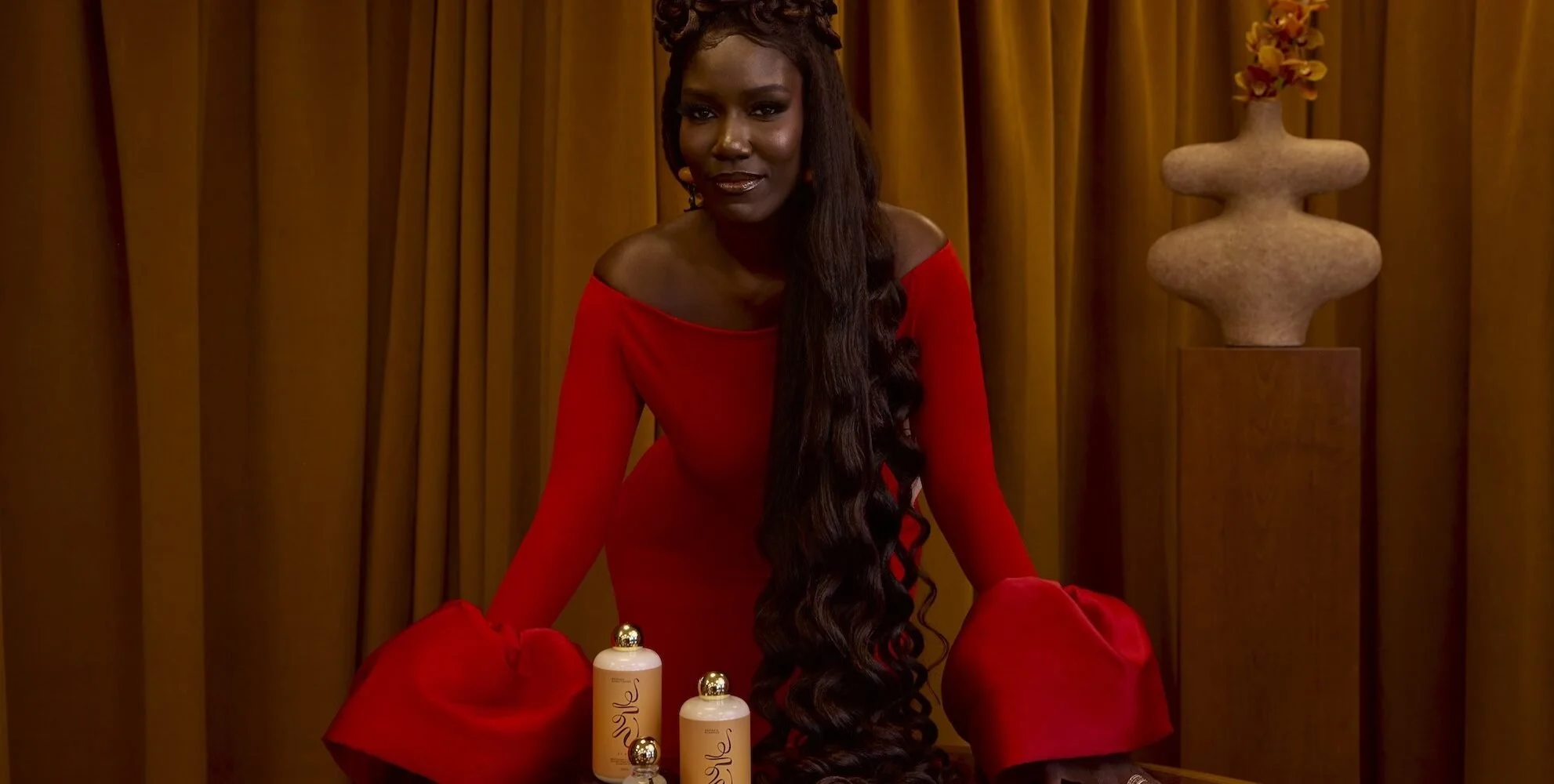
To Bozoma Saint John, she doesn’t just walk into rooms—she owns them. Thank you for showing us what’s possible when purpose meets execution.
From rescuing Uber’s reputation to running game-changing campaigns at Apple and Netflix as the CMO, Bozoma redefines what it means to leave a legacy. Her impact isn’t just felt. It’s seen—bold, unapologetic, and impossible to ignore. She’s proof that professionalism isn’t about playing it safe. It’s about making moves that matter.
This unstoppable force has gon’ on and launched Eve by Boz. A haircare and wig brand that is manufactured in her homeland of Ghana. It’s a revolutionary act that despite Black women and women of color holding 80% of the buying power in this industry—don’t have a say—Boz became instrumental in how these products are constructed.
Do it like Boz:
Make Bold, Strategic Moves: Bozoma Saint John didn’t wait for permission to lead with her ideas. Her bold campaigns reflect her vision, even if they challenge norms and make the old-school execs sweat. You can’t leave a legacy by coloring inside the lines.
Leverage Cultural Intelligence: Boz doesn’t just market products. She connects them to culture in a way that makes brands feel human. The secret sauce to staying authentic is being who you are while still resonating with your audience. It’s not magic. It’s a skill.
Prioritize Visibility: She doesn’t shy away from taking up space. Whether on stage or in a boardroom, she ensures her voice is heard and her work is seen. Take notes: your impact is only as big as the space you claim for it.
Boz, you’ve shown us that real impact goes far beyond job titles—it’s about creating meaningful, lasting change.
Guilty as F*ck: Who knew The Olympics and corporate culture have so much in common?! →
These living examples show us how to rewrite the rules of professionalism and make it work for us—from my 12-year-old powerhouse to Wicked’s Elphaba, you can be a Scott mastering their craft daily, a Kai owning their authenticity by inches or a Boz leaving a lasting impact on Zoom meetings.
Your work inspires us to rethink professionalism as something dynamic, inclusive, and rooted in what actually matters: competence, presence, and impact—the professionalism trifecta.
So here’s to them (you)—and here’s to anyone who’s ever been told they don’t “look the part” but delivered anyway.
Let’s stop stressing over fitting outdated standards and start celebrating the people brave enough to elevate ‘em.
👋🏾 Soooo…collective illusion is public enemy number one—Don’t Believe The Hype. Every week, we’ll say the quiet parts out loud (in your inbox). So we can cancel or co-sign marketing or market trends and discern pop culture gems from flops together. And start making sense of the nonsense online.
P.S. That’s a wrap on Season Two of Don’t Believe the Hype! We’ll return in the new year, ready to cancel or co-sign whatever marketing trend decides to embarrass itself next. See you then…

Hella Blows: The eulogy to Quiet Influence in the age of the loudest wins
It was never the loudest in the room, but it was always the most honest.
Once upon a time, female artists were seen as delightful yet costly accessories in the entertainment world—like the decorative parsley on a gourmet dish.
From their hair and makeup to their on-stage outfits.
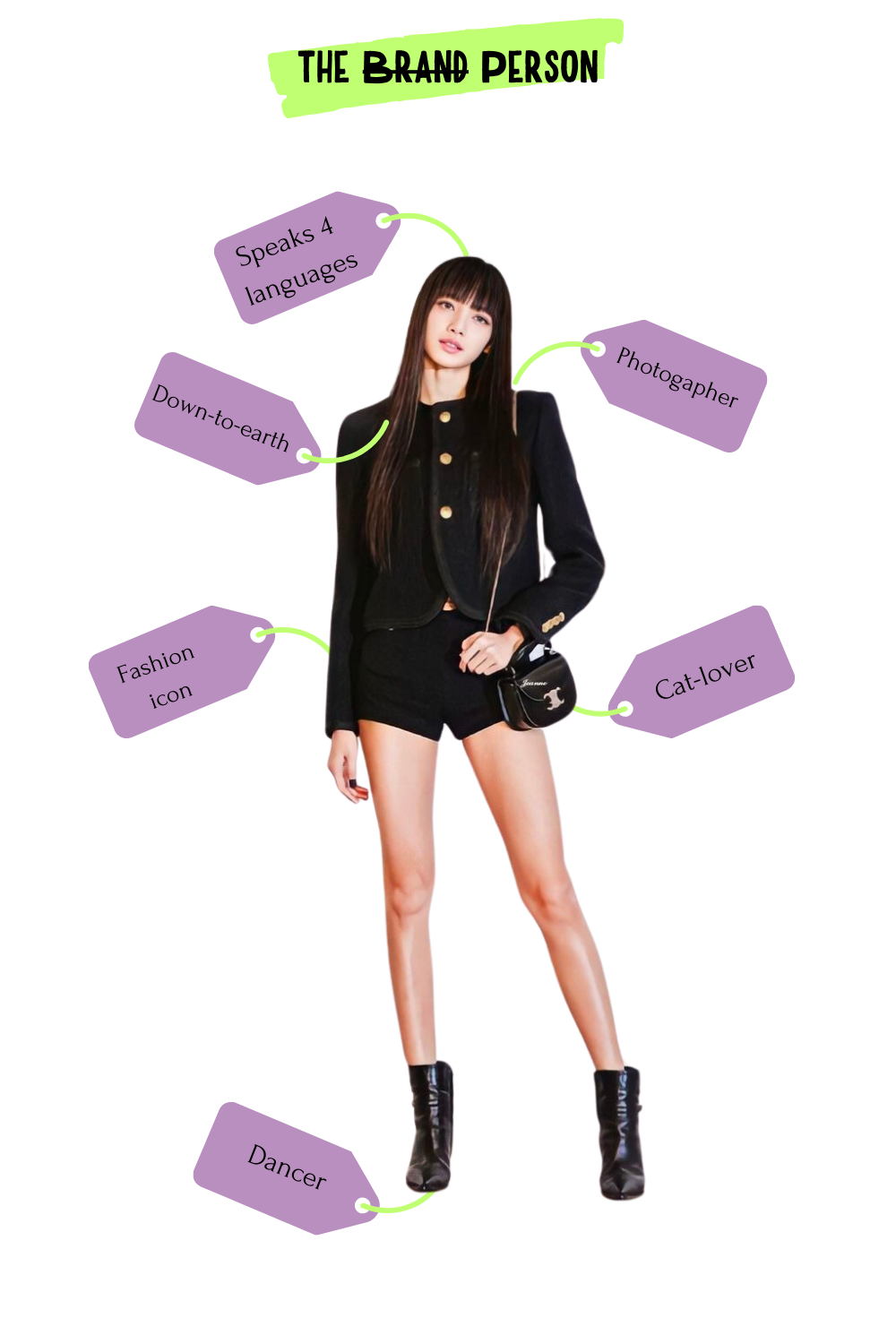
Fast forward to today, and they're the main course, commanding center stage and, more importantly, the big bucks. Take K-pop Blackpink's Lisa, for example, who didn't just become a global ambassador for Celine, she practically turned the brand into a household name among Gen Z. And then there's Taylor Swift, whose brand partnerships are so lucrative that her cat probably has a better retirement plan than most of us.
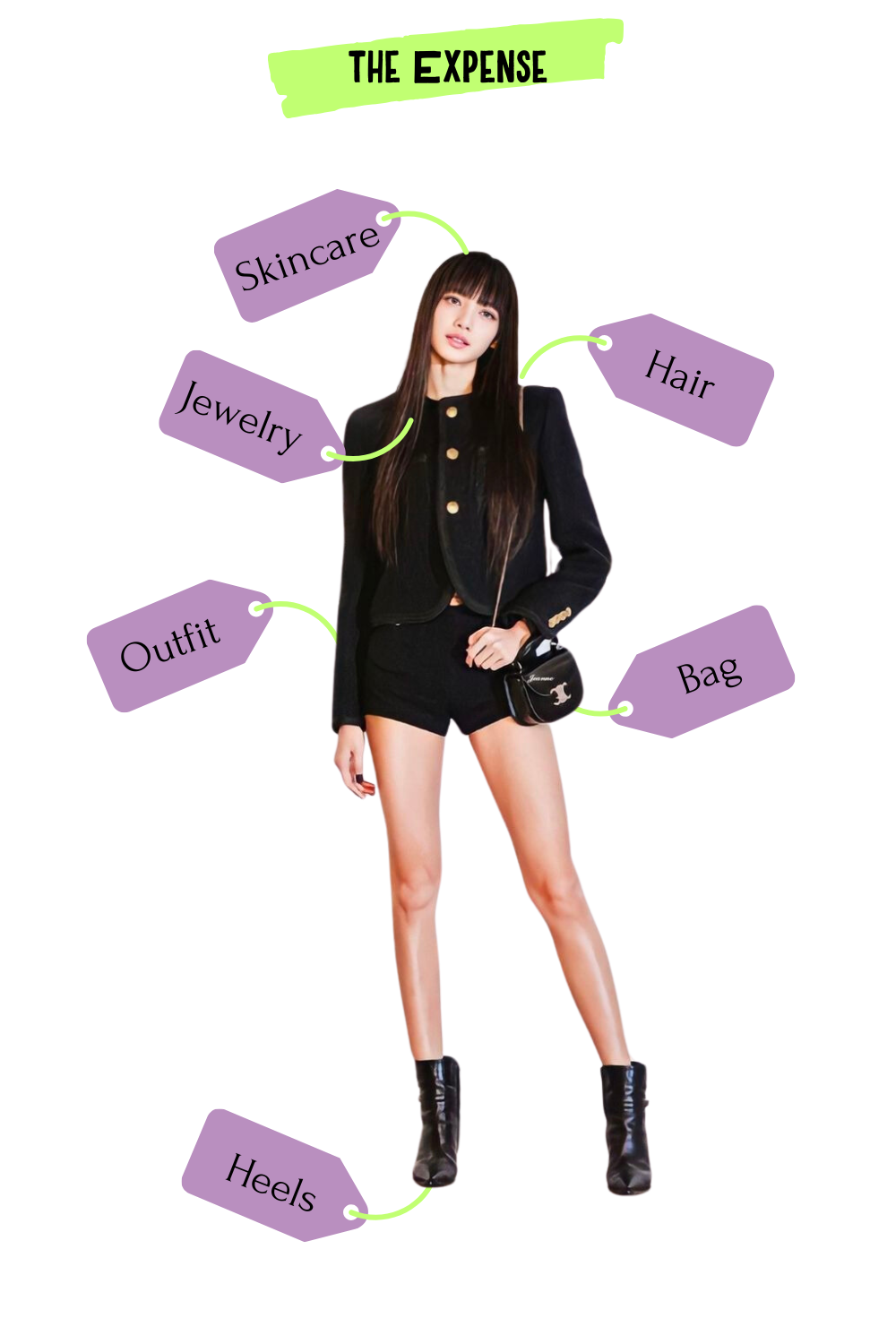
This is Lisa, a prominent member of the K-pop group Blackpink
This evolution from irritating expense to profitable investment isn't just a win for gender equality. It's a masterclass in how to turn a perceived 'deficit' into an asset goldmine.
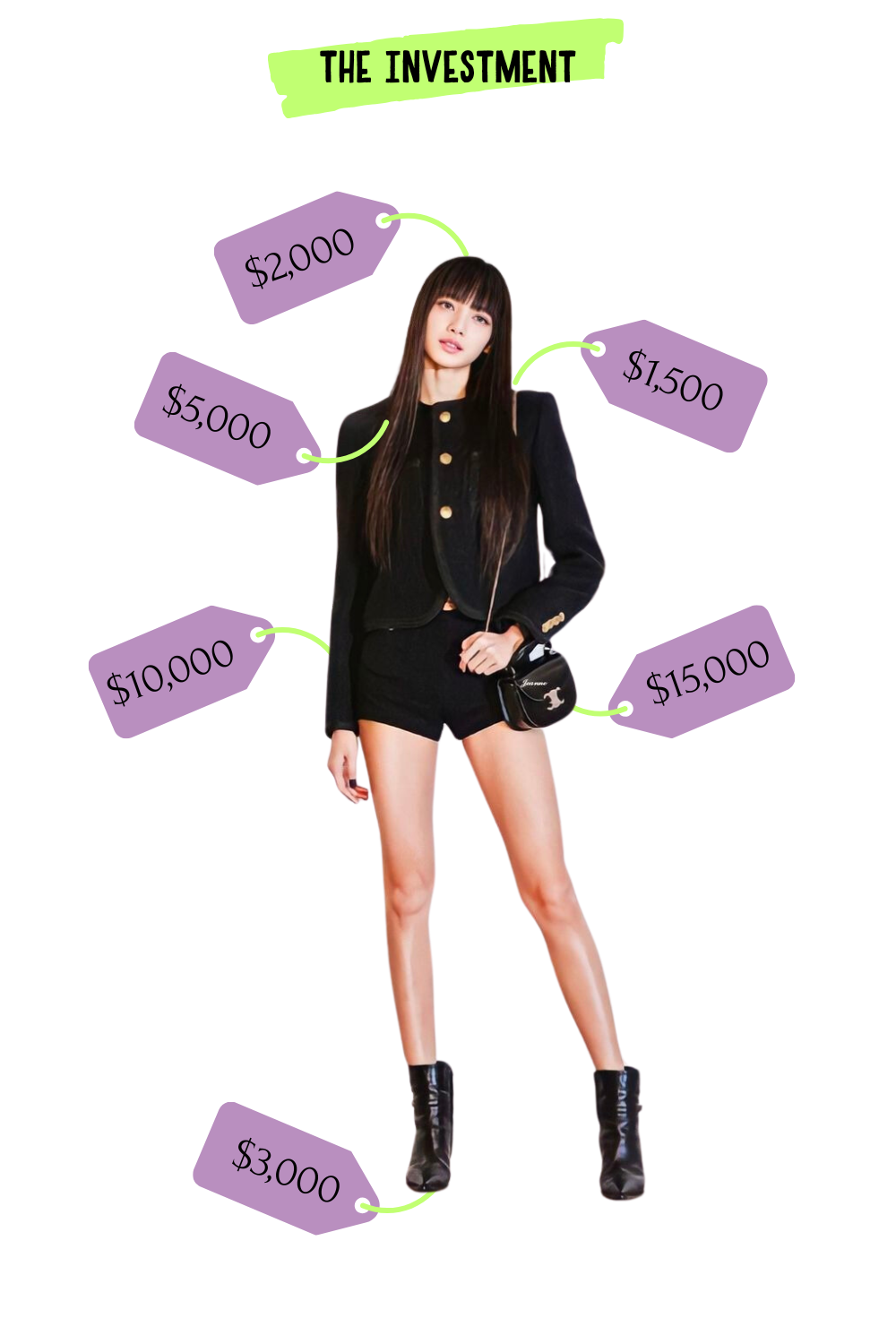
Cha-ching! Brand partnerships have entered the chat…
But here’s the thing—while it’s all rainbows and dollar signs now, the expectation for female artists to always 'show up' with the perfect blend of beauty, relatability, and influence has a cost.
This isn’t just a celebrity problem. It’s a corporate one, too.
As female artists (and women in general) get funnelled into loud, marketable personas, what happens to those who prefer quiet influence? The ones that get things done without a booming sound system.
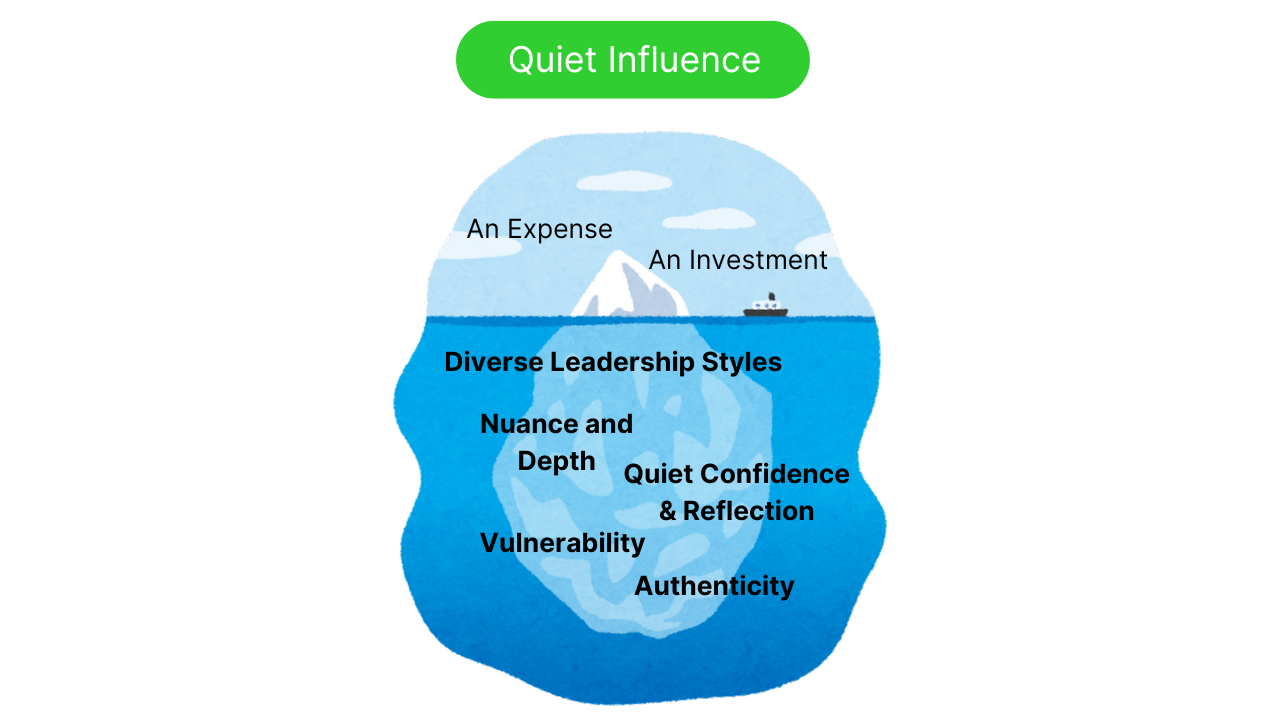
What happens to the quiet leaders and quiet geniuses? Do they become an expense or an untapped investment?
It’s almost like we should bury the quiet voice to make room for the loud and deceptively more profitable.
The Eulogy to Quiet Influence in the Age of the Loudest Wins
Please gather ‘round for the Eulogy—but let’s call it a ‘Corporate Memo,’ because we’re here to address the Quiet Voice that’s been taking hella blows.
Yes, the dearly silenced, often mistaken for shyness.
This Quiet Voice was never meek.
It was resilient, reflective, the one that spoke up when it truly mattered. But as loudness became our culture’s currency, the Quiet Voice was edged out, its strength mistaken for weakness, its subtlety for irrelevance.
Here lies Authenticity. Lost in the shuffle of shallow performance, booming voices, and an endless race for clicks and short-tail attention.
Once the quiet heartbeat of genuine connection. Authenticity lived—no filters, no exaggerated poses, no one-liners crafted for “maximum engagement.” It was never the loudest in the room, but it was always the most honest.
Authenticity died as we cranked up the volume, pushing louder and louder until it was silenced by the pressure to perform. We traded sincerity for a watered-down version of what looked good on camera but was hollow at its core.
With the demand for constant output, Authenticity couldn’t keep up with the noise and chose, instead, to take its blows.
We mourn the loss of Nuance and Depth, too, the closest companions of Authenticity. When every conversation had to be Black or White, Liberal or Conservative, there was no space left for the layered thoughts and complex insights they offered.
Quiet Confidence and Reflection were Authenticity’s true friends, loyal and steadfast. But as the push for self-promotion grew, they faded out as well. It’s hard to stay quietly confident when we reward volume over value. Reflection, who always took its time, stood no chance in the world of fiery hot takes.
When Authenticity passed, Quiet Confidence and Reflection took its last breath.
Diverse Leadership Styles, an endangered species now, had been the torchbearers for thoughtful, calm, and empathic guidance. But as loudness became the default setting for success, they found themselves overshadowed by charisma without content, flash without foundation.
They tried to keep pace, but the one-size-fits-all mold of “loud leadership” eventually escorted them out.
And we can’t bypass the death of Vulnerability. Performative, replaced reality. There was no room for softness, no tolerance for being real. We crafted perfection for our feeds but left our true selves out of reels. Authenticity had always provided space for vulnerability, holding it gently, making it safe.
But without it, Vulnerability became a foreign language, a risk too high to take.
As we say goodbye to Authenticity, we’re left with a question: Who are we without it?
Authenticity was our foundation, the reason people felt seen, heard, and understood. Without it, we’re just noise, chasing the next big, bold, ultimately empty moment.
An expense, not an investment to our truer selves.
In loving memory of Authenticity, in a world that feels hella loud, there’s an undeniable goldmine in the quiet influence within ourselves.
We can’t connect to a brand, but we can to a person.
As we reflect on the loss of Authenticity and the rise of brand building: Are we co-signing genuine connections or canceling performative hype?
👋🏾 Soooo…collective illusion is public enemy number one—Don’t Believe The Hype. Every week, we’ll say the quiet parts out loud (in your inbox). So we can cancel or co-sign marketing or market trends and discern pop culture gems from flops together. And start making sense of the nonsense online.

Guilty as F*ck: Who knew The Olympics and corporate culture have so much in common?!
Once inside, that talent needs to have a seat at the table, not only an invitation.
👋🏾 Soooo…collective illusion is public enemy number one. “Don’t Believe The Hype”. Every Tuesday, we’ll say the quiet parts out loud (in your inbox). So we can cancel or co-sign marketing or market trends and discern pop culture gems from flops together. And start making sense of the nonsense online.
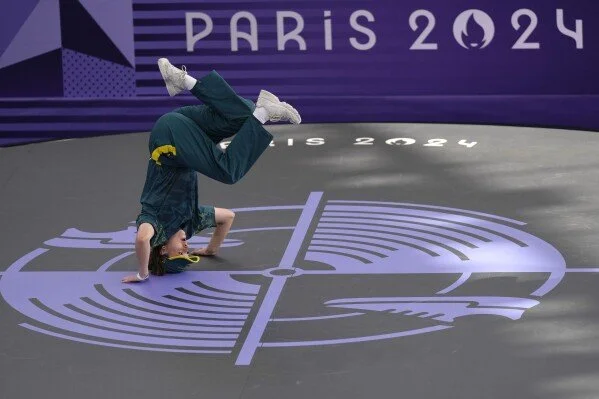
“I was never going to beat these girls on what they do best — their power moves,” said Gunn. “What I bring is creativity.” Source: APNews
How many times have you been passed over by a company because you didn’t meet the requirements?
Then you saw who got the job instead. How disappointing…for them.
Break Dancing's Olympic debut at the 2024 Paris Games raised questions about whether it authentically represented hip-hop culture.
“B-girl” Rachael Gunn, known as "b-girl Raygun," gained attention for her interpretation of Breaking but did not score any points in the competition.
And rightfully so (see video at the end of article).
But, how do we define "authenticity"?
Staying true to the traditions and origins of a practice or art form.
Acting in alignment with one’s values and beliefs.
Being recognized and accepted by the community as genuine.
Preserving the original context and meaning.
Or feeling a deep, sincere connection to an experience or expression?
This is a hard one. Drop your answer in the comments section.
The Olympics is a unique global spotlight to amplify an art form (Breaking), but if not careful, it can also strip it of its soul.
Just like corporate culture is a great platform to amplify the diversity of people and ideas, it can also squeeze the hell outta our pinky toe (in a one-size-too-small heel).
And that’s what I’ll be referencing authenticity as—for the rest of this article, a pinky toe—shout out to Bozoma Saint John for that metaphor. *She is one of the most authentic people in her professional career.
Therefore, if companies don’t want to get watered-down versions of the talent they hire, company culture should embed the following three key elements:
#1 Equitable Representation, Now
Homogenized corporate culture has been the norm for many years i.e. hiring folks who look like the majority.
However, homogenized thinking lacks innovation.
The Olympics introducing Break Dancing at the Paris Games is a major win for the art form on a global scale, but the cultural integrity is at risk. Similar to when companies hire under a DEI lens, the current landscape needs to be set up to support a broader representation of talent.
#2 Voice and Ownership, Now
Once inside, that talent needs to have a seat at the table, not only an invitation. It’s not enough to say you’re here and be grateful. We need to be able to shape the culture.
Similar to how the hip-hop community was concerned about the Olympic commercialization of Breaking—they didn’t involve those directly connected to the culture in the decision-making.
When companies tap into their employees to contribute to cultural and operational decisions, employees feel a sense of ownership over their work and contributions. This loosens the tight squeeze on their pinky toes (aka authenticity, remember?).
#3 Continuous Education, Now
However, it doesn’t stop there. Culture evolves, imposters infiltrate, and cosplaying occurs. Why? In short, entitlement.
“When you're accustomed to privilege, equality feels like oppression.”
Sharing privilege is difficult for some. And to cope, it manifests in different ways. Positively, as an ally. And in the case of “B-girl” Rachael Gunn, as a culture vulture.
cul·ture vul·ture /ˈkəlCHər ˈvəlCHər/
n. someone who adopts elements of another culture without genuinely understanding or respecting its significance
‘…and benefit from.’
There is an inherent benefit to adopting cultures outside of societal norms like economic growth, but I touched on this in another article (Thristy as F*ck). Companies should strive to preserve the diversity of their people and thoughts without diluting or misrepresenting them.
That means:
feedback channels
diverse hiring panels
employee resource groups (ERGs)
leadership training incorporating cultural nuances
and culturally relevant marketing and communication
Otherwise, there’ll be a lot of pinky toes squeezed to death. And how many companies are already guilty as f*ck?
To be fair—most companies do widen their hiring lenses, but the power move is how they retain the same talent they recruit.
And as much noise as you hear around DEI initiatives, don’t believe the hype. They will often settle for the watered-down version instead.

Thirsty as F*ck: Was 2020 the best year for human capital?
Companies will bend the rules and play the fool, but they’ll always be thirsty as f*ck for human capital.
👋🏾 Soooo…collective illusion is public enemy number one. “Don’t Believe The Hype”. Every Tuesday, we’ll say the quiet parts out loud (in your inbox). So we can cancel or co-sign marketing or market trends and discern pop culture gems from flops together. And start making sense of the nonsense online.
Corporate workplaces are thirsty for DEI hires, Chat GPT and hybrid models, but it’s also the 13th reason why companies should foot our therapy bill.
Is That a Hard “er”??
It’s a DEI Hire
At the height of the Black Lives Matter movement (in 2020, shortly after George Floyd riots against police brutality), companies from far and wide coveted Black talent.
Head of D&I roles were plentiful and well-paid, too.
Due to legal and compliance pressures, companies saw the need for equal employment opportunities and to avoid potential lawsuits related to discrimination.
As societal awareness around social justice issues grew, so did social responsibility. Companies faced increased pressure from stakeholders, including employees, customers, and investors, to showcase a commitment to diversity and inclusion.
McKinsey & Company research clearly outlined the increased business performance when diverse teams are on board. This leads to better decision-making and innovation, which improves competitiveness and financial performance.
Cue graph for receipts.
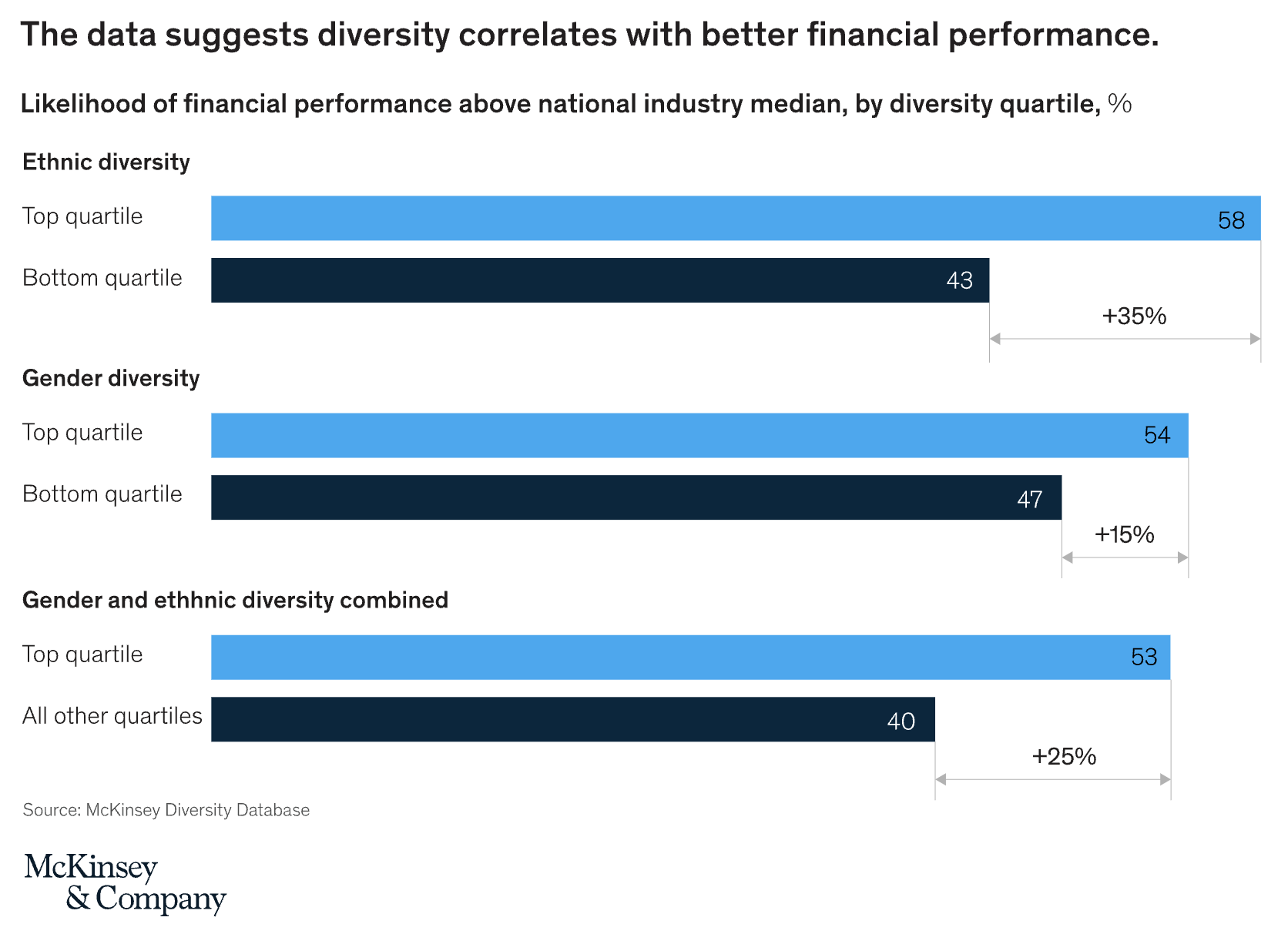
Fast-forward to today, and that’s no longer true?!
To be a “DEI hirRE” is to lack qualifications, I’m sorry?? To be honest, DEI is starting to sound like a slur these days.
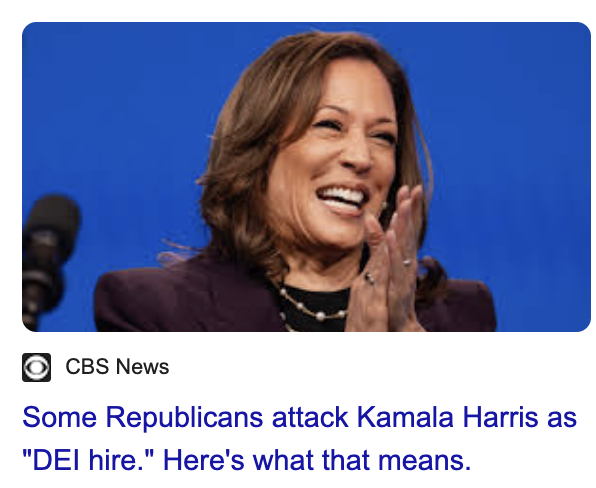
Exhibit A of VP Harris' recent press
Self Driving Careers
It’s a Chat GPT
And where do I even begin about the Olympic race companies are in to adopt AI and Automation expeditiously!
They’re deprecating roles and conducting mass layoffs so fast that they forgot to reskill employees to keep pace. If the aim was to improve efficiency and reduce costs, you kinda failed.
Hi. Do we have a global skills shortage in the room?
As industries rapidly evolve, there is a mismatch between the skills workers have and the skills employers need. Reskilling helps bridge this gap…and keeps the costs low.
However, companies are more worried that reskilling their employees will provide a direct path to job security despite the uncertain job market (people becoming highly employable—who wants that? *Sarcasm alert*).
Workers seamlessly exiting for new roles outside of the company doesn’t sound like a good time, I guess. But, this logic is flawed because employees can also transition within a company.
It’s risky, but outsourcing everything to AI is also risky.
Either way, adaptability is crucial in a world where job roles and requirements constantly change. What are companies going to keep doing? Fire people only to replace them six months later? That’s expensive and inefficient.
A workforce that is augmented with technology and continuously learns and adapts is better positioned to drive innovation within a company.
Because succession is not only reserved for the award-winning TV show, there’s planning involved. The happy side effect is that when a company prioritizes reskilling, it becomes a talent destination.
Now, I didn’t go digging for the research on this, but I am willing to bet worldly riches that employees who are exposed to new ideas and technologies (through reskilling programs) are more likely to be creative, solutions-driven and contribute improvements.
Betting all the gold on this.
Flexibility is Only For Yoga (And Pretzels)
It’s a hybrid Model
Back in good ol’ 2020, the COVID-19 pandemic forced us to stay indoors.
And companies were like, “No problem. Here’s a laptop. You can work from home.”
Remote work became necessary, leading to permanent shifts in work models. Companies had to invest in digital tools and technologies to maintain productivity and communication. But once our sneeze was no longer deadly, it’s like they forgot we could do all that monotonous work in PJs.
Forget flexibility and work-life balance—I need to see your productivity in person.
And if we’re ALL being transparent here, the Hawthorne Effect kicked in, and the ones who complained about remote work the most were usually the ones who needed to be watched. Shhh. You’re telling on yourself.
The Hawthorne Effect: a type of human behavior in which individuals modify an aspect of their behavior in response to their awareness of being observed
Never mind that flexible work arrangements are valued by top performers and can lead to higher levels of job satisfaction, which reduces turnover, and helps companies retain their talent. F*ck that!
A survey by Buffer (one of my favorite examples of a remote work environment) found that 98% of respondents wanted to continue working remotely, at least part-time, for the rest of their careers.
Not to mention, remote work allows companies to hire from a global talent pool (remember the whole “DEI hire” benefits thingy?).
There will always be a war for talent, despite the current bear job market.
Don’t believe the hype.
Companies will bend the rules and play the fool, but they’ll always be thirsty as f*ck for human capital.
They just want to lower the demand first.